

From the car window on her way to work, somewhere between Ararat and Yerevan, Anahit Harutyunyan would raise her phone and take a picture of Mount Ararat. The mountain always stood there in its power: majestic, vast, different every day, and yet unreachable. Anahit always captured it with her phone, as if one morning it might reveal something new: perhaps interdependence. Covered in fog, wrapped in gold in the sunlight, shrouded in storm clouds, towering beyond the poplars covered in the yellow-green leaves: no two mornings were the same, and neither were the pictures she captured. She captured Ararat in her frame, with its shifting tenderness and moods. Not as a habit, but as a pull, call of blood. Her friend Lilit — the one Anahit calls “civil friend” — attested that Ararat wasn’t the horizon of her gallery — but a constant presence.
Anahit spent ten months leading to the climb – not as an athlete striving to conquer yet another peak, but as a girl preparing for her first date with the man she had madly loved from afar.
“It was a mirror journey”, she stated, like a reflection of life itself. “When things fall apart, who are you?” — when the wind bites your bones, when your path is in the fog, when your breath burns, when there is no one to blame for anything.
Anahit came to believe that mountains, like life, do not conform to one’s expectations. Rules of mountains imitate rules of life — or the real truth, life mirrors the rules of nature. The ten months of preparation taught her that you don’t win in life by fighting alone, sometimes what it takes is patience and small stops.
The physical path to the slopes of Ararat is the same for all climbers, but for an Armenian it is more rugged — not in kilometers, but in the weight of memories carried by the towns along the way to Bayazet. Anahit and her teammates recalled that the city of Ani was the first to welcome them, 40 kilometers from Gyumri, a destination that took ten hours to touch. Then the road took them to Kars, Mush, Van. The last stop was Bayazet: between the life they already knew and the life that awaited them.
About 3,200 meters high – the first stop reached, the sound of the wind and the scent of thyme. Teammate Nelli broke the silence by breaking out into song.
«Բարով, արագիլ, բախտի արագիլ,
Արագիլ գարնան, արագիլ ամռան,
Իմ տան մոտ ապրիր, բարի արագիլ,
Բույն հյուսիր ծառին, բարդու կատարին։»
(Hello, stork, stork of luck,
Stork of spring, stork of summer,
Live near my house, kind stork,
Weave a nest in the tree, at the top of the poplar.)
At the first stop, Anahit realized that it was only an illusion of giving off energy while climbing — she felt charged with energy along the way. No river originates from the slopes of Ararat. Where does all that snow and water energy go? Anahit came to an understanding that the rocks of the mountain soak it up hungrily and that’s the source of the energy of Ararat.
“During the preparation, very few people encourage and inspire to climb a mountain above 5,000 meters. Mostly, the people around impose their fears on us, so that we are guided by fears and doubts through our thoughts and let go of our dreams. But these are unrealistic fears, unfulfilled fears, fears that lead to an uncertain place,” she stated.
For Anahit, the camping life was not just a way to overcome another challenging height, but to climb Ararat itself. It was a journey of thoughts of the years, to understand how you can love something and at the same time accept that it is not yours, to see it every day from home and feel that it is untouchable.
Day two, 4,200 meters — the height, when the oxygen started to drop to a critical low.
“Don’t sleep, don’t sleep,” Gohar, the group guide bellowed repeatedly, driving the group to battle the sleep and move forward.
The first group was about 15 minutes ahead, when Gohar realized that Anahit stopped, rooted to the spot, motionless. Approaching found her silent, tears freely falling from her eyes at 4,900 meters, almost 200 meters from the top. It wasn’t the fear or cold that stopped her, neither the tiredness. It was the first embrace with Ararat. The Mouth seemed to gently hold her hand walking to the top, while talking and singing with her.
Anahit’s fellow climber Nelli remembered that after days of hailstorm it started to snow, making the final steps to the summit a thousand times easier. From that moment they knew that Ararat welcomed the group warmly, because it is usually covered in impassable ice, to protect and to defend itself from something.
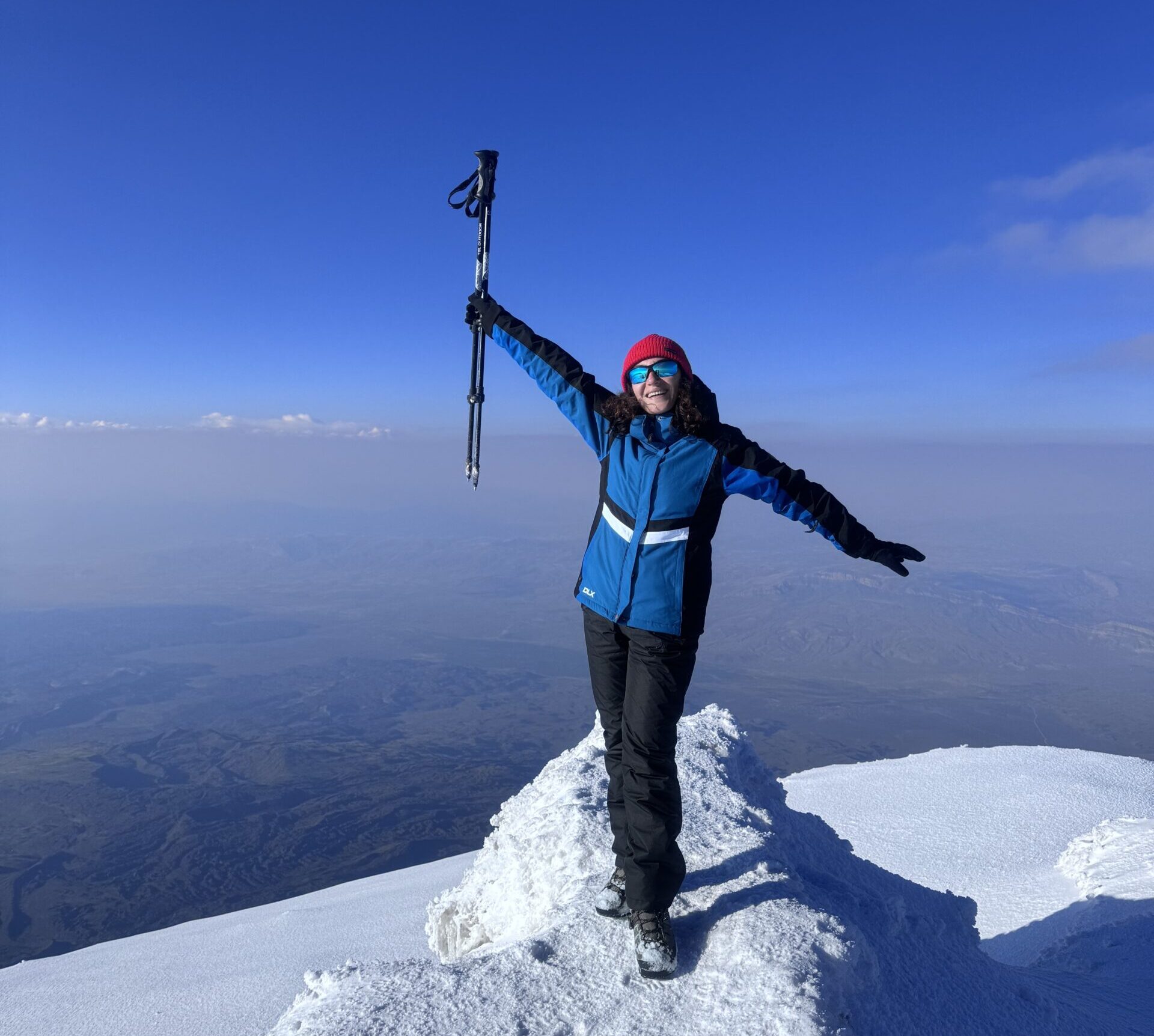
The sun rose on the top of Ararat, at the moment of surrender, when your strength wants to leave you. They were already at the top, at an altitude of 5,165 meters. Mountaineers assure that it is a psychological step: reaching the goal at the moment of your sunset, minutes before giving up. Just like someone at long last achieves their cherished dream in life.
Ararat hosted the group on its summit for longer than it usually does. And, by rules of the mountains Anahit appeared at home, full of emotions, but stubbornly peaceful, without fears and doubts, attached to the native land. In a breath — “A happiness that had not been experienced yet.”
“I see all of you from above,” after 750 kilometers of road and 5,165 meters of climb, Anahit stood on her homeland again. She raised her phone and took a picture again – not of Ararat, but from the top of Ararat. And in 5,165 meters, Anahit’s life changed by 5,165 seismic degrees.
Her friends said that climbing Ararat resonates with something deep: with each climb, daily problems seemed to become smaller for her. Lilit noted that Anahit approaches life very gently, but seeks heights everywhere, even on her birthday in the mountains of Bulgaria. She often skipped friendly wine gatherings to chase peaks and instead took her loved ones to the mountains with her, setting new meeting spots. They even claimed that this experience made Anahit decide to study psychology after years of being in the field of political science. On her way to Western Armenia and Ararat, she shared everything she encountered, including unique flowers, a bunch of which she brought with her as a bouquet for her future wedding. However, in her bonded circle, they joke, wondering whether the person who catches the bouquet will receive a marriage proposal or climb Mount Ararat.
In her “civilian” life, with a necklace in the shape of Mount Ararat around her neck, Anahit now remembers the words of her senior climbing friend Tigran, “When you look at Ararat from the Armenian side, it seems unreachable. You go and conquer it, and it’s still unreachable.”
But now she knows that Ararat belongs to her, and no document or border can deny that. After conquering it, she still looks at that giant from afar every day, but she already knows that her love is mutual.