

The name Romeo almost always evokes a story of romantic love, but for an Armenian artist, Romeo Melikyan, the narrative is one of survival and resilience. While the world associates that name with Shakespearean passion, Melikyan’s devotion lives in the stubborn act of creation in Berd, a border city shaped by recurring military tension.
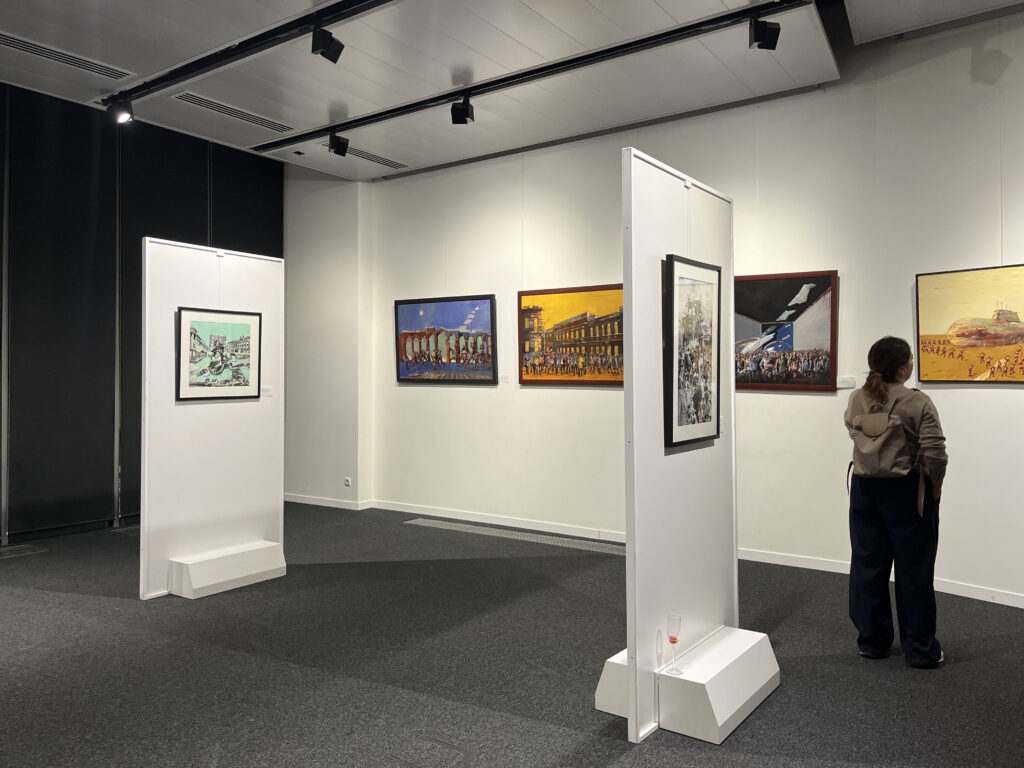
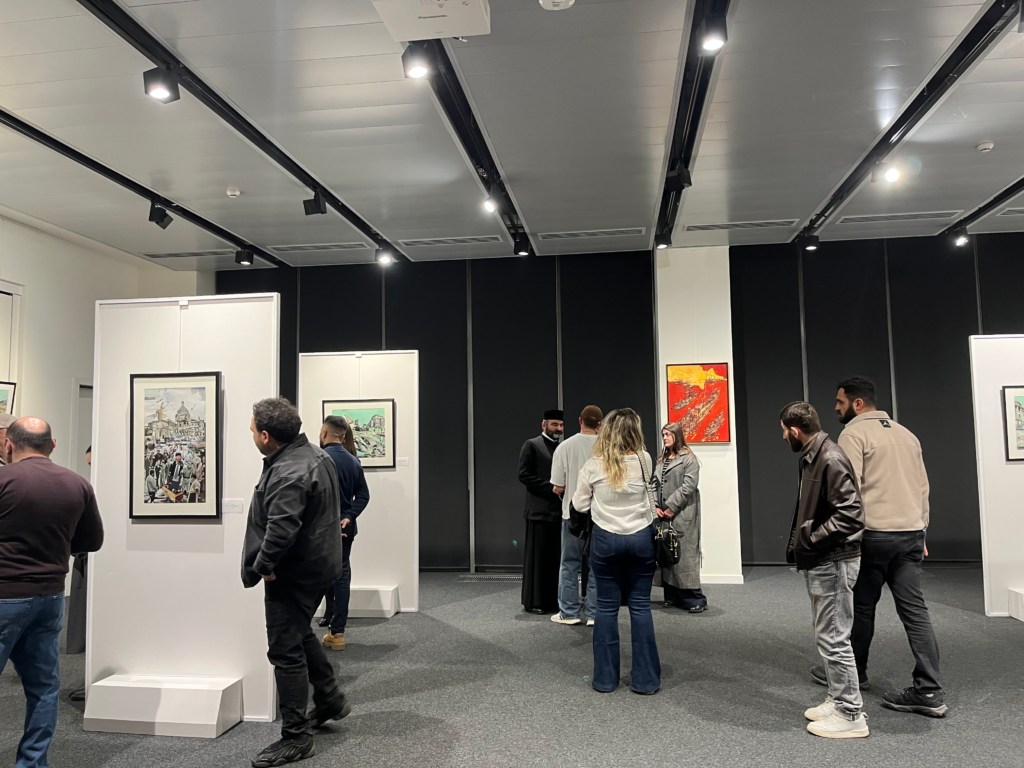
Opened on Feb. 18 and running through Feb. 21 at AGBU Center, the exhibition “Romeo: The Picture of Busy People,” along with a documentary film premiere, launched a cultural series marking the 120th anniversary of the Armenian General Benevolent Union with collages, sound and quiet intensity. As visitors stepped into the hall, large-scale paintings lined the walls, their crowded figures mirroring the city’s rhythm, while live piano music by Vahagn Vardanyan flowed through the space, setting a reflective mood for the evening.
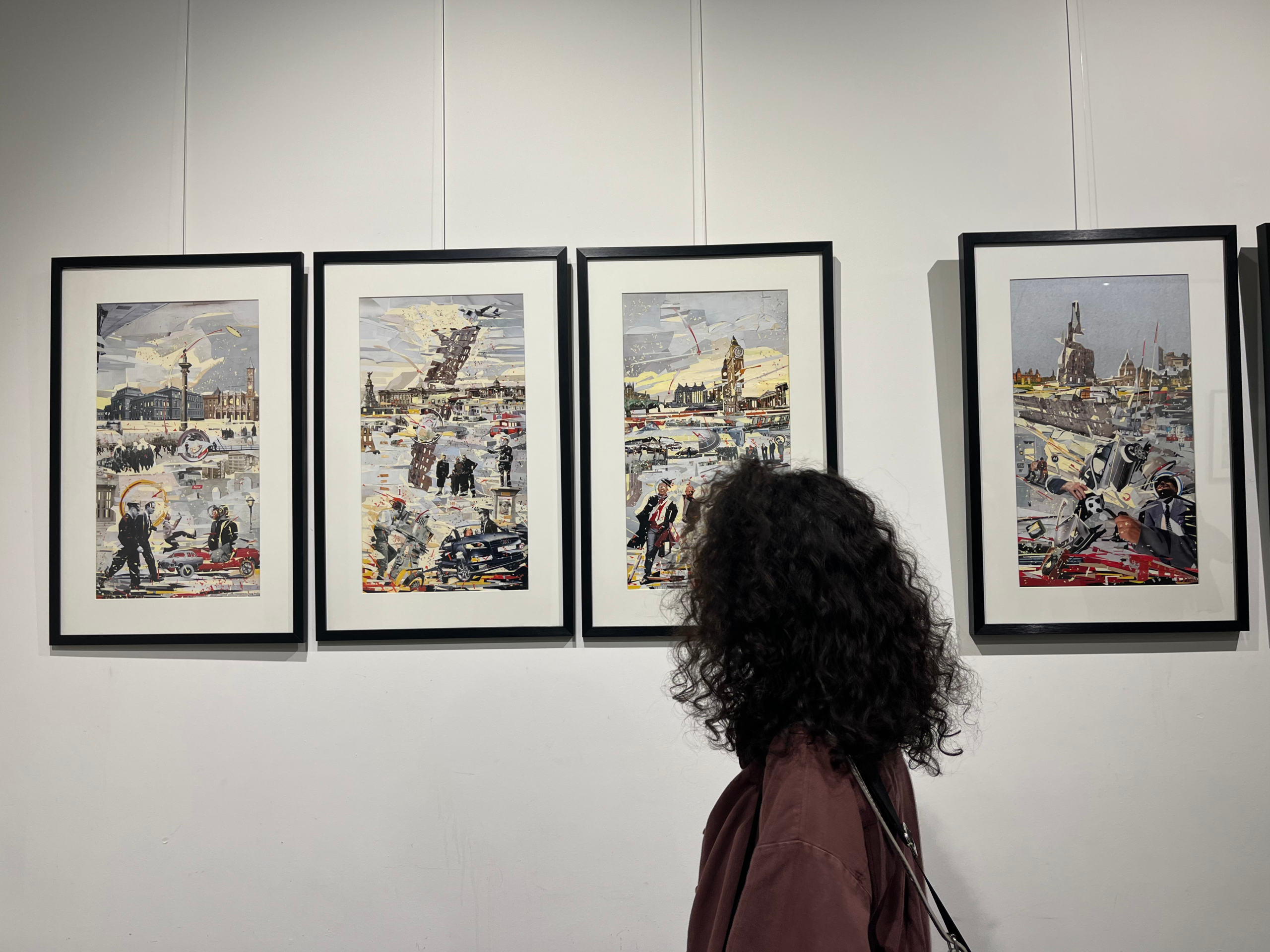
Romeo’s paintings and collages explore the psychological and geopolitical realities of modern life. Regardless of material, his canvas reflects war-related anxieties and the emotional weight of crowded urban life. His collages combine vintage and archival materials in mixed compositions that suggest transformation and reborn memory — a visual metaphor, as the artist sees it, for how the soul changes from carrying traces of previous life.
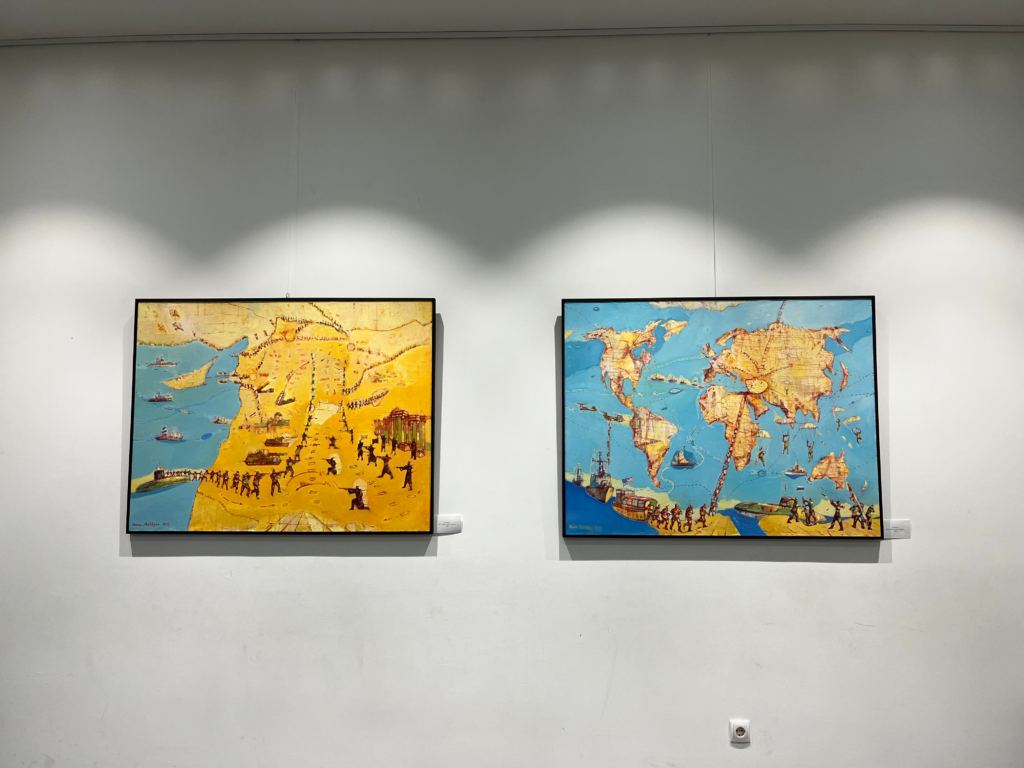
The exhibition presents several series, including “Conflicts,” “Citizens” and “In the City.” In “Conflicts,” Romeo paints his personal experience of living alongside war, placing miniature soldiers against large-scale map landscapes. The figures appear small and nearly swallowed by the scale of borders and terrain, mirroring how human lives fade from view within the logic of conflict.
In “Citizens” and “In the City,” Romeo turns to “overworked” urban life. His characters move through dense environments, united yet isolated, carrying emotional upheavals that are deeply felt by each of us but rarely spoken — the pressure to succeed, the struggle to adapt and the loneliness among crowds.
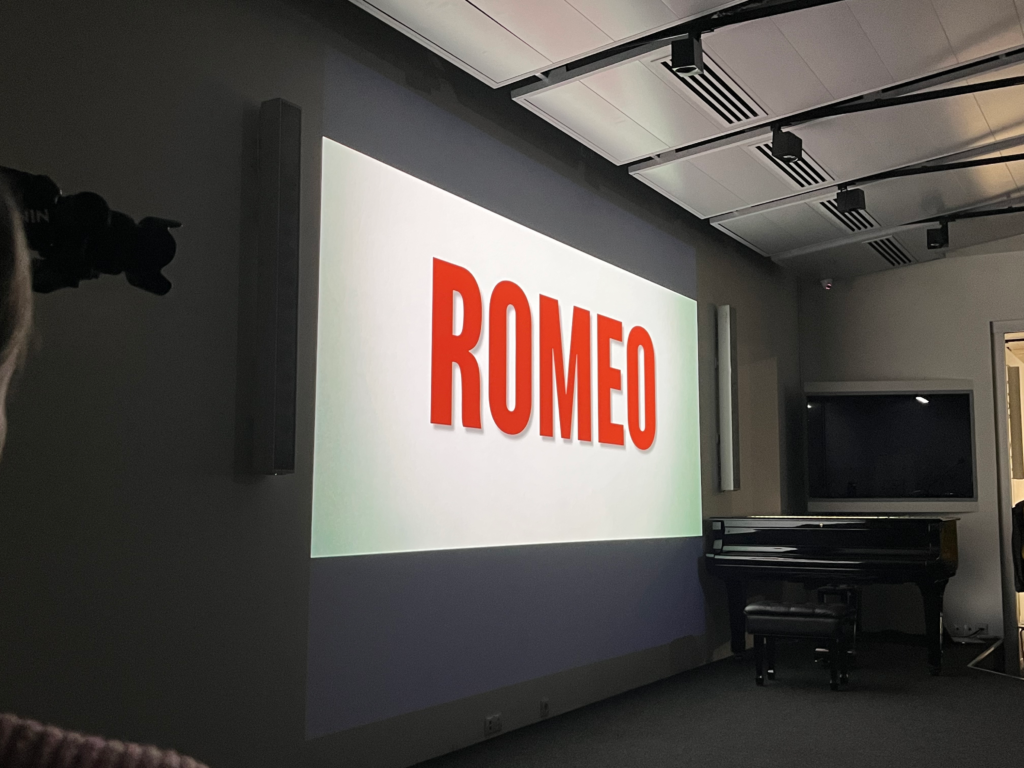
Following the exhibition opening, guests attended the premiere of “Romeo.” In the film, Romeo reflects on a shift in his work.
“I used to paint crowds of people until those crowds left,” he says in the film. “Now I paint nature. And I’m afraid that if that also disappears one day, what will I paint next?”
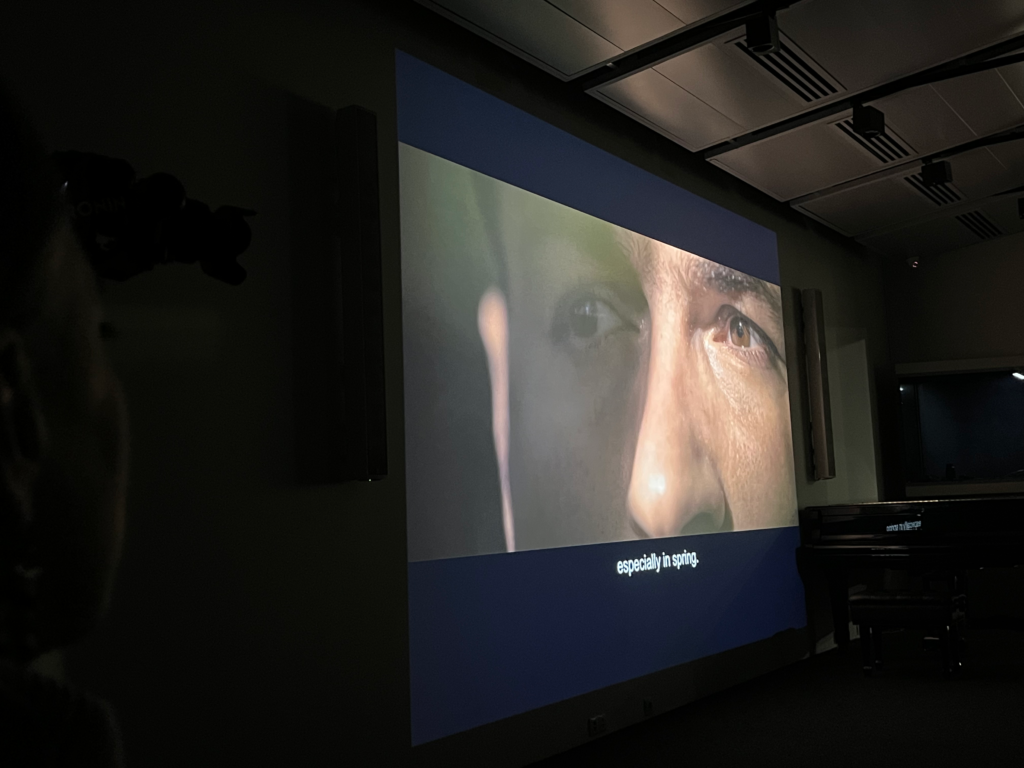
Film Producer Ani Ordyan said the project grew from a long-standing connection with the artist and a desire to document a creative voice shaped by life on Armenia’s border.
“I’ve known Romeo for a very long time,” she said. “His paintings speak about people, about cities, about conflict, but always from a very human side. The film “Romeo” follows that same perspective.”
Film Director Marina Arzumanova said the idea for the film emerged years ago.
“We were impressed by his creative style and felt it was important to make a film so people could truly see his work,” she said.
Arzumanova added that Romeo’s story also reflects overlooked realities of post-Soviet Armenia. According to her, few speak about the abandoned factories and industries left behind, the lack of workplaces in the regions and how entire cities have become ghost towns as a result. Romeo, who lives surrounded by one of Armenia’s richest natural landscapes, embodies the contrast between natural fullness and social emptiness that runs through much of his art.
Romeo’s works are held in private and institutional collections in Russia, Lebanon, Germany, the United Kingdom, the United States of America, the United Arab Emirates, Serbia and are part of the permanent exhibition of the Yerevan Museum of Modern Art.
The film has already been screened internationally, participating in festivals including the Baiqonyr Film Festival, Armenian Film Festival Australia, Bastau International Film Festival, Golden Baklava Film Academy International Student Film Festival and the International Film Festival Kyrgyzstan – Land of Short Films. It was also shown as part of the Armenians in Film 2024 program at New York’s Lincoln Center in Fresno.
[Editor’s Note: The photographs are taken by the author.]