

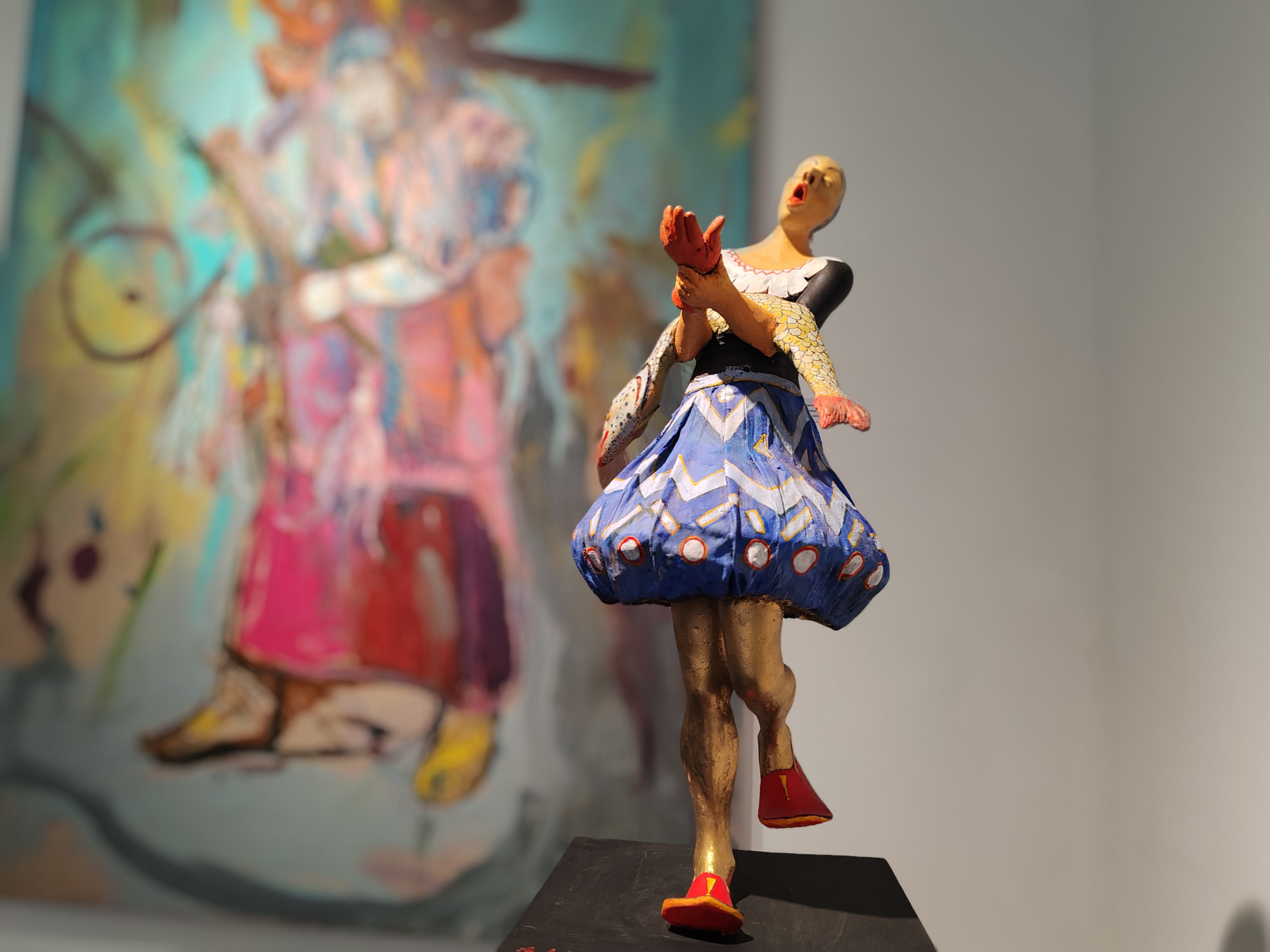
Entering Arshak Sarkissian’s new exhibition, “Birdsongs of the Soul,” at the Henrik Igityan National Centre for Aesthetics, one senses a world between eras, between species, between the seen and the intuited.
For viewers familiar with Renaissance art, the artist’s project will feel recognizable, echoing Hieronymus Bosch in the theatricality of each canvas and the garden logic where a human form gives way to its inner beasts. Yet if Bosch offered a demonstration—or better, a monstration—of the inner world, Sarkissian offers its contemporary sequel: a circus of individuals, “contemporary man” or “personalities,” as he calls them.
Opening on Dec. 5, the exhibition gathers works created between 2014 and 2025 and spans oil on canvas, wood, ink on paper, and a number of figurative pieces. In its breadth and ambition, the exhibition echoes the Renaissance project itself: the exploration of how individuality and identity emerge and transform.
The characters who populate these canvases, many of them women, wear modern clothing with Crocs appearing where sabatons might have been. And still, the roles they take feel anachronistic. They step into mythic positions inherited from older symbolic systems, archetypes revived now with a touch of irony and romanticism of something long outlived.
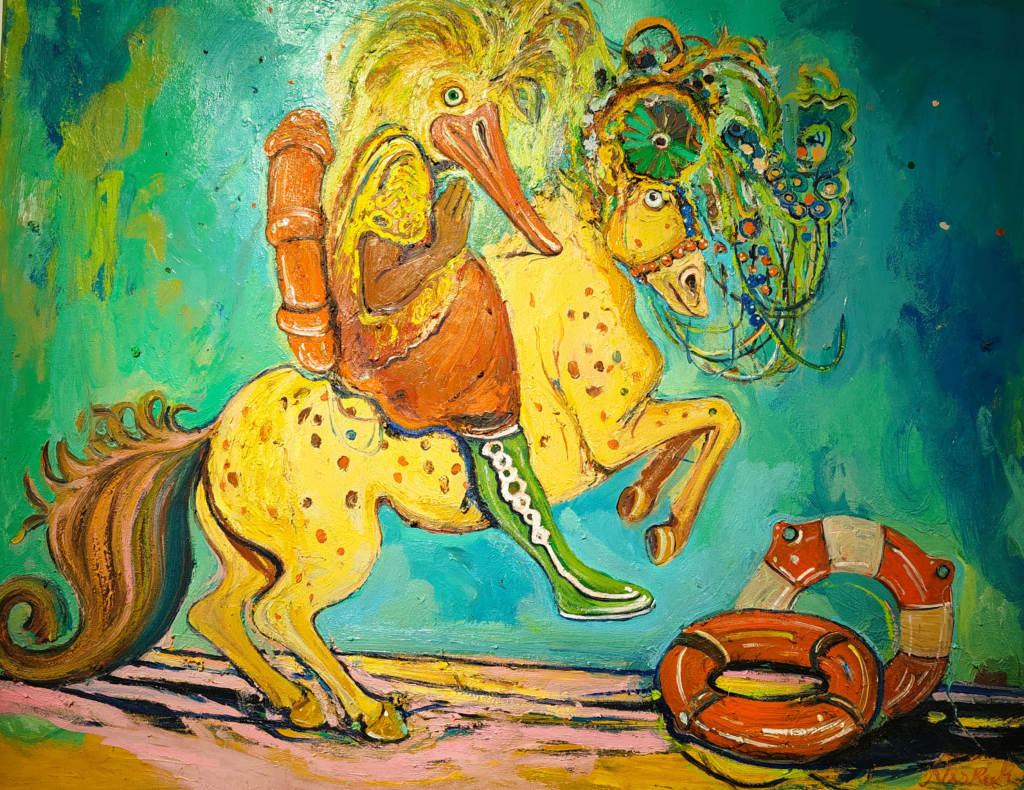
One of the most telling of these inherited roles is the knight, reflected with sharpness in the work titled “Modern knight.”
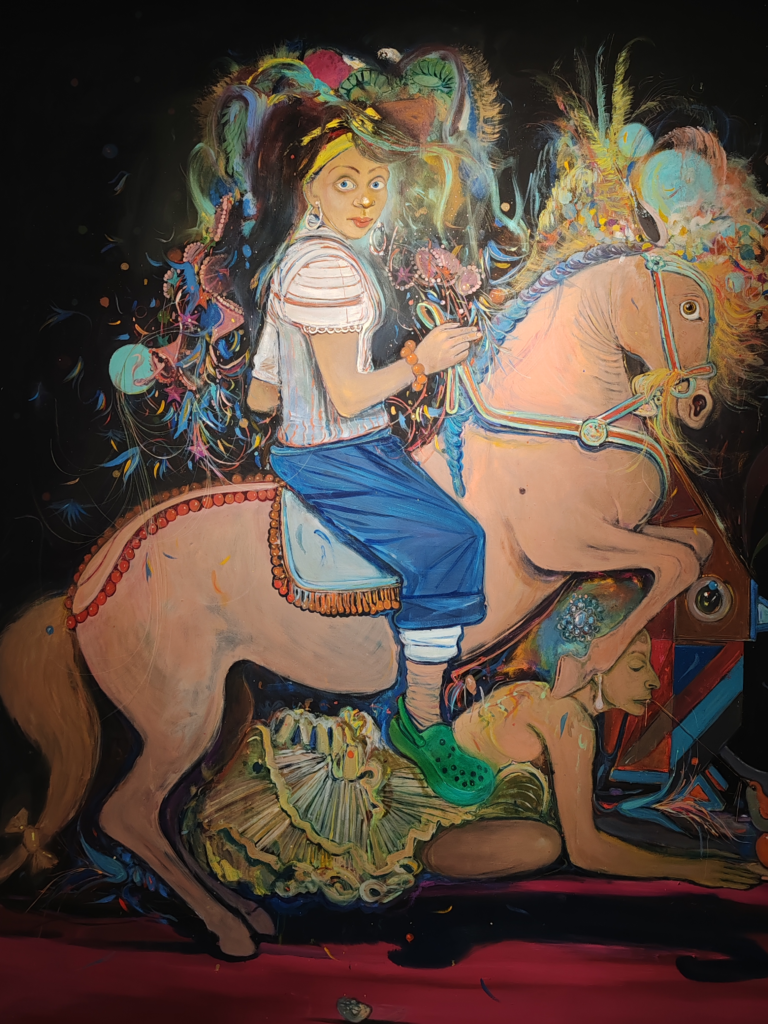
As there are no knights anymore, Sarkissian plays directly with that absence.
The role is taken up by a young mulatto woman in clogs, seated on horseback as if stepping into an abandoned archetype.
The absence of proper armor and the missing chivalric suit stress the sense of a myth recreated with whatever symbols the present can provide. And the role is taken up by a woman rather than a man, as if she was filling the space once occupied by a lost ideal of masculine courage and honor.
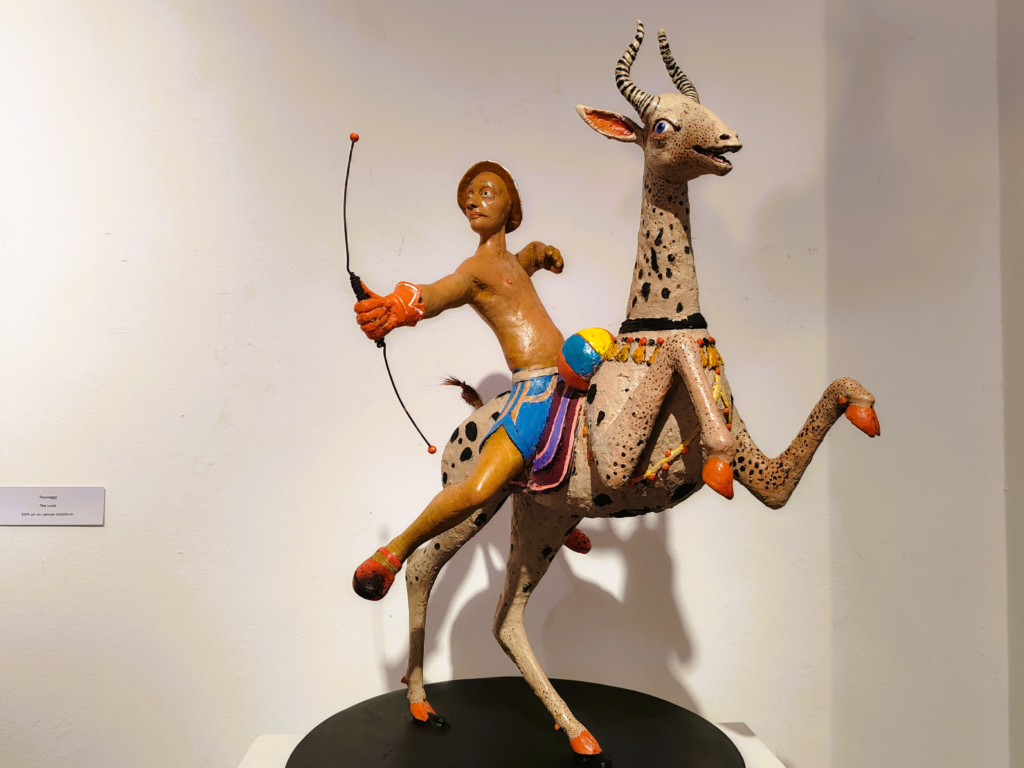
The motif is pushed even further into absurdity in “Aimless Hunter,” which depicts a figure in beachwear holding the last remnants of a hunter’s gear, a single glove and a bow without an arrow, while riding an awkward, wide-eyed antelope that should, by all logic, have been the hunter’s quarry.
Sarkissian’s instinct for crossing boundaries between inner and outer worlds, human and animal forms has roots in a life shaped early by the loss of home.
Born in Gyumri in 1981, he grew up in the shadow of the 1988 earthquake, a collapse of the physical world that never left his imagination and crystallized into his signature visual language during his studies in Yerevan and Cyprus. Over the past two decades, his work has reached far beyond Armenia’s borders, appearing in public and private collections and exhibitions worldwide.
Yet what seems to captivate visitors most are not the “contemporary men” but the animals. Grandparents guide grandchildren from canvas to canvas, pointing out the bright plumage and the almost theatrical handling of birds that sit at the center of Sarkissian’s works.
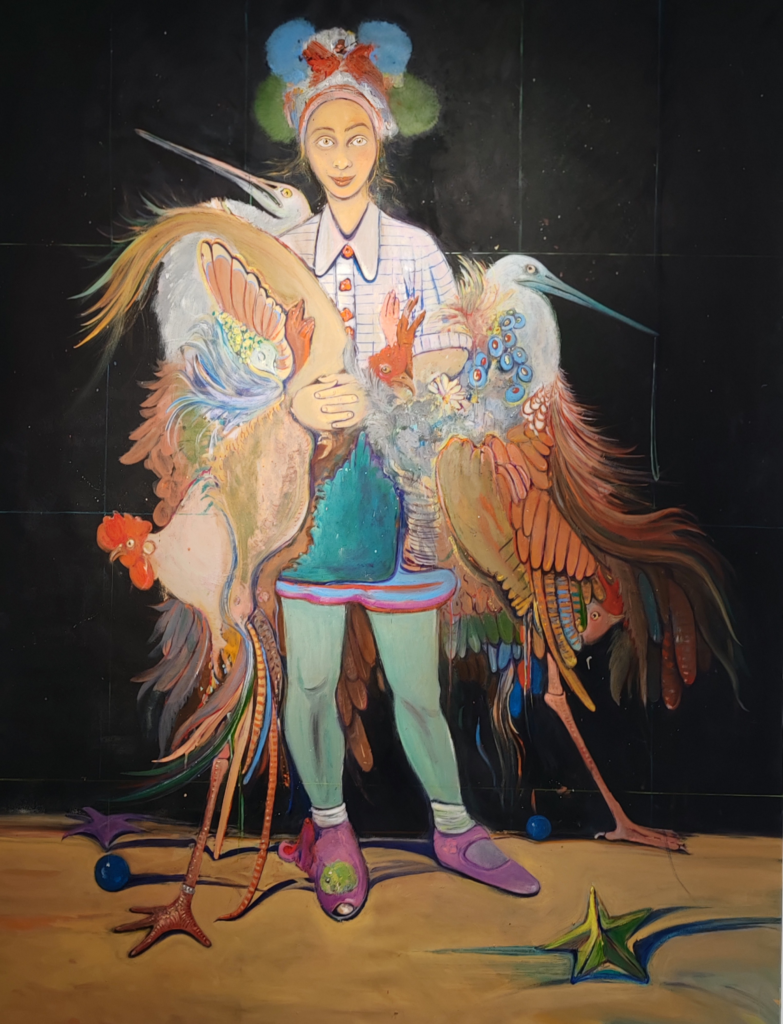
Birds in his paintings are not flying. Instead, they stay close to the human figures, serving as masks, companions, or decorations.
Some, like “Girl with birds,” rest in a hand like Leonardo’s ermine, and others seem fused to the outline of a character, as if absorbed into the costume itself. Their presence suggests a freedom that has been restrained, hunted, petted, and left unrealized.
Sarkissian’s focus on animals places him in direct conversation with Grandville. The French illustrator’s “Scenes of Private and Public Life of Animals,” populated by donkey academics, dueling roosters, and crocodile dandies, offered a satirical mirror to human society and framing the human condition as something trapped between animal instincts and the behavioral and clothing canons of civilized life.
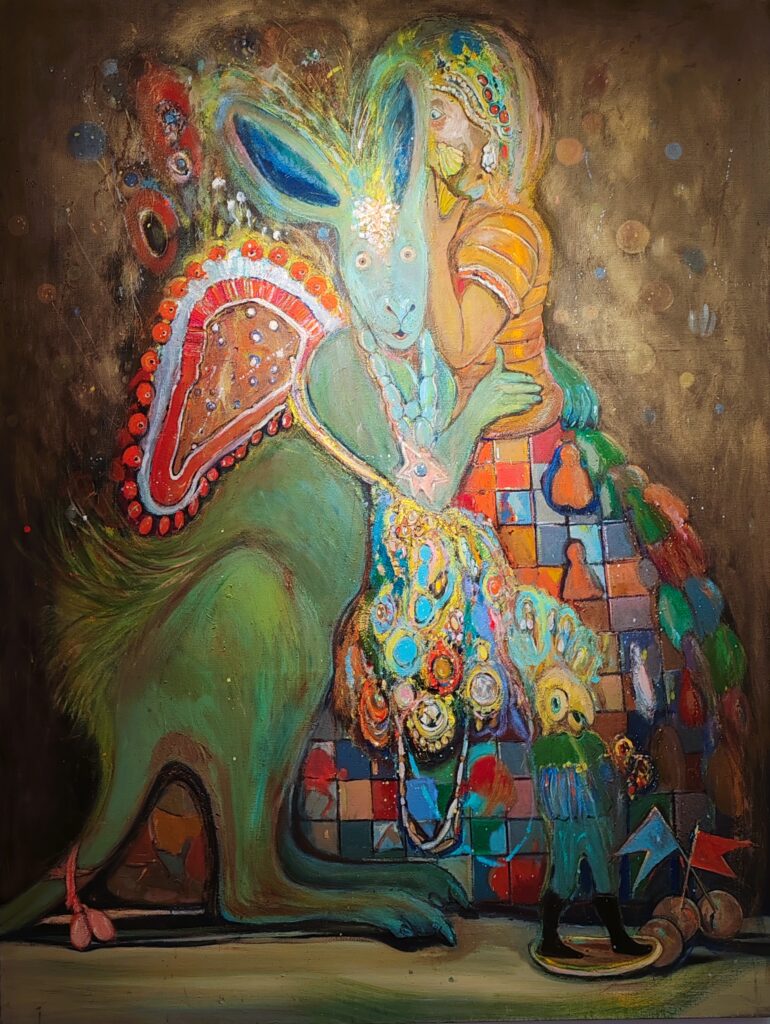
Sarkissian’s anthropomorphs belong to the same genealogy.
His “Honorable kangaroo” and “Fishmonger knight” could march straight out of Grandville’s illustrated parliament of chimeras. But where Grandville hid fatalism beneath satire, Sarkissian hides vulnerability beneath comfort of modern outfits.
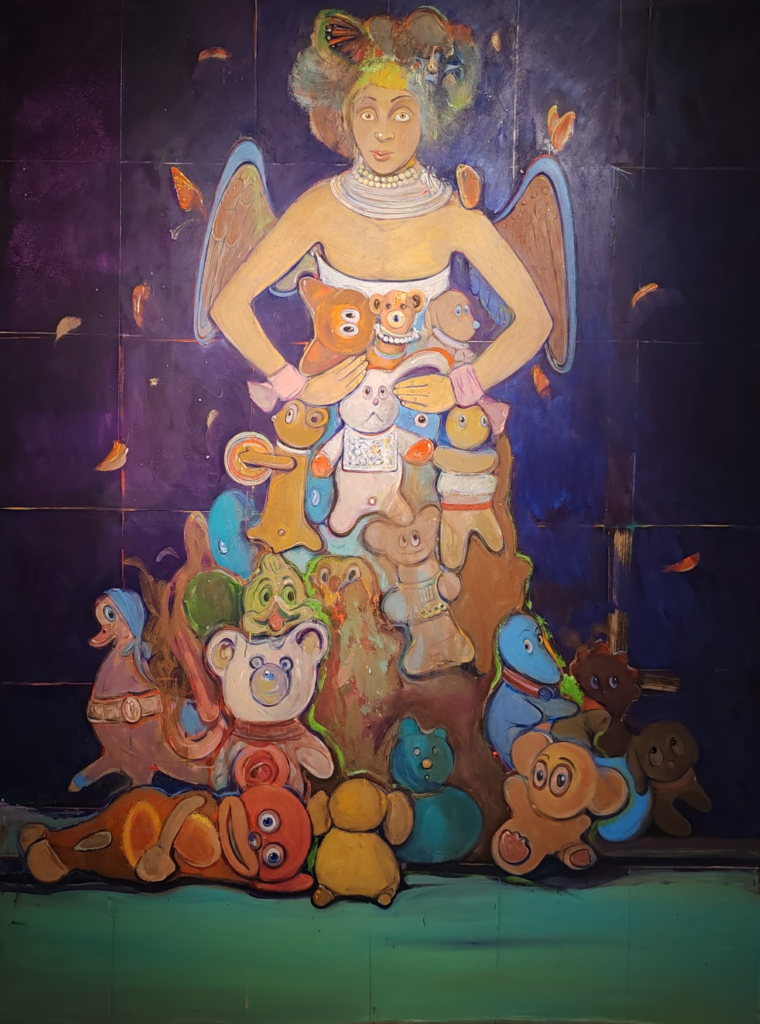
This theme reaches its fullest expression in “Toy story,” painted earlier this year, where a woman poses in a dress made of children’s toys, a garment that can be viewed both as armor and as a modern Peter Pan’s refusal to grow up.
This is where Sarkissian is at his boldest. He offers not allegory but anatomy—an anatomy of the inner life that is made visible through feathers, animals and human faces, a world that echoes Aristotle’s idea of “man as a social animal,” a society of individuals in all its flora and fauna.