

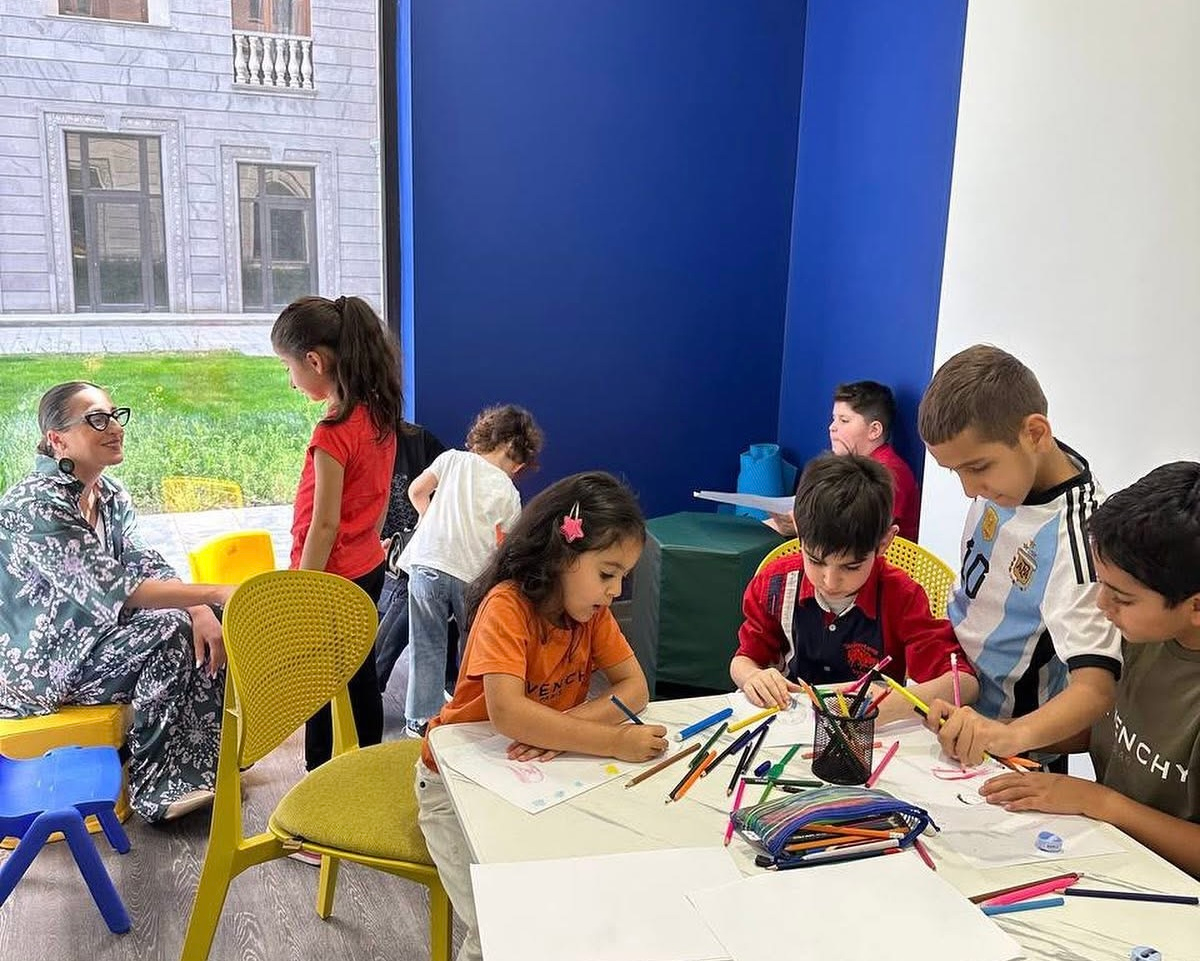
For many Armenian families, raising a child with developmental differences including autism means overcoming cultural stigma, lack of resources and misunderstandings within their communities, along with navigating the challenges of daily life. Though public awareness has grown in recent years, both specialists and parents say Armenia still lacks the systems and societal attitudes necessary to support these children fully.
Ruzan Khachikyan, a behavioral therapist with 15 years of experience, has helped parents understand their children’s behavior and development through therapy and education.
Cultural attitudes still discourage some families from seeking help, according to the expert.
“Parents often fear criticism and believe that asking for help means their child has a problem,” Khachikyan said. “That fear delays action and, in turn, delays progress.”
Hripsime Pantosyan, also a behavioral therapist, said she has seen a slow but steady shift in awareness among young parents today, who are more proactive in recognizing early signs of developmental challenges than previous generations were.
“Young parents are now quicker to notice when something feels off,” Pantosyan said. “They recognize when their child doesn’t respond to their name, doesn’t follow instructions. This is a big change from even a few years ago.”
Parents often want quick solutions, but it takes time to see change, the experts said.
“When a child doesn’t want to stay in kindergarten, we may start with just three minutes. Then five,” said Pantosyan. “Progress requires patience, and teaching that patience is often the hardest part.”
Still, many families first turn to speech therapists, psychologists or pediatricians before deciding on behavioral therapy. Pantosyan uses Applied Behavior Analysis, known as ABA, explaining she adapts techniques to fit the cultural realities in Armenia.
“Armenian parents often resist using tools like the Picture Exchange Communication System (PECS) because they fear stigma, such as their child being labeled as ‘disabled’ or facing gossip from relatives, neighbors,” Pantosyan said.
“We mix verbal behavior strategies, situational learning and ABA to fit our environment,” she added. “It’s not a textbook, but it works for Armenian families.”
Both therapists say families face immense pressure from their communities, where strangers and relatives often judge or give unsolicited advice, making it harder for parents to seek support.
“A father was like that — he walked and talked late. That was how it was, this was how it was, everything is fine, leave the kid alone,” Pantosyan said. “These are old ways of thinking in society.”
According to Khachikyan, these responses are deeply rooted in longstanding cultural perceptions that continue to shape how families approach developmental challenges.
“These attitudes stem from the current level of awareness, education and cultural stigma,” Khachikyan said.
One mother, who asked not to be named to protect her family’s privacy, said these judgements make an already difficult journey even harder.
“In the beginning, I blamed myself. I thought I had done something wrong as a mother,” she said. “Then I realized the problem isn’t me or my child. It’s how people around us refuse to understand.”
The mother noticed signs of developmental differences in her 3-year-old son’s behavior early on.
“My son avoided playing with others and always played alone. He also preferred to play with older kids,” she said. “Later, a relative visited us, and their child had the same symptoms. That confirmed my suspicions.”
Before the diagnosis, she said she tried to accommodate her child’s moods to avoid upsetting him. Over time, she realized that accommodating his moods only worsened his isolation.
“After understanding what was really going on, I started changing those habits little by little,” she said. “Now I involve myself in his games. That connection helps him stay calm.”
She immediately sought help after realizing her son’s behavior wasn’t just a phase.
The parent eventually found a specialist who helped her understand her son’s needs. Small steps — building routines, reducing overwhelming stimuli and slowly increasing time in social environments — have made a difference, she said. Through behavioral therapy, her son now attends kindergarten, responds to his name, follows instructions and no longer wanders off with strangers, the mother added.
Reflecting on her journey, she encourages other parents in similar situations to remain strong.
“Take it day by day. Don’t lose hope. People around us aren’t really aware of these issues. Yes, it’s a problem, but not as extreme as people make it out to be. You just have to stay strong — for your child,” a mother said.
However, another parent, Qnarik Hakobyan, a mother of four, truly believed in such sayings that the problem would resolve on its own with time and decided to simply wait, convinced that time alone would solve everything.
“Everyone kept telling me not to worry, this kind of thing happens. Also, my older kids started to talk quite late and my brother started to talk at 3 years old, so I thought that it was something genetic. So I waited,” Hakobyan said.
She realized later that waiting had only delayed the necessary help. Back then she enrolled her child in a special kindergarten where specialists finally provided professional support. Looking back, she admits that if she had sought help from specialists earlier, they could have resolved the situation much sooner, and her child’s progress might have come faster.
However, despite receiving professional support earlier at kindergarten, her son still does not attend school at age 7. He remains highly dependent on his mother’s presence and refuses to go anywhere.
“It is only recently that he has begun to recognize his name and identify close family members. Still, he prefers to be alone most of the time and rarely interacts with others. Occasionally, he plays briefly with his older brother, but these moments are short.”
Despite numerous challenges, specialists and parents remain hopeful as Armenia gradually improves understanding and support for children with developmental challenges. Khachikyan and Pantosyan stressed the need for community education and government action to build inclusive environments. Local nonprofit organizations, such as Orran Benevolent NGO and the Children of Armenia Fund, as well as centers such as ARMAV and Arevamanuk, are working to close these gaps by offering therapy, education and peer support to families.
“There is progress, but we need more resources, more trained professionals, and most importantly, a shift in societal attitudes,” Khachikyan said. “When families feel supported rather than judged, children have a much better chance to thrive.”