

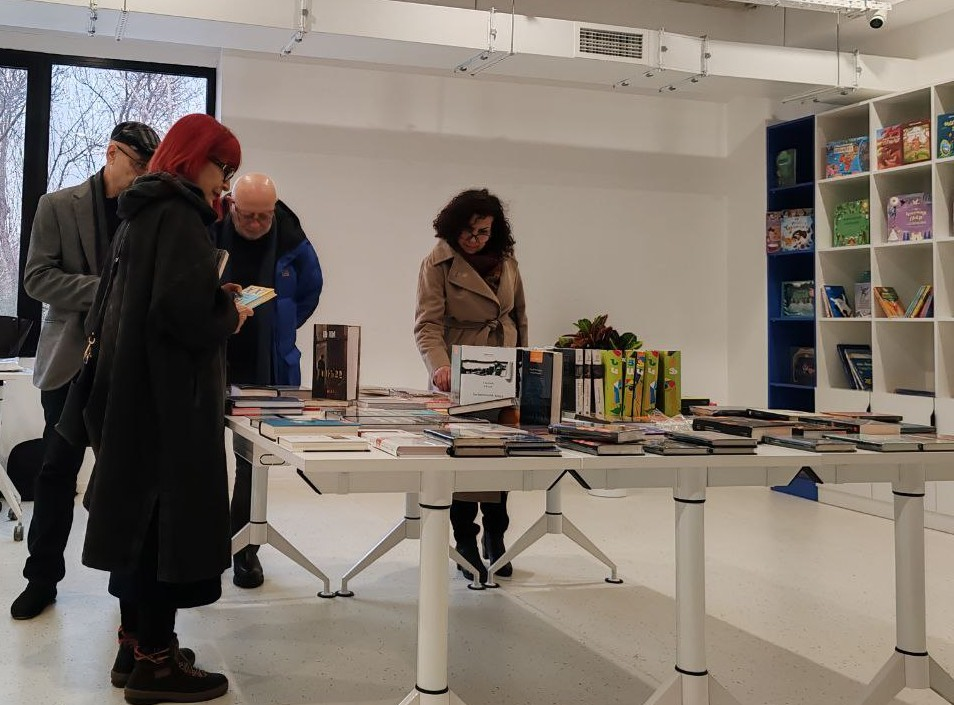
On the wooded grounds of the Wood Center on Yerevan’s outskirts, the arrival of spring is easy to sense as people return to outdoor spaces after a long winter. Trees surround the modern buildings of the center, voices spill onto the terraces, coffee cups warm cold hands as small groups of people gather, scatter and gather again, with their paths and conversations eventually leading to Bookuboran LitFest.
On Feb. 21–22, the two-day cultural gathering brought dozens of publishers, writers and literary communities under one roof just days after Armenia marked Book giving day and the birthday of the poet of all Armenians, Hovhannes Tumanyan.
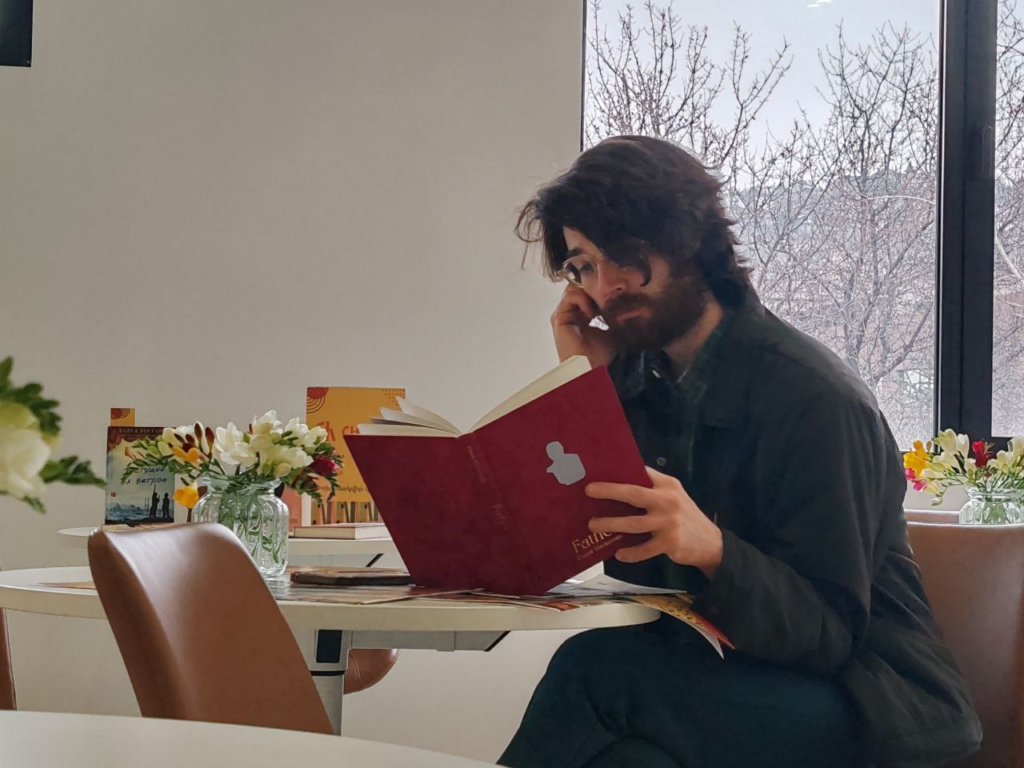
“This is the second year we are organizing Bookuboran, but honestly, with the level of activity we got, it feels like the third,” said Vahan Stepanyan, founder of Rambalkoshe, the cultural initiative behind the festival.
Last year, he said, organizers were still persuading people to make the trip “all the way into the forest,” where the Wood Center hosts the event. “This year, even before we officially announced it, people were calling us asking, ‘You’re doing it again, right?’”
Stepanyan said the goal is to make such gatherings a normal part of Armenia’s cultural calendar. The two-day festival was free of charge for both presenters and visitors.
“We’ve brought 10 years of Rambalkoshe experience and reproduced it here,” he said. “You involve people, and then those people begin involving others, without relying on ads.”
Despite the word “book” in its name, Bookuboran — which means “blizzard” in Armenian — mixes formats. Stepanyan said the title emerged from a collective brainstorming process. Organizers initially considered “book fest” before settling on “litfest,” reflecting its broader cultural scope.
“Someone may come here for a lecture, someone for theater, someone for a concert,” Stepanyan said. “But for all of them, the connection to the book becomes organic.”
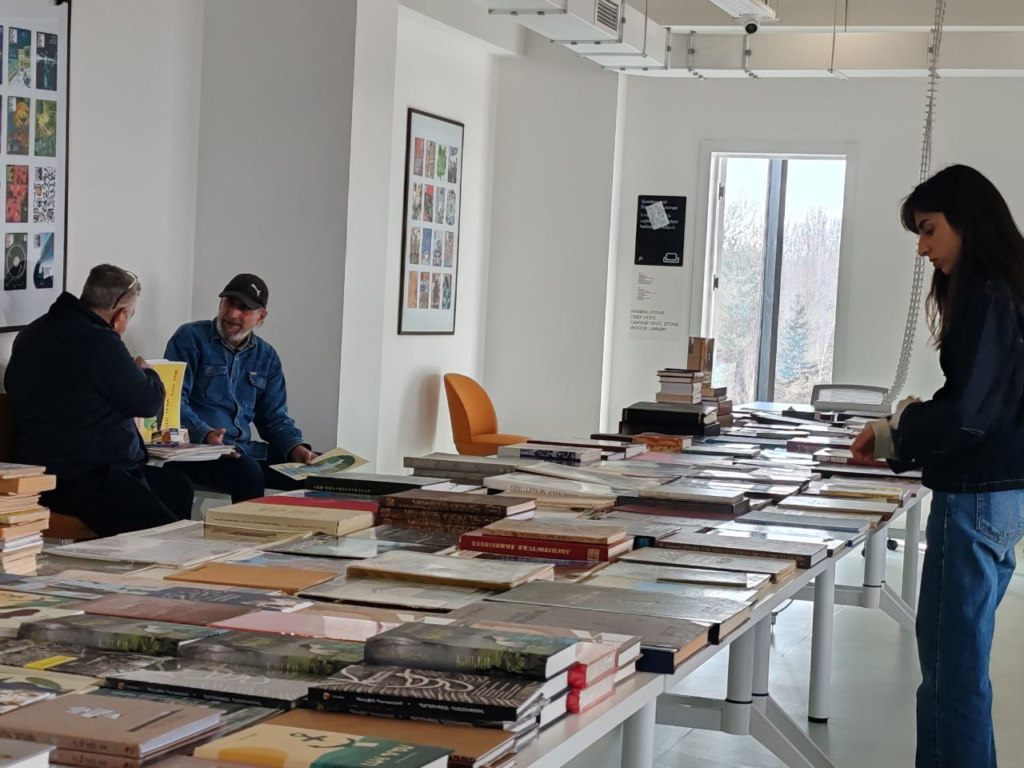
This year introduced the “Book Palace,” a space for sellers of old and antiquarian books who typically trade at street markets such as Vernissage in Yerevan. The aim, Stepanyan said, is to create a balance between new and old publishing.
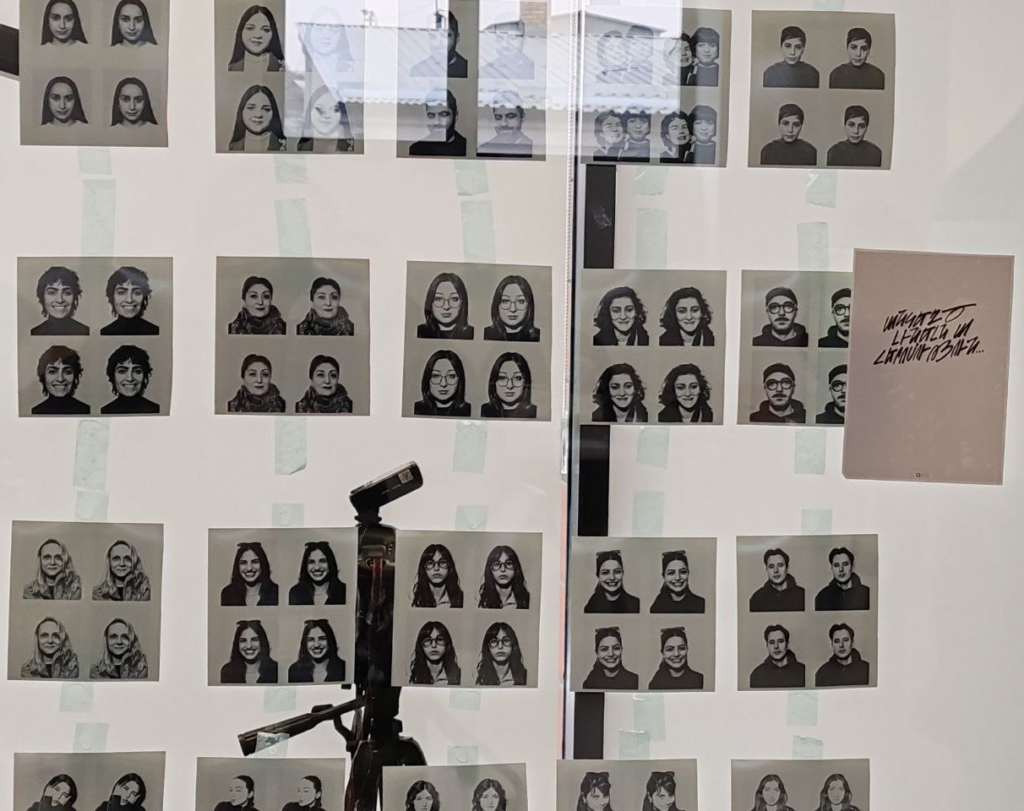
A theater program replaced part of last year’s concert lineup. Interactive experiences drew some of the longest lines. In one room, visitors were photographed and instantly added to a live exhibition.
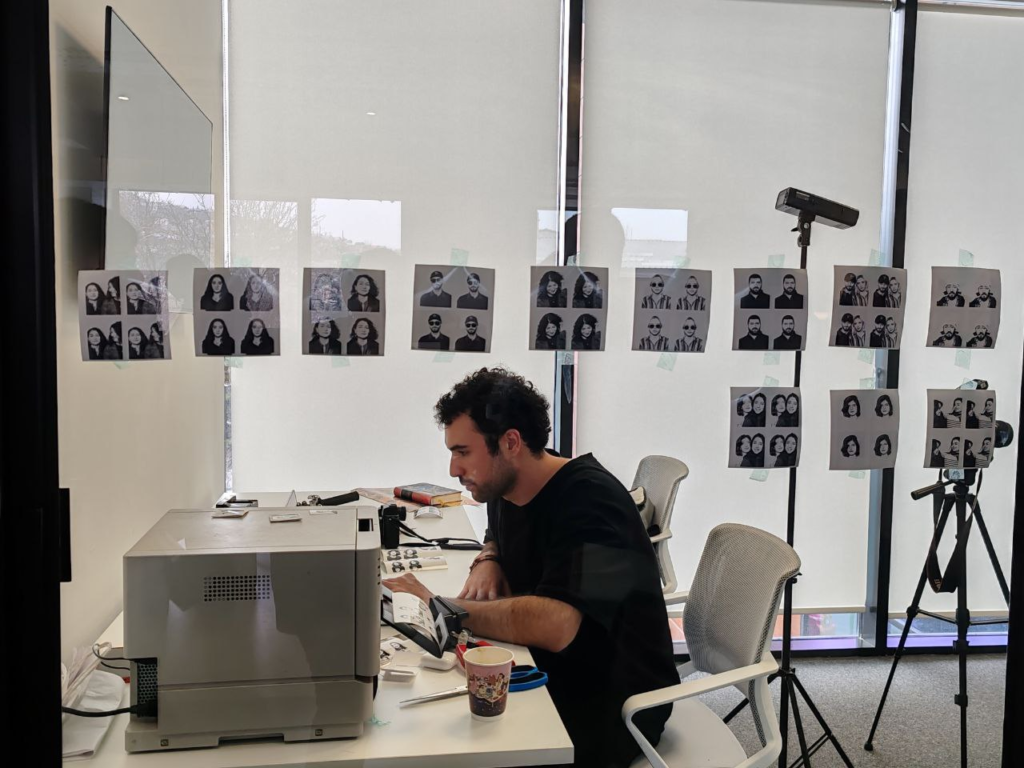
In another, in partnership with TUMO, guests stamped their own books with a Bookuboran seal.
“Interactive elements are always the most interesting part of the festival,” Stepanyan said. “Next year we will increase them even more.”
As the festival’s format expanded, so did its emotional range. One of the most crowded events on the second day was the presentation of the Armenian translation of “Where,” a memoir by Kolya Stepanyan. A Moscow-born Armenian who decided to repatriate and join the army, Stepanyan survived 70 days trapped behind enemy lines during the 2020 Artsakh war. His 256-page debut, originally written in Russian, shocked Armenian readers with its unpolished account of survival, stripped of romanticism and heavy with detail.
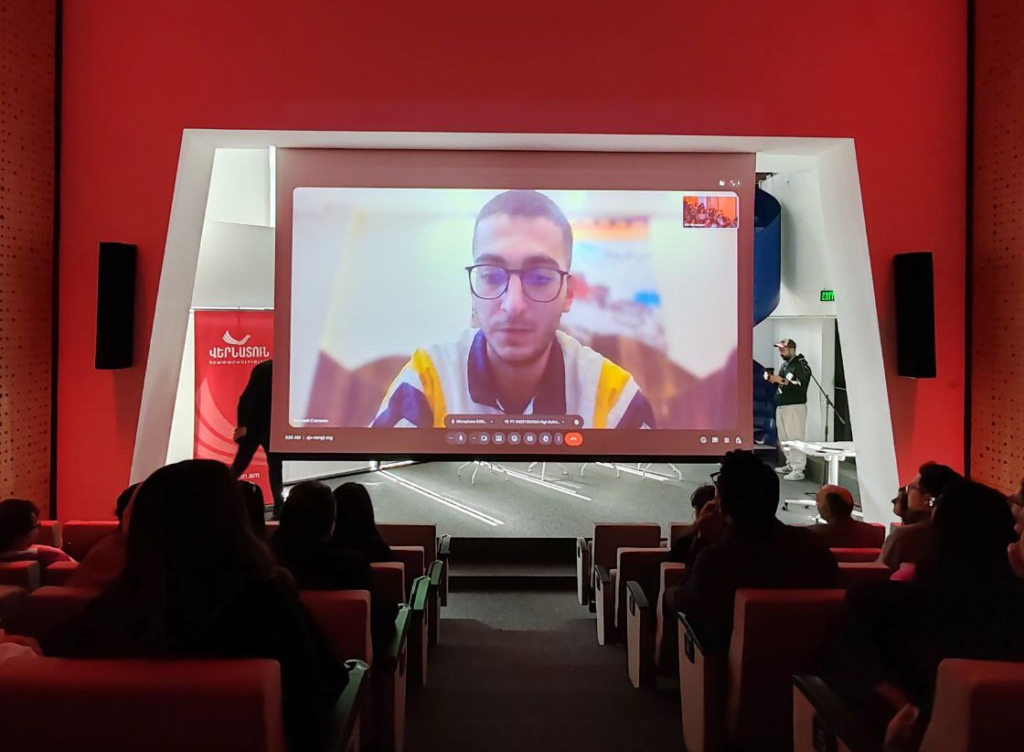
“I began writing the book two years after the war,” Stepanyan said. “I would sit, recall an episode and write it down. I did not rewrite a single chapter.”
Most chapters were written by hand; the final ones were drafted as notes on his phone. The Armenian edition includes additions that convey dialect nuances, including those of Martakert, a region in the north of Artsakh.
“We’ve tried to keep the liveliness of the language,” said translator Norayr Manvelyan, who opened the event by performing one of the book’s songs on guitar.
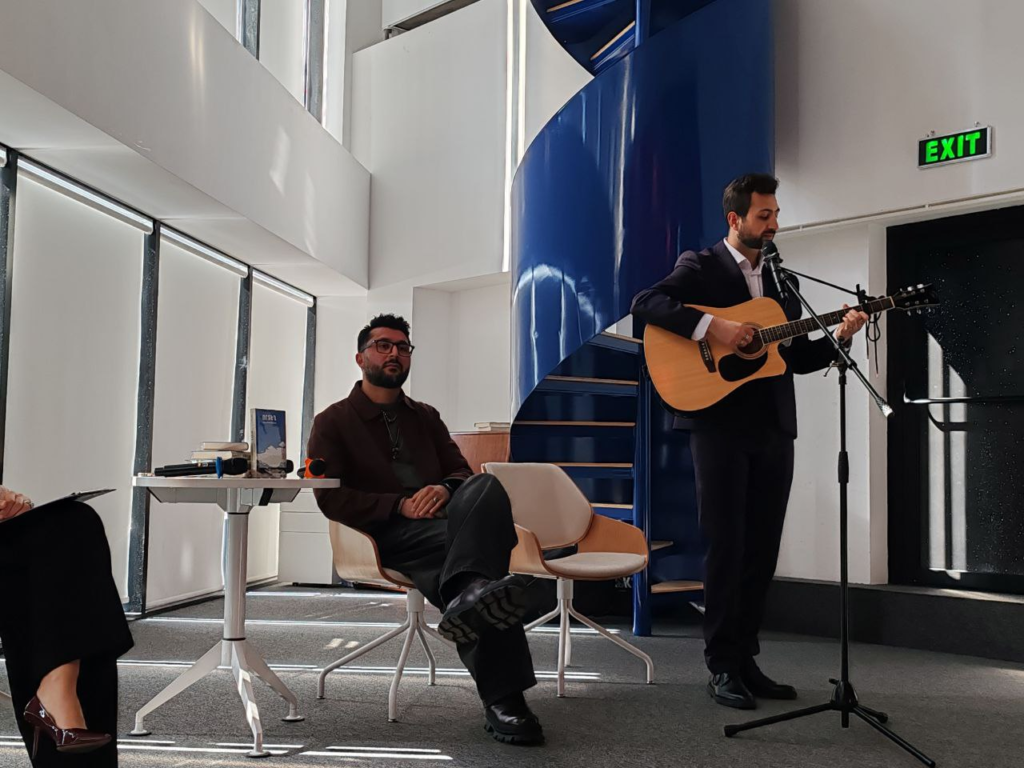
During the presentation, the audience applauded three of Stepanyan’s fellow servicemen — Arman, Arthur and David — who appear in the book as Manch, Ato and David, respectively. One of them praised the author’s “frightening level of honesty,” calling it “deeply lacking in our reality.”
Armenian prose writer Nelly Shahnazaryan, who was among the attendees, said the work left her in tears.
“We have heard much about that war, about ourselves,” she said. “But to feel it this closely — you almost become a participant. I want him to write more books.”
If Kolya Stepanyan’s memoir brought the war back in raw detail, writer Aram Avetis approached it from another angle. His latest book, “Amputated Clouds,” also reflects on the 44-day Artsakh war, but places the writer himself at the center of the narrative.
Reflecting on the state of Armenian literature and its readership, Avetis said that while the Armenian reader can be “a rather uninteresting” figure, the festival reveals pockets of curiosity.
“In Armenian literature we lack many themes that have nothing to do with the village,” Avetis said, suggesting readers to search for something outside the familiar canon.
He stressed the importance of reading in Armenian, particularly contemporary translations. Among his recommendations was “Strange Forces” by Argentine writer Leopoldo Lugones, translated from Spanish by Kara Chobanyan.
With Ferdinand Céline appearing as a character in his own books, Avetis spoke with the intensity of a reader as much as a writer. He urged the audience not to bypass authors who disrupt their comfort, naming Jerzy Kosiński, Roberto Bolaño, Antonin Artaud, Benjamin Péret and the generation of French surrealists as essential for reading.
Upstairs, beyond the book presentations, visitors were drawn to a pavilion built around the idea of “unboxing.”
Meri Pepanyan, research coordinator at the Library for Architecture, said the institution used the festival to highlight its Live Archive platform, which collects, digitizes and exhibits materials related to Armenian architecture and urban studies.
“Last year we brought fundamental architectural books and translated excerpts together with visitors to show how little Armenian-language literature we have in this field,” Pepanyan said. “This year, we are presenting the archive as a form of responsibility.”
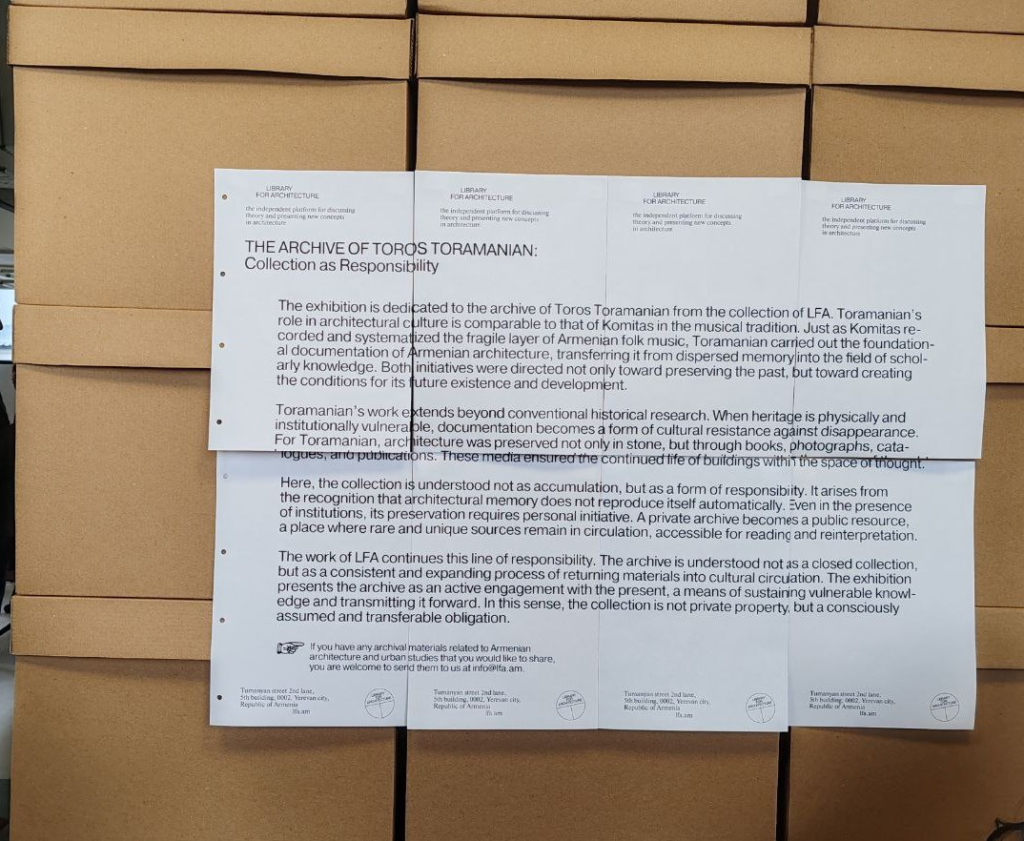
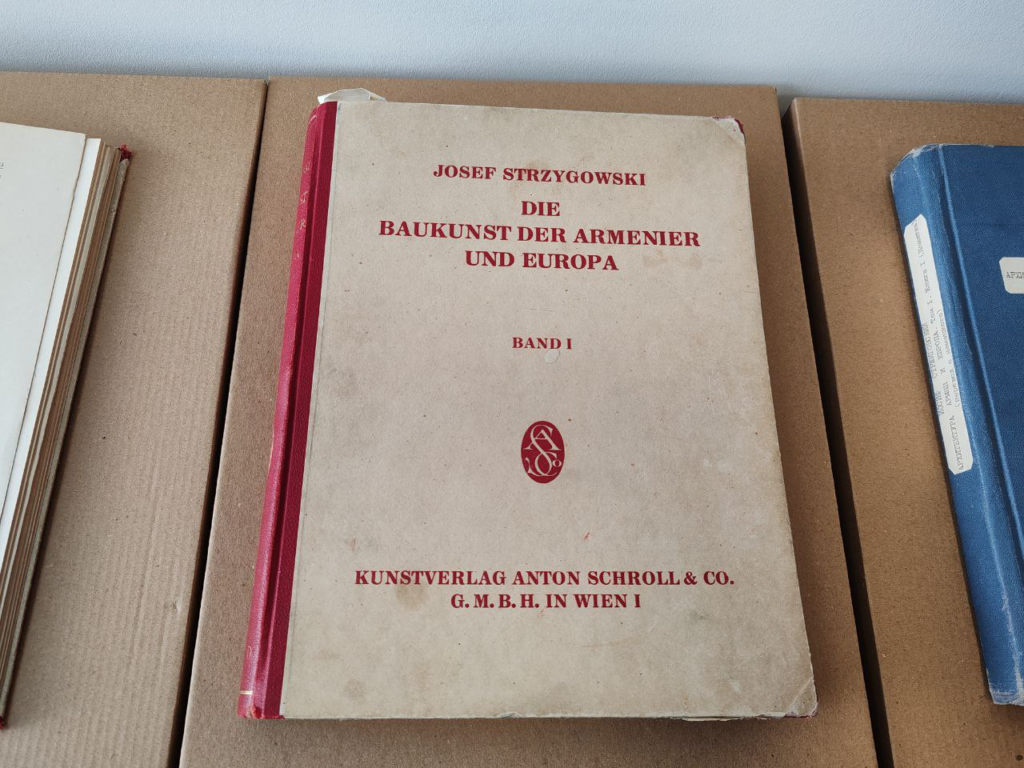
Among the central materials on display was the legacy of Toros Toramanian, including a rare 1918 Vienna publication by Josef Strzygowski based on more than 1,000 drawings by the father of Armenian architectural historiography.
For Vahan Stepanyan, the deeper challenge is cultural.
“Real change will happen not when you bring readers to different reading-related spaces, but when you bring non-readers,” he said. “With this mix of Bookuboran’s formats, I think that shift is just beginning.”
[Editor’s Note: The photographs were taken by the author.]