


– Yerevan Speaking, it’s 7am, Gymnastics time, one-two-three and four….
Mornings in Soviet Armenia began the same way for everyone. It’s the built-in radio, the same one in every Soviet apartment, crackling to life whether you asked for it or not. It dictated when you woke up and why. Life was collective, ritualized: wake up, stretch, listen. Families across Yerevan stood in their kitchens, sipping black tea with sugar cubes while state-approved songs drifted from boxy radios. Aerobics music pulsed through apartment walls, as if the entire republic were one giant gym class, moving in lockstep to the same rhythm.
But afternoons and evenings belonged to another Armenia. Once the official soundtrack faded, underground jazz began to stir – risky, improvised, intoxicating. In the 1970s, the city even boasted its first female DJ, Lyuda Bilbilidi, who became a legend behind the turntables. Records, however, were expensive and nearly impossible to find. Young people often deprived themselves of small pleasures just to save up for music. As Lyuda once said, “Pleasures weren’t essential, because music had already changed everything in our lives.”
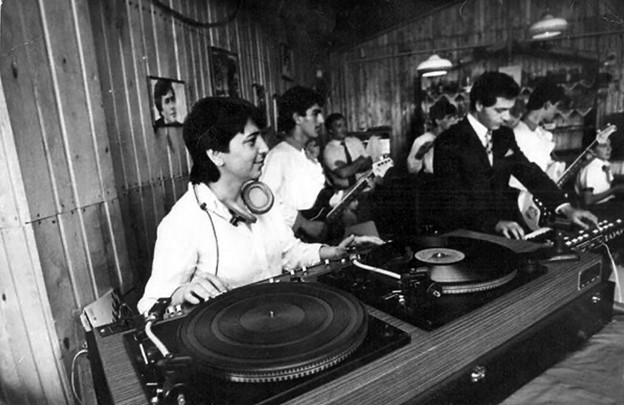
The government, of course, placed obstacles in their way. Discotheques were shut down periodically, always with some official excuse. One night you could be listening to the Beatles or Louis Armstrong in a darkened room, and the next morning you’d be summoned for an “educational conversation” with the security services. As Lyuda was telling once, officials closed a discotheque claiming it was “too dark” inside – and that people were hugging each other “too much”.
But time changes the rhythm. Once being a member of a risky disco transforms into something altogether different: losing yourself in rave parties that stretch from dusk till dawn, where every acceptable – and unacceptable – thing on Earth seems to find its place.
At the heart of this transformation stands Hayfilm. Once the Soviet Union’s largest film production center, the studios that once staged heroic epics and state-approved dramas have been reborn as a different kind of stage: a sprawling pavilion for electronic music and light. On weekends, the cavernous halls of Hayfilm turn into an alternate Yerevan.
Thousands of young people flood in, dressed in neon, sequins. The air is thick with cigarette smoke and sweat, punctuated by the flicker of strobes that erase time. Here, the rules are different. Nobody tells you when to wake up or what songs to hear. Instead, night bleeds into day without permission, and young Armenians carve out their own rituals of freedom – dancing, experimenting, testing limits.
But the new story of Yerevan’s music isn’t only written in raves. It also finds its rhythm in quieter places — open cafés, or even vinyl players in bedrooms. Here, having a turntable or a cassette collection is more than music taste: it is a mark of richness, of heritage. Families, businesses, even individuals are considered fortunate if they can display stacks of vinyl or the clunky beauty of old tapes.
And it is never old-fashioned. On the contrary, we desire it – to find that one unique recording of a forgotten singer, to brush the dust off our parents’ collections. We treasure these not just for their sound, but for their history.
Every cassette and vinyl had a story. Some were gifts from loved ones, their handwritten notes on the covers preserved like family relics. Even today, those objects are handled with care – not just plastic, not just grooves, but pieces of life. They remind us that music has always been. Each crackle of sound carries a history, and that history is what makes us respect and protect it. We save, we archive, we display, because in every object there is proof of who we were and who we are becoming.
Now, walking through Yerevan, you can still feel this reverence. Cafés dedicate their walls to old singers, plastering portraits of Elvina Makaryan or the Beatles beside Armenian icons. Vinyls line shelves, new pressings stand alongside vintage gems.
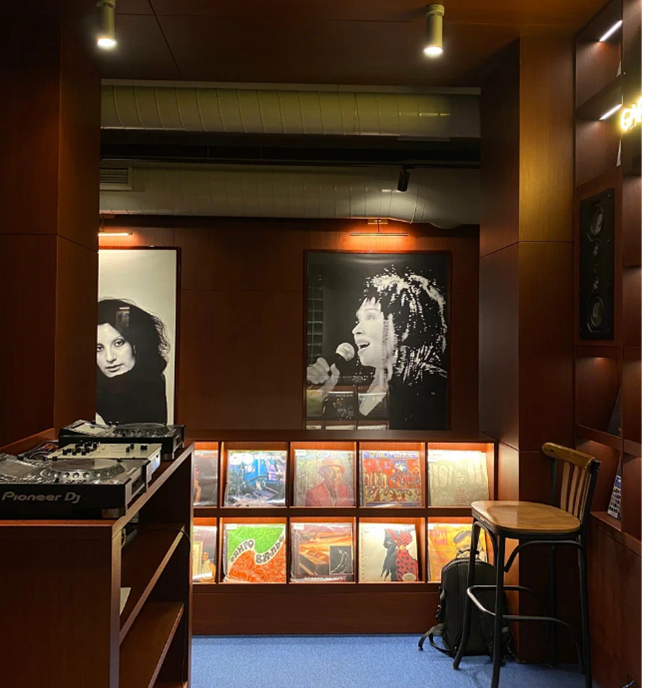

Yerevan’s youth may scroll through Spotify in their headphones, but in public, they gather around vinyl, as if reminding themselves that music has weight, presence, ritual.
Each format didn’t just change how people listened. It changed who they were. Cassette kids talk about patience, about ritual. CD teens talk about ownership, the pride of saving money to buy a disc. The MP3 generation remembers abundance — the thrill of having thousands of songs in your pocket but still paying homage to older generations.
And yet, for all this curation, all this nostalgia and technology, the real soundtrack of Yerevan is still out in the streets. It’s in the one place you don’t get to choose your music: the backseat of a Yandex taxi.
Order a ride at night, and the city sings back to you. One driver cranks Russian pop hits from the ’90s, the kind you’d hear at a cousin’s wedding. Another prefers rabiz ballads, throbbing with heartbreak and street poetry. A third might surprise you with techno remixes, the bass rattling the seatbelt buckle. Once, I slid into a taxi expecting the usual mix — only to be greeted by Komitas sung in choral harmony. The driver tapped the wheel like a conductor, proud to be the keeper of something timeless.
No Spotify playlist could predict this. No vinyl collection could contain it. The Yandex taxi is pure chance, the musical lottery of Yerevan life. The taxi is a reminder that Yerevan isn’t one sound, one format, or one generation. It’s all of them, colliding, contradicting, harmonizing in ways you don’t expect. Together, they tell the story of a city that refuses to stand still, a city that keeps composing itself one track at a time.
And if you want to know what Yerevan really sounds like, don’t just put on your headphones. Step into the street. Order a taxi. Walk into a café. Open the window on a summer morning. The music will find you.
Views expressed in opinion pieces represent those of the author and do not necessarily reflect or represent the views of AUA or the MAMJ program.