

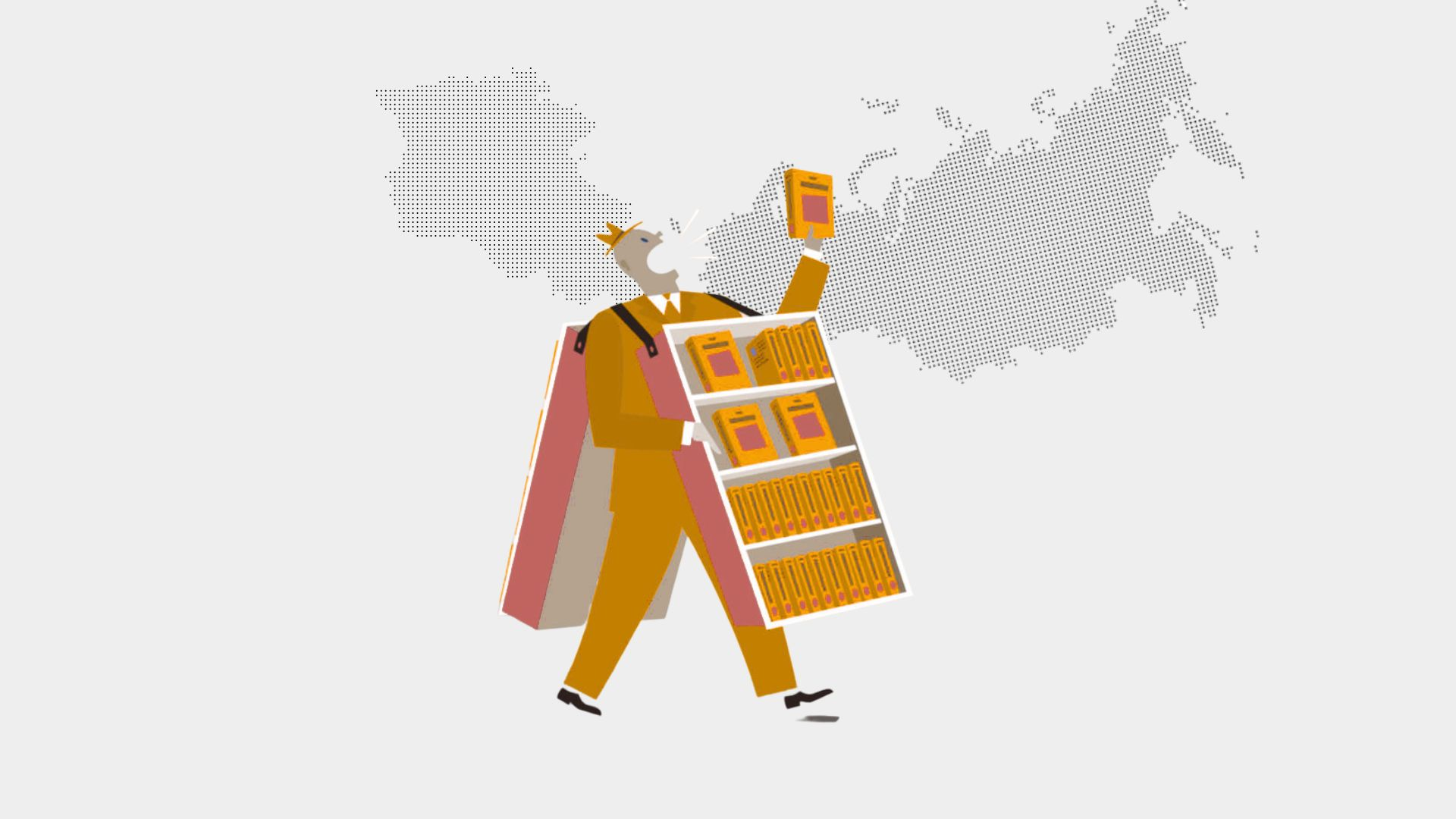
Though the Soviet Union has long collapsed, Russian remains the unseen editor in many Armenian publishing houses. Even major publishers still measure Armenian translations not against the original text but against the Russian version—an act that reveals something deeper than a mere post-imperial habit.
During the Soviet period Russian functioned as far more than a lingua franca; it was the channel through which the world was filtered, classified, and interpreted for the republics on the periphery.
Without direct access to the originals, Armenian translators turned to the Russian version as the “safe alternative”—the version that carried no political risk, no ideological uncertainty, and, especially, no need for independent judgment. For decades, this practice conditioned Armenia’s literary and translation field to treat the Russian interpretation as the natural point of reference. Yet what drives this tendency in the Armenian publishing industry today is not simply the legacy of Soviet Russia’s imperial policies.
During the early post-Soviet years, such dependence could still be defended on pragmatic grounds. The country’s most experienced translators had been educated within Soviet institutions and were, respectively, fluent primarily in Russian. The comparison practice with Russian translations was understandable.
Yet this can no longer serve as a justification. Armenia today has translators fluent in multiple European and non-European languages, fully capable of working with original texts. And still, many look to the Russian version, as if it were a more reliable compass than their own judgment.
Even more than the translators, it is the “experienced” editors who hesitate, reflecting a national inclination to avoid responsibility for their own choices.
This instinct has deep historical roots. For centuries, and especially after the 1915 genocide, Armenians have tended to see the outside world as unstable and hostile, and have looked instinctively for a protector—a role that, beginning in the 18th and 19th centuries, was “assigned” to Russia.
In such a climate, trusting one’s own judgment—whether political, strategic or literary—became full of anxiety. The big brother would know better. The big brother’s version must be safer. The big brother’s translation is more reliable.
Soviet language policies strengthened that pattern. Russian fluency became a marker of education, Russian schools a sign of status, and thinking in Russian became proof of elite standing. The idea that Russian represented a higher intellectual standard took root during those years and remains embedded in the collective consciousness even now.
The result is a deficit of independent “Armenian” thought. Given this context, Russian functions not as a simple measure of quality but as a protective authority that frees decision-makers from the need to choose for themselves.
This dependence is especially striking in light of how central translation has been to Armenian nation-building. With the creation of the alphabet by Mesrop Mashtots in 405, Armenia embarked on a vast translation project that brought to its intellectual Golden Age and helped shape the foundations of Armenian statehood and an independent cultural and national identity that Armenians praise to this day.
And this was not a one-time effort. In the 19th century — around the same time Goethe, the Schlegel brothers and other German Romantics launched their project to translate world literature into German — the Mkhitarist fathers in Venice began their own ambitious undertaking of “translating everything” — historical, linguistic, literary and religious works — using primary sources in Latin, Greek and other languages. And although their work was done in Old Armenian, or grabar, it helped spark the next wave of Armenian intellectual revival, which in turn fueled the independence movement and culminated in the creation of the First Republic of Armenia.
Even in the early Soviet years, that independent spirit was still there, with one of Armenia’s most prominent writers, Yeghishe Charents, giving it voice at the First Congress of Soviet Writers in 1934. Echoing Goethe, he called for mutual translation among all Soviet languages, believing that only through such exchange could peoples come to know one another and become brothers.
And now, when Armenians finally have the freedom, resources and capability to operate independently, Armenian publishing houses cling to a Russian intermediary that is no longer necessary and was never particularly renowned for its fidelity to the original.
Translation is not a secondary activity, certainly not in this country. It is the space in which a culture gains its intellectual confidence and independence.
What Armenia lacks today is not competence but assurance. The shadow of the “big brother” endures, yet stepping out of it demands only the willingness to treat the original text as the primary authority and embrace literary autonomy.
Armenia once translated the world with remarkable courage; it now needs to reclaim that tradition, trust its translators to meet the world directly, and in doing so restore the nation’s belief in its own interpretive capacity.
Views expressed in opinion pieces represent those of the author and do not necessarily reflect or represent the views of AUA or the MAMJ program.