

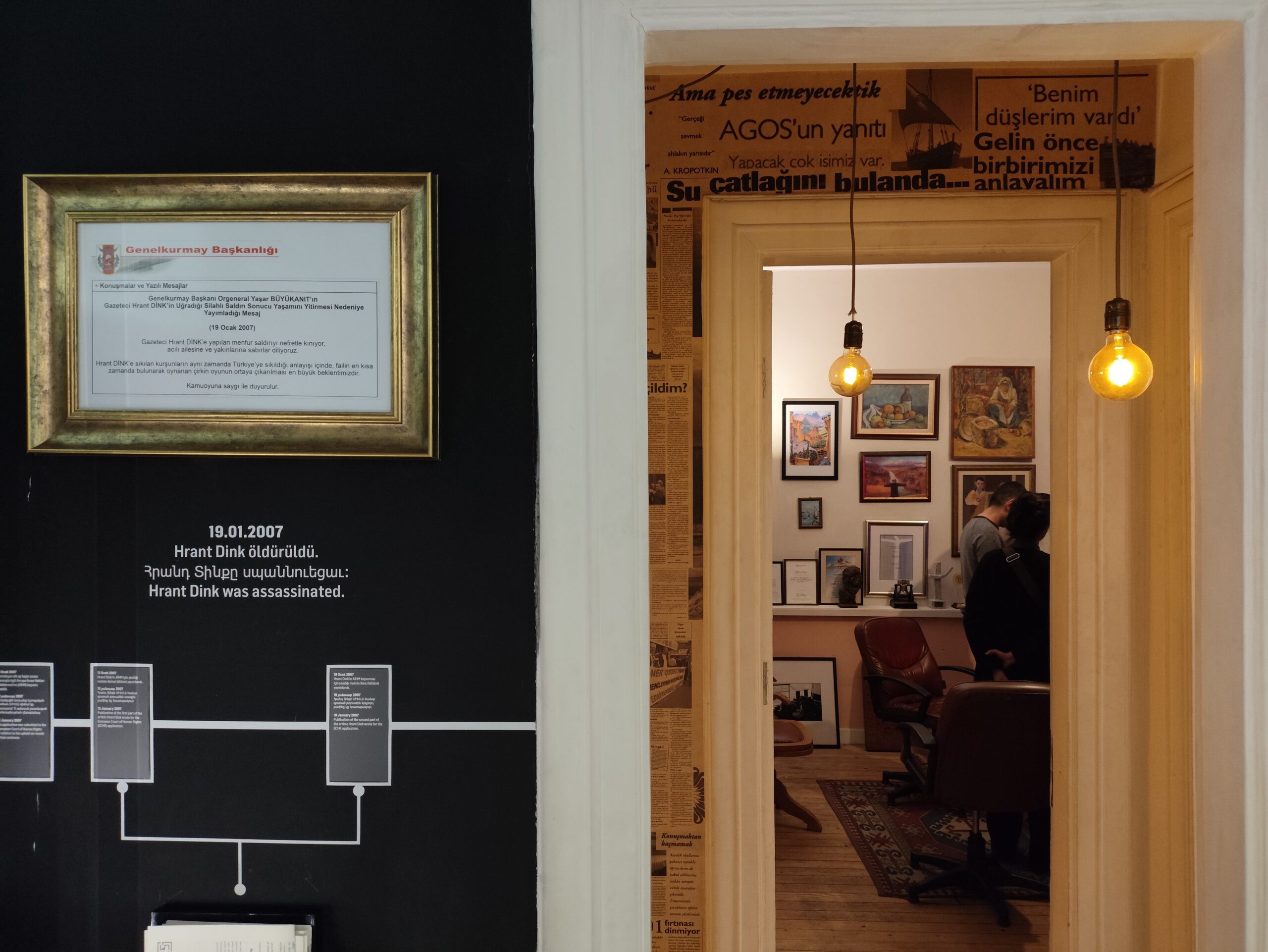
For centuries, Istanbul has been not only the capital of empires but also a city layered with identities. The Armenian community of Constantinople predates the Ottoman conquest and was institutionally formalized in 1461 with the establishment of the Armenian Patriarchate of Constantinople by Sultan Mehmed II. Within the Ottoman millet system, Armenians held a recognized religious and administrative status and played a significant role in commerce, education, publishing, architecture and the intellectual life of the empire.
Despite the 1915 Armenian Genocide, which took the lives of almost 1.5 million Armenians, their legacy in Istanbul remains visible today. Churches, schools, charitable foundations, printing houses, and cemeteries continue to mark the city’s historical landscape.
Today the officially registered Armenian population in Turkey is estimated at around 60,000 to 70,000. However, there are between 2 million and 3 million “hidden Armenians” in the country according to the Hrant Dink Foundation — descendants of survivors who were Islamized or assimilated and whose Armenian identity was concealed over generations. These figures remain unofficial and debated, yet they form an important part of contemporary discussions about memory, identity, and belonging in Turkey.
The following photographs document the religious, memorial, and educational sites of the Armenian Apostolic community, focusing primarily on the districts of Beyoğlu and Kumkapı.
1. Üç Horan Armenian Church (Holy Trinity)
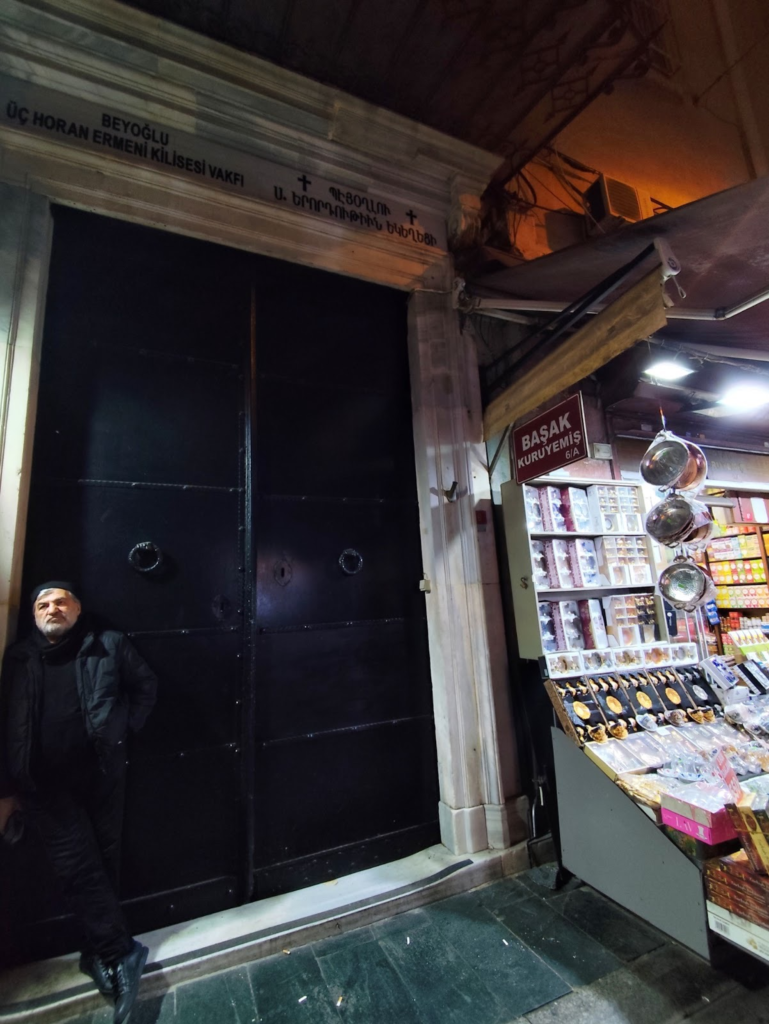
The Üç Horan Armenian Church, also known as Holy Trinity, stands in the Beyoğlu district of Istanbul, Feb. 14, 2026. The active 19th-century church was rebuilt after sustaining damage from earlier fires. Photo by Anna Eganyan
2. The Church of Saint John the Baptist (Surp Hovhannes Voskeberan)
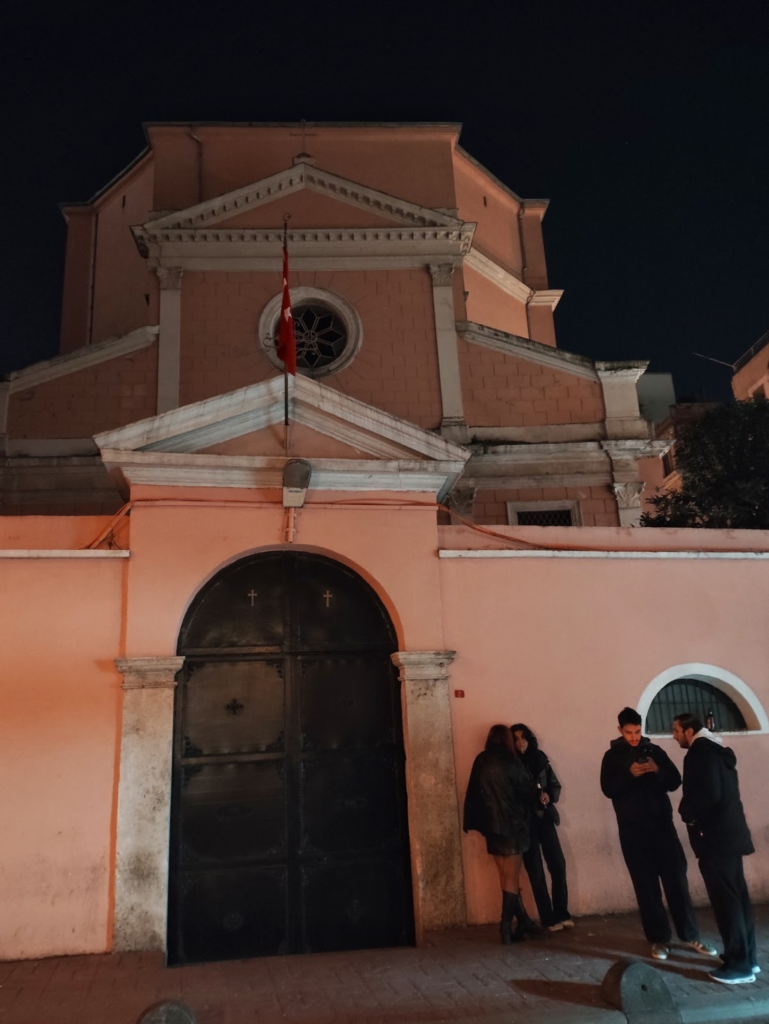
The Saint John the Baptist Church stands in the Beyoğlu district of Istanbul, Feb. 14, 2026. The 19th-century church, originally a wooden structure, was completely rebuilt following a fire.
3. Private Armenian Esayan Elementary Primary High School
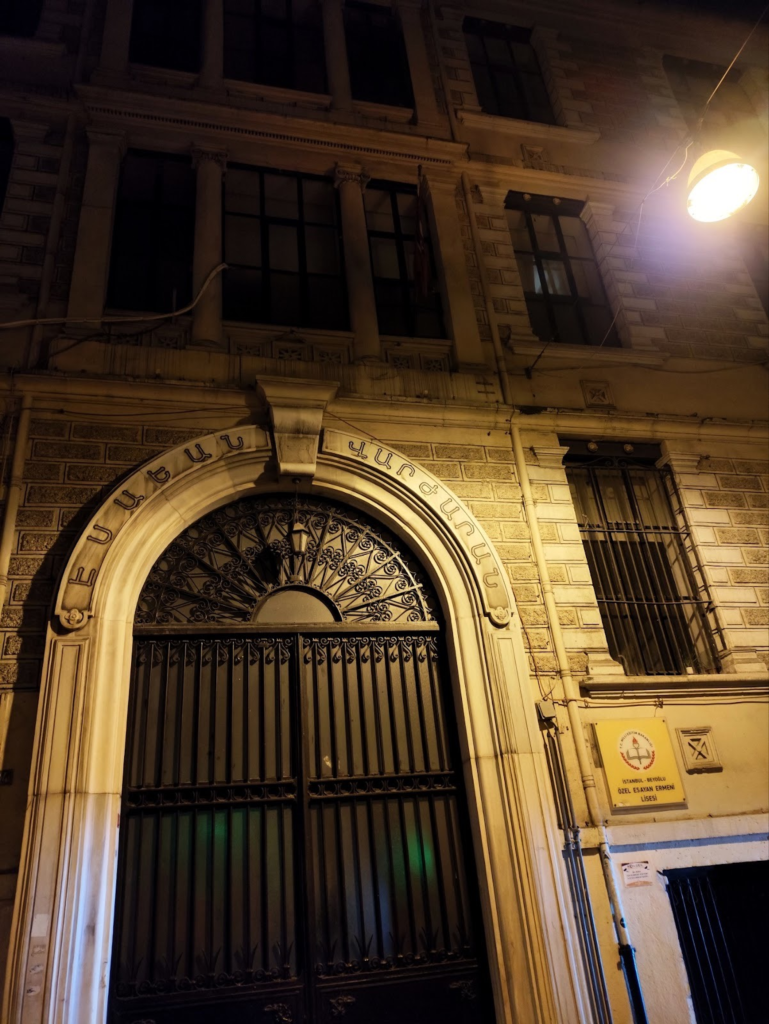
The Esayan Armenian School stands in the Beyoğlu district of Istanbul, Feb. 14, 2026. The 19th-century building houses elementary, primary and high school levels.
4. Bezciyan Armenian School
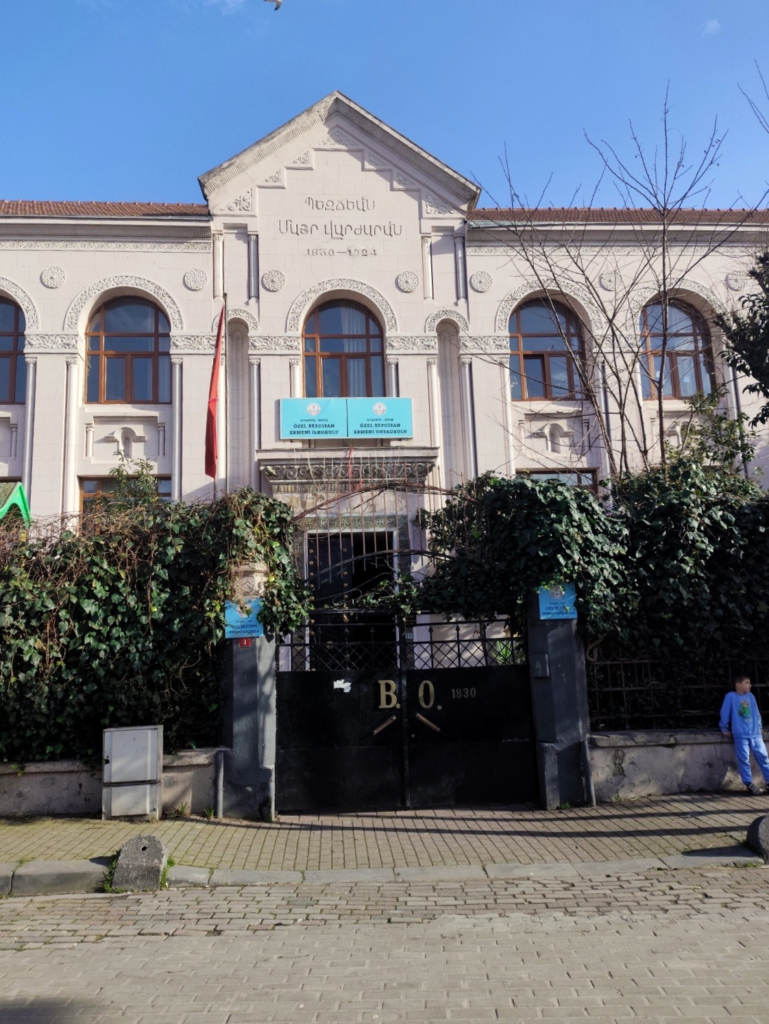
The Bezciyan Armenian School stands in the Kumkapı district of Istanbul, Feb. 16, 2026.
5. Residence of the Armenian Patriarchate
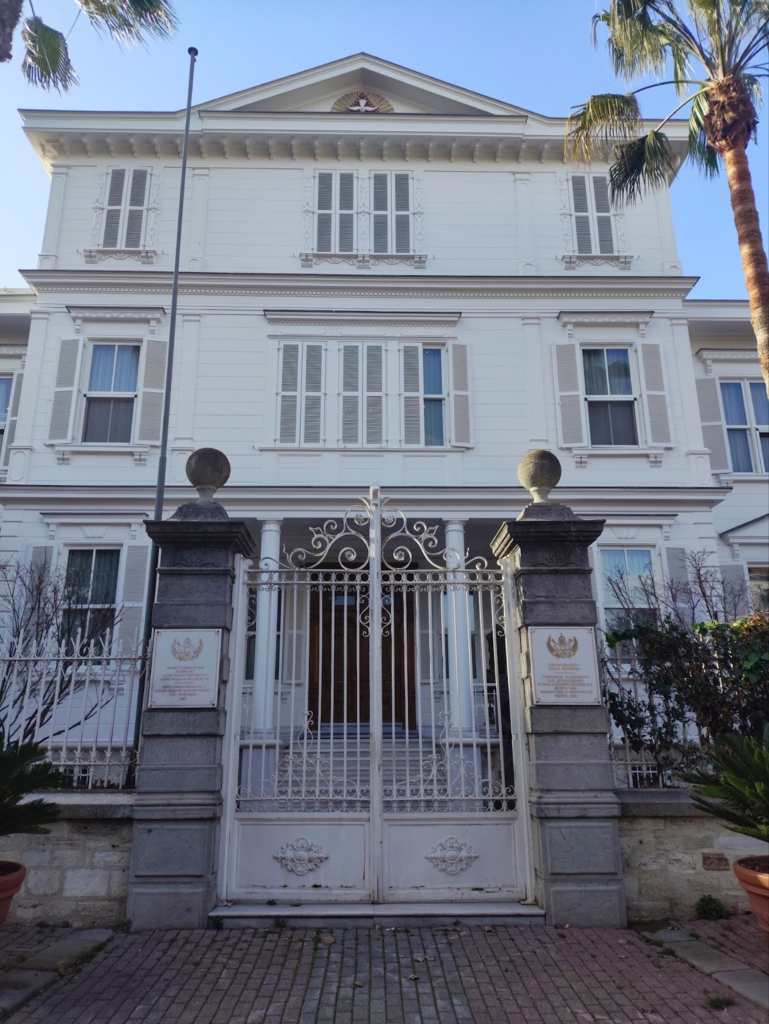
The seat of the Armenian Patriarchate of Constantinople stands in Kumkapi, Istanbul, Feb. 16, 2026. Established in the 15th century, the current structure reflects 19th- and 20th-century reconstructions.
6. Surp Asdvadzadzin Cathedral Complex (Holy Mother of God)
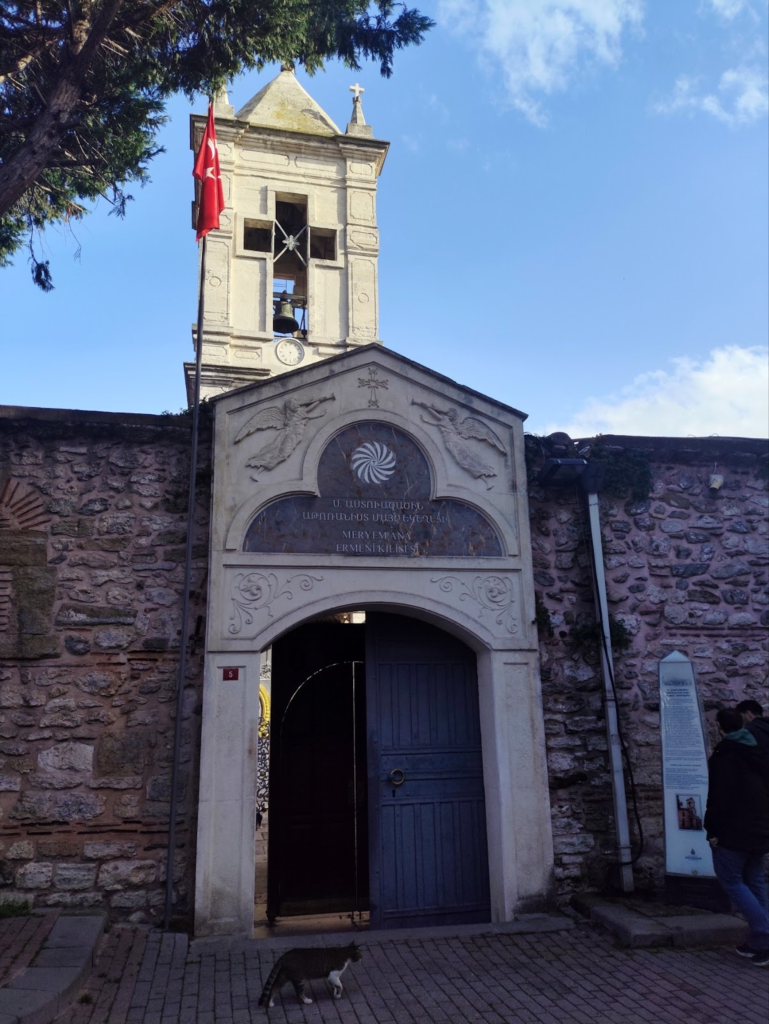
The seat of the Armenian Patriarchate of Constantinople is seen in the Kumkapı district of Istanbul, Feb.16, 2026. Established in the 15th century, the current structure reflects 19th- and 20th-century reconstructions.
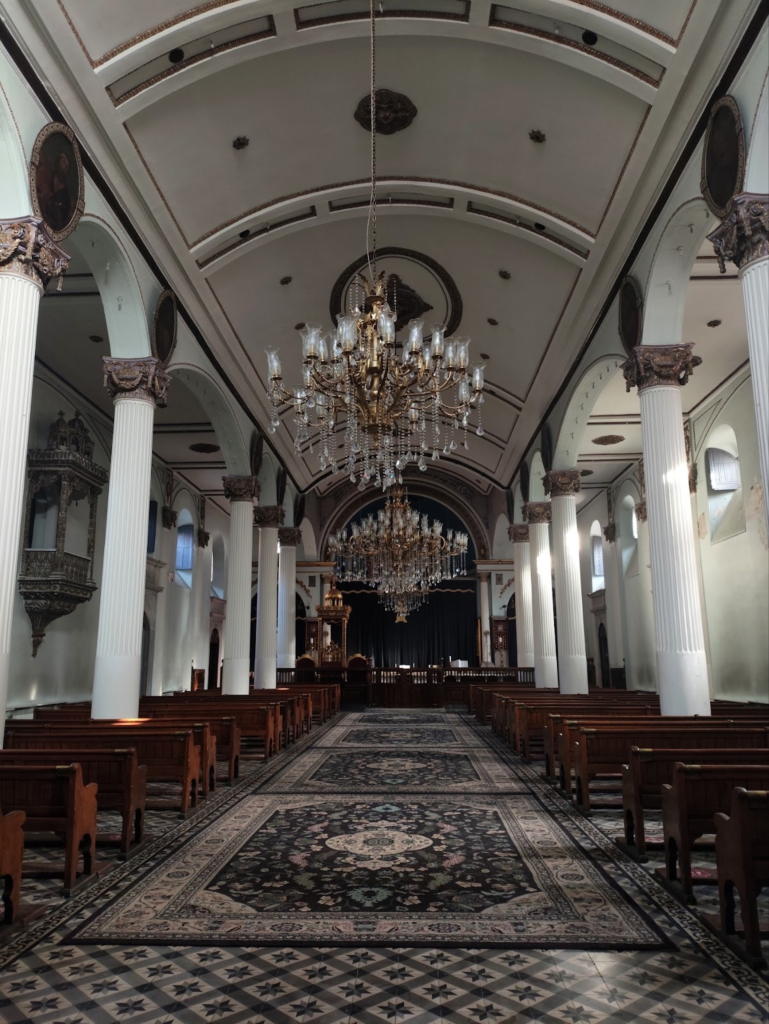
The interior of the Holy Mother of God (Surp Asdvadzadzin) Cathedral Complex, is shown in the Kumkapı district of Istanbul, Feb. 16, 2026.
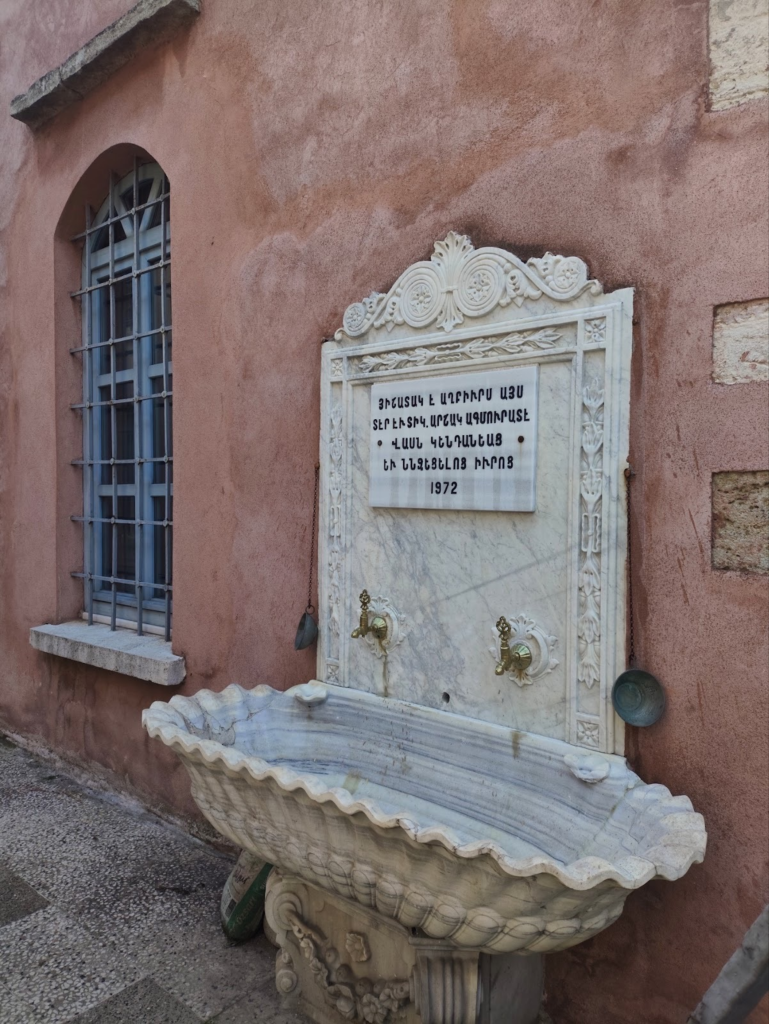
A marble fountain with an Armenian inscription stands in the courtyard of the Holy Mother of God (Surp Asdvadzadzin) Cathedral Complex in Kumkapı, Istanbul, Feb. 16, 2026. The inscription reads: “In remembrance and donation by our benefactor, Priest Ter Sargis (Vart/Varteverdi), for the repose of his departed soul. 1972.”
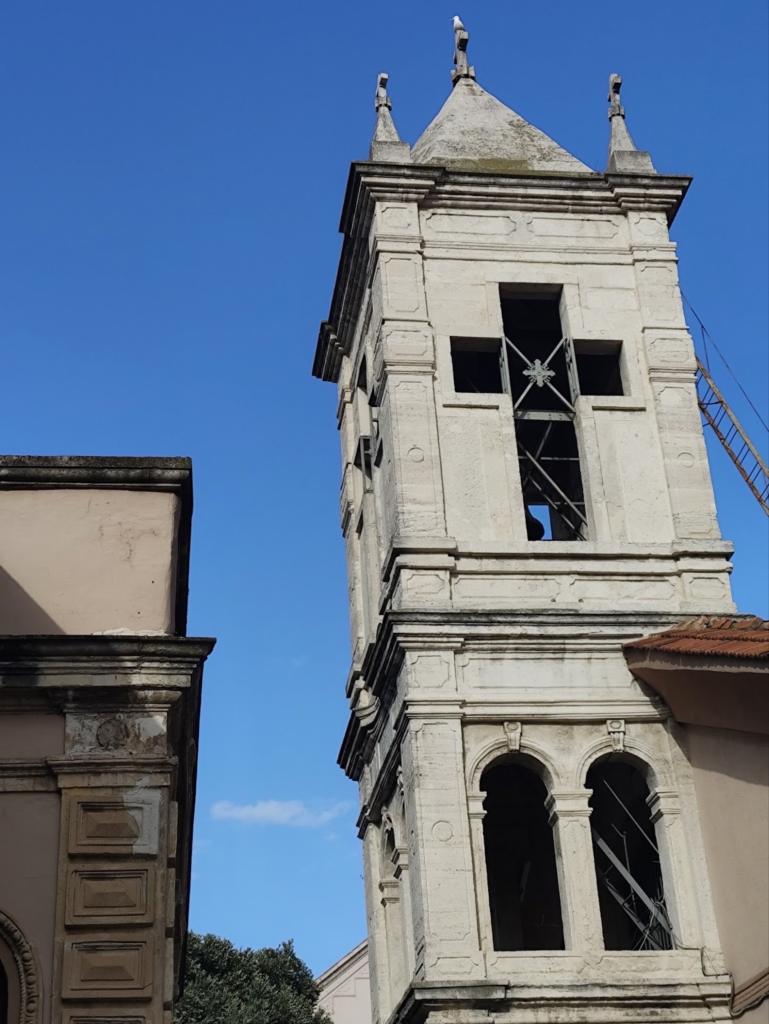
The bell tower of the Holy Mother of God (Surp Asdvadzadzin) Cathedral Complex, featuring a large cross, stands in the Kumkapı district of Istanbul, Feb. 16, 2026.
7. Hrant Dink Foundation and Memory Space, Istanbul
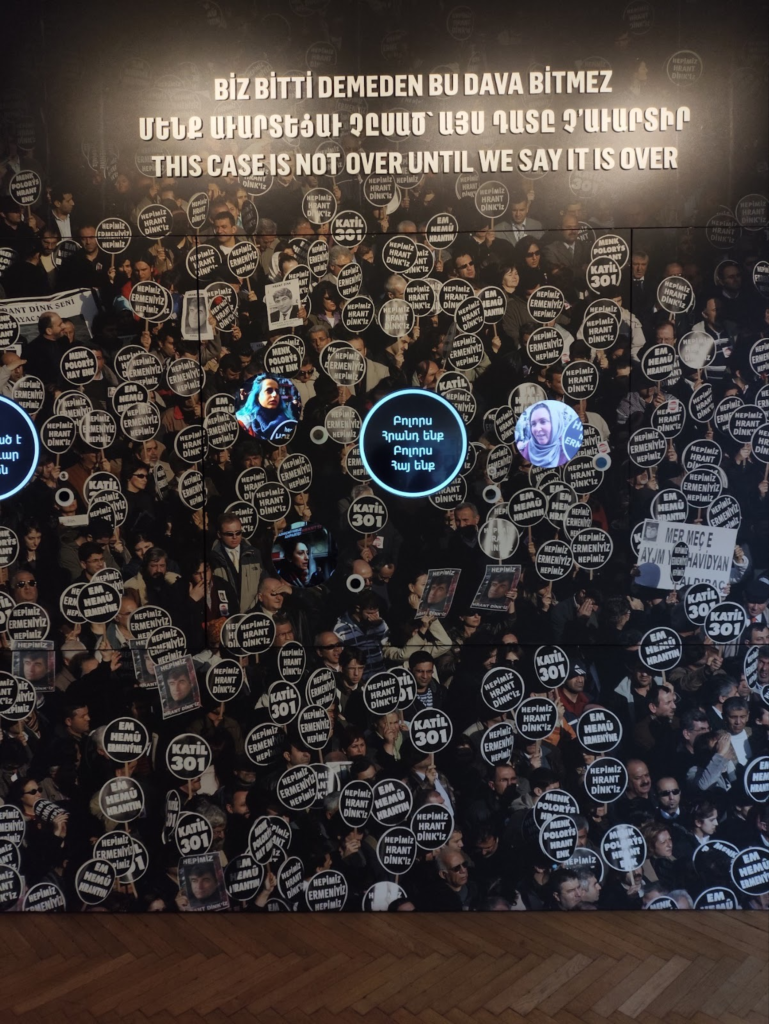
The Hrant Dink Foundation, established in memory of the journalist Hrant Dink, stands in the Şişli district of Istanbul, Feb. 13, 2026.
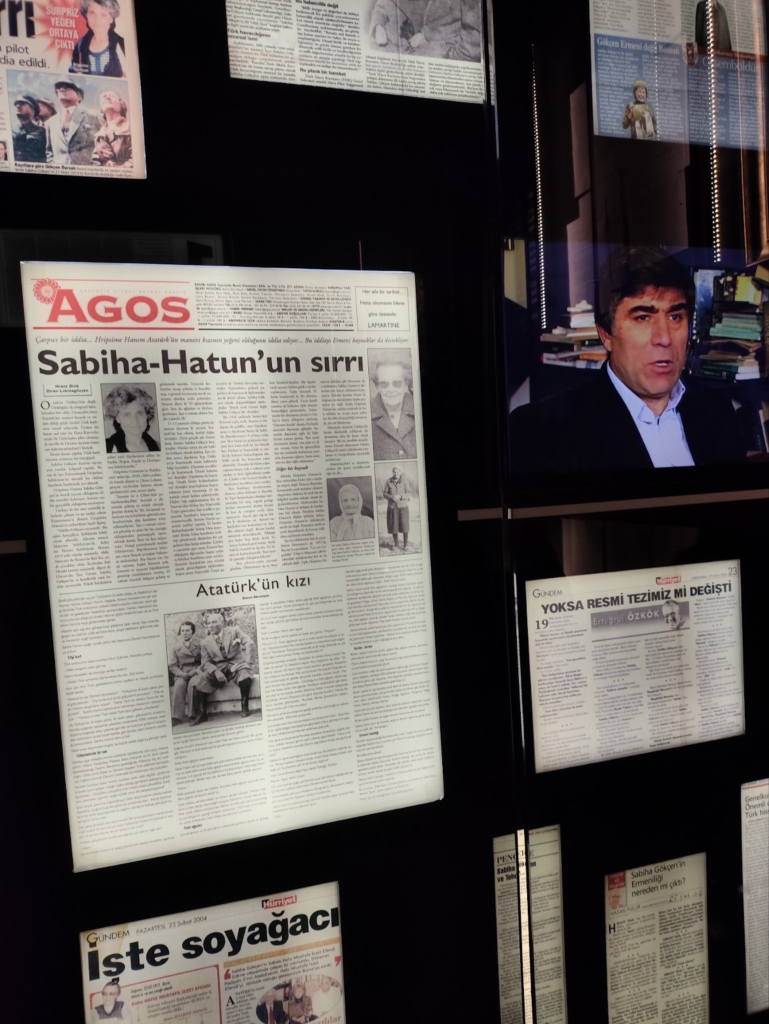
Magazines and films featuring the works of Hrant Dink and documentation of the Armenian Genocide, are displayed in Istanbul, Feb. 13, 2026.
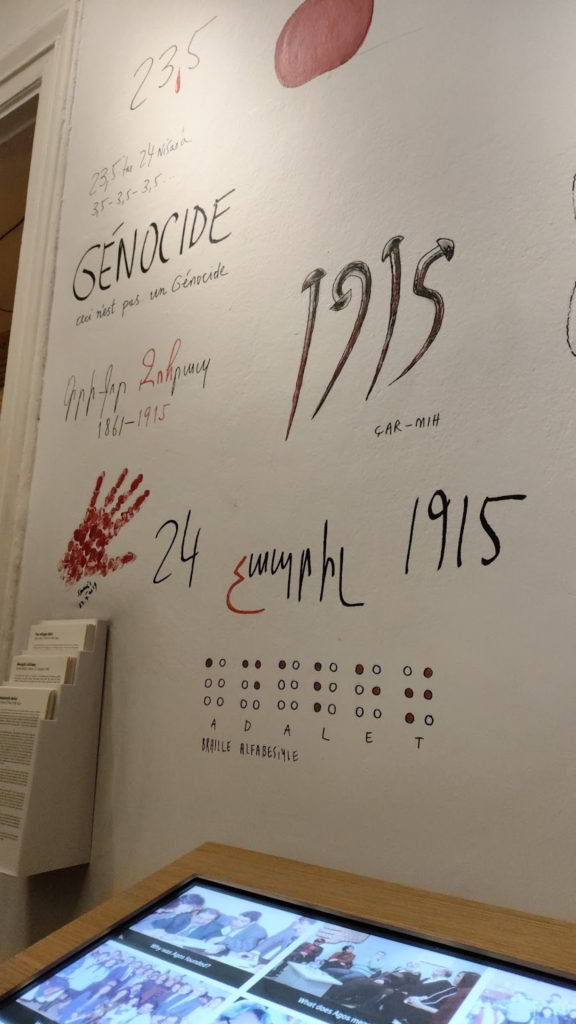
A memory wall dedicated to the Armenian Genocide is displayed at the Hrant Dink Foundation in Istanbul, Feb. 13, 2026.
8. Café & Bookshop Nostalgia, Istanbul
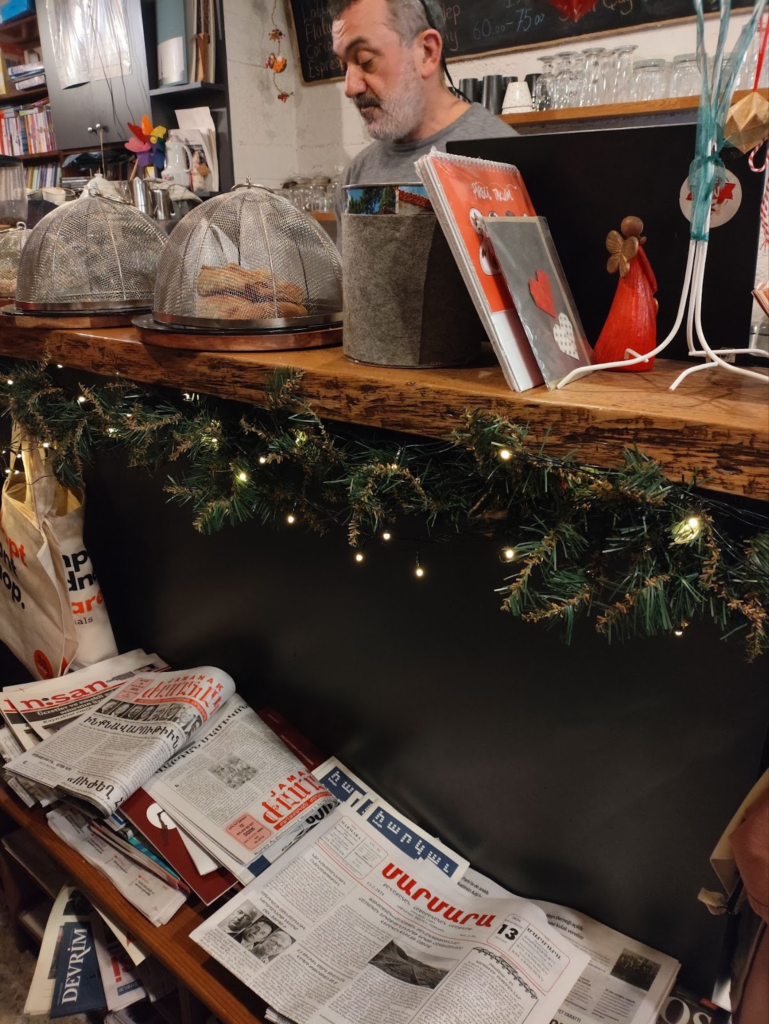
The owner of Café & Bookshop Nostalgia stands by the cashier in Istanbul, Feb. 14, 2026. The ethnic Turk operates the venue as a cultural space.
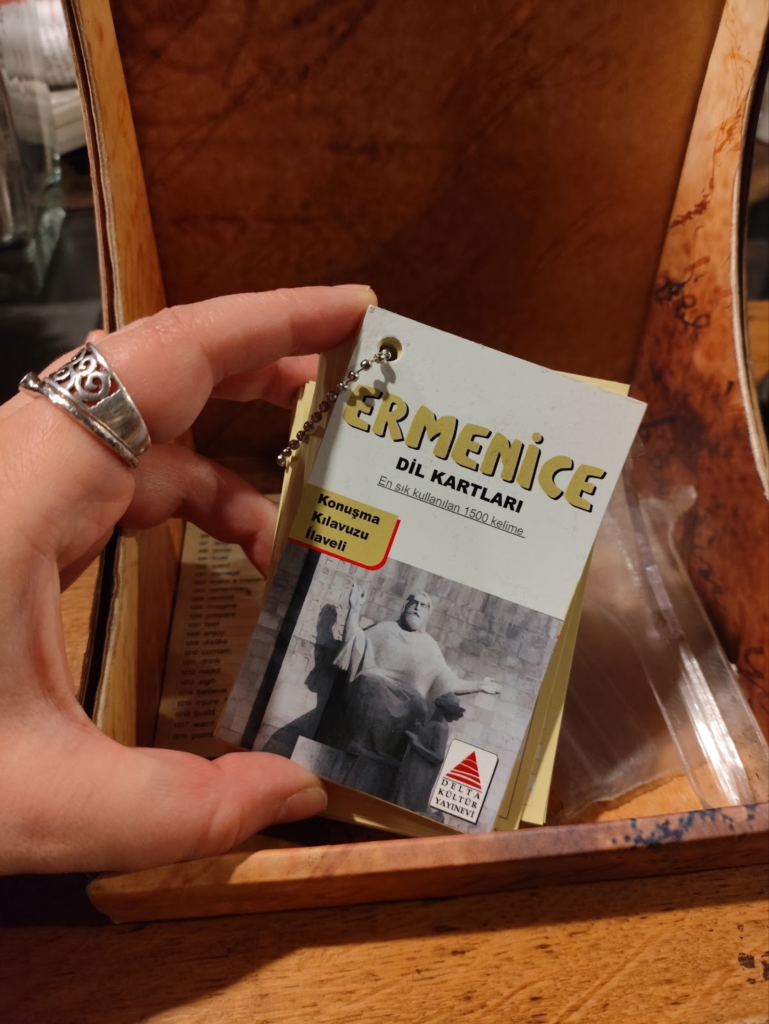
A book featuring Armenia is displayed at a local bookshop in Istanbul, Feb. 14, 2026.
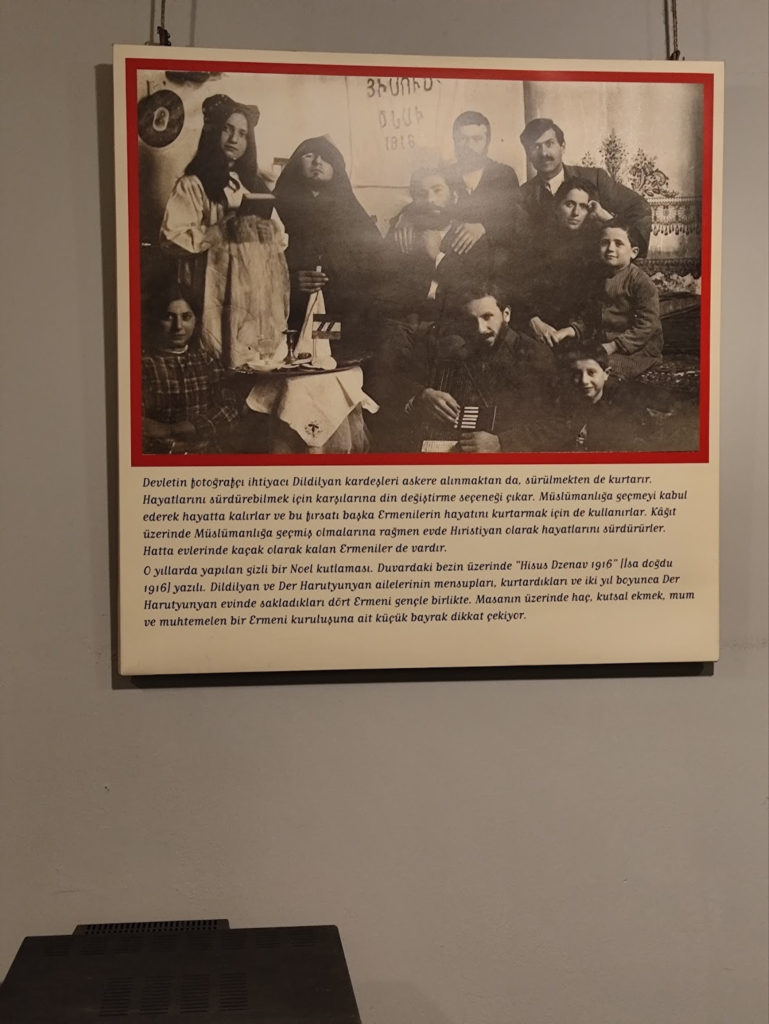
Photographs and memory books from Armenian families and churches are displayed inside a cafe in Istanbul,Feb. 14, 2026.
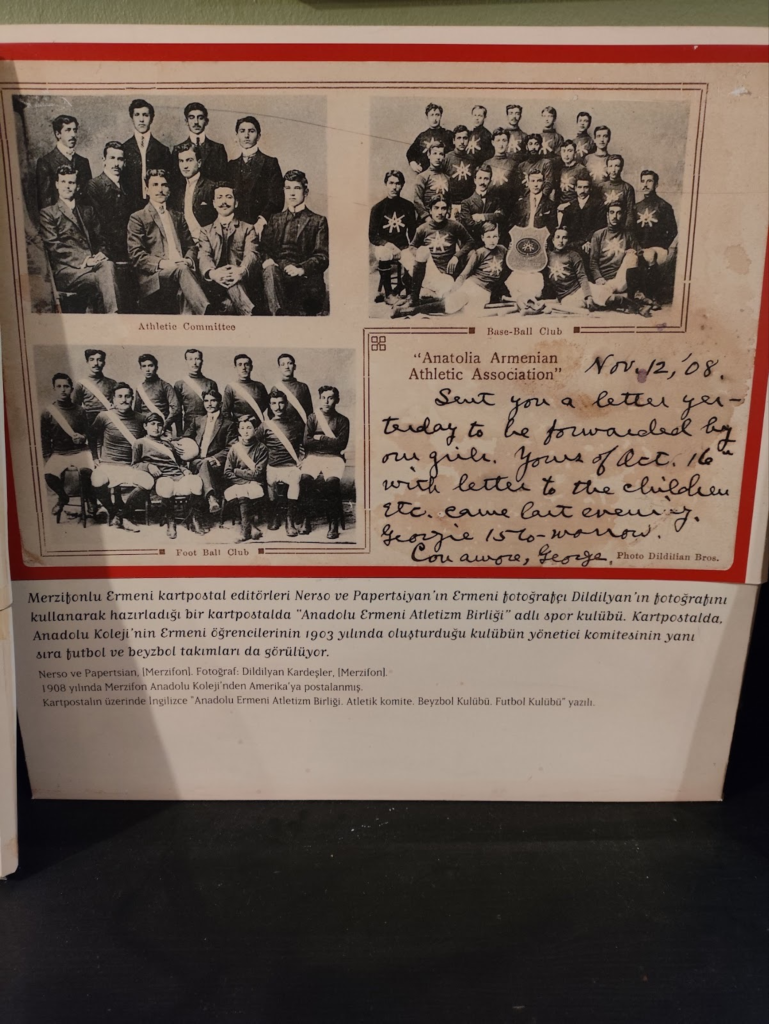
A 1908 photograph of the Anatolia Armenian Athletic Association is displayed in Istanbul, Feb. 16, 2026.
[Editor’s Note:The photographs are taken by the author.]