

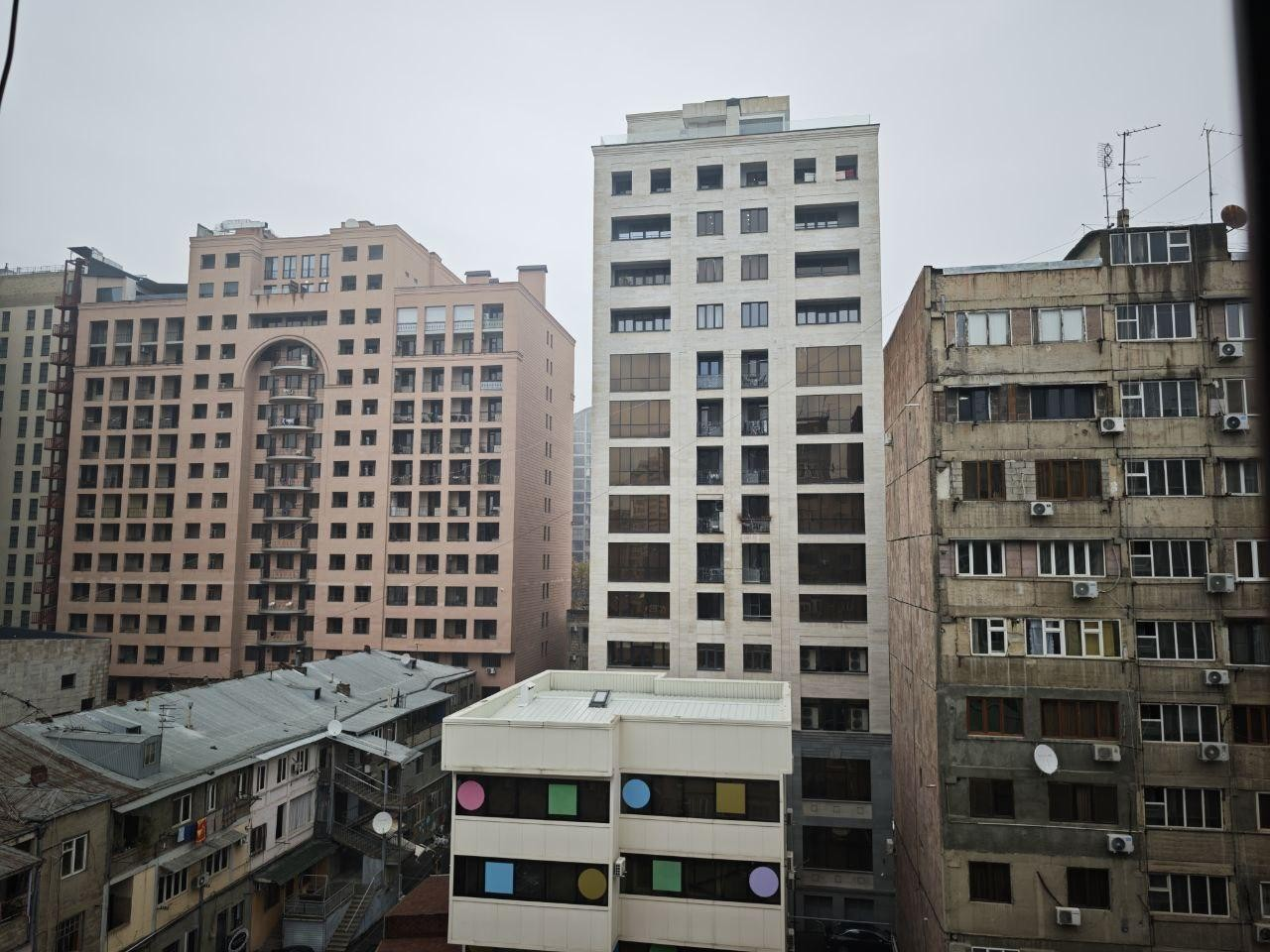
Air pollution in Yerevan has reached severe levels, recording “very unhealthy” air quality and fine-particle pollution far above international health standards. According to Armenia Blackouts, an independent research and monitoring project, there were 214 days in 2025 where Yerevan’s air exceeded WHO’s recommended daily limit for PM2.5 (15 µg/m³) in the past year, well beyond the three or four days that the organization considers safe. The daily average, 152.7 µg/m³, is 10.2 times higher than the standard.
PM2.5 refers to fine pollutant matter that is 2.5 micrometers or smaller, about 30 times thinner than a human hair. These particles are so tiny that they can travel deep into the lungs and even enter the bloodstream. Armenia Blackouts noted that the health consequences in the past month were the same as those of smoking 90.5 cigarettes.
µg/m³ is the micrograms per cubic meter, the unit that measures how much of these particles are present in the air. The higher the number of µg/m³, the more polluted the air is. For context, the World Health Organization considers 15 µg/m³ to be the safe annual average for PM2.5.
Armenia Blackouts pointed to a number of factors contributing to the severe pollution: vehicle exhaust, solid fuel burning, industrial production, and dust from roads and construction. The independent project said that these factors create dangerous conditions for health, especially in winter when stagnant air and temperature inversions trap pollutants close to ground level.
According to the initiative, fuel combustion from vehicle engines and heating systems form nitrogen dioxide (NO2). This irritates the respiratory tract, aggravates asthma symptoms, increases the chance of respiratory infections, and leads to chronic lung diseases. These consequences may also be a result of exposure to sulfur dioxide (SO2), which comes from industrial production and the burning of low-quality fuels.
Meanwhile, carbon monoxide (CO) from fires, vehicle exhaust, and faulty heating devices leads to headaches, nausea, weakness, and in extreme cases, poisoning or death. Other sources of the air pollution in Yerevan include ozone (O3), formaldehyde, and polycyclic aromatic hydrocarbons. These compounds cause a range of health issues, such as inflammation, respiratory system damage, and different forms of cancer.
According to Karine Markosyan, a pulmonologist at the Saint Gregory the Illuminator Medical Center, severe pollution causes asthma attacks, bronchitis issues, and flare-ups of chronic obstructive pulmonary disease. She said that exposure to high air pollution levels also increases the risk of heart disease and lung cancer.
Markosyan added that for patients with asthma, heart disease, or chronic lung conditions, a few very polluted days can undo months of stable health.
City authorities have a different outlook on the situation. In a CivilNet report, Yerevan mayor Tigran Avinyan announced that air quality had improved earlier in 2025, according to readings from 173 monitoring devices around the capital. He added that more comprehensive measurements now allow the municipality to diagnose and address pollution hotspots.
The Armenia Blackouts project, however, doesn’t share the optimism, noting that pollutant concentrations, especially PM10 and PM2.5, frequently exceed recommended limits despite reassurances from city hall.
At the national level, Armenia is part of international agreements on air pollution, including the UN Convention on Long-Range Transboundary Air Pollution (CLRTAP), and has pledged to reduce harmful emissions. Yet today, much of the burden falls on individuals.
According to Markosyan, citizens should constantly check real-time air quality apps, keep windows closed on “very unhealthy” days, use air purifiers if available, and wear respirators such as FFP2 or N95 masks outdoors. She added people with chronic respiratory or heart conditions should keep medications on hand and avoid going outside when pollution is at its peak.