

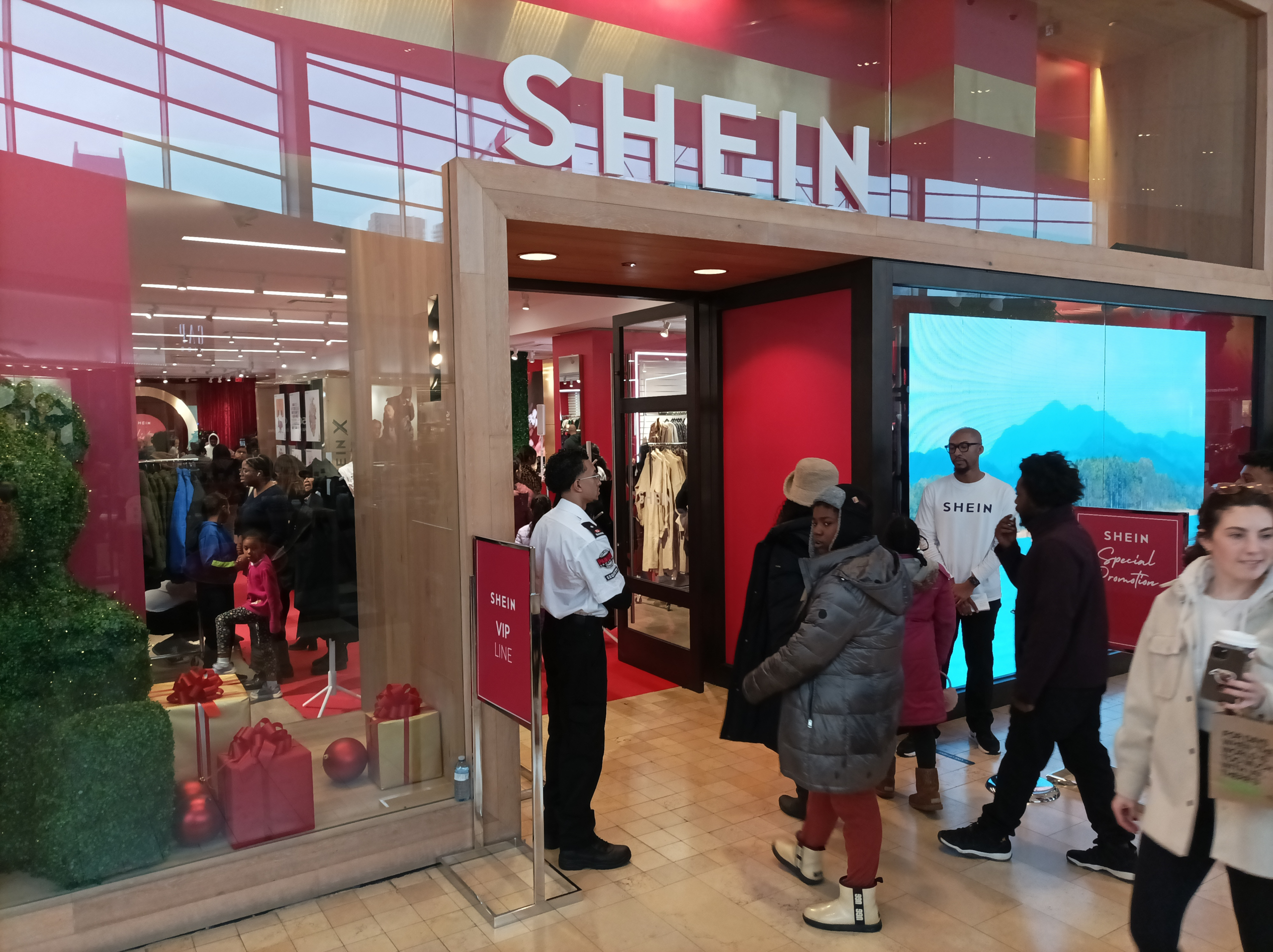
The opening of Shein’s first physical store in Paris this week was meant to signal the fast-fashion giant’s next chapter. Instead, it immediately ignited government scrutiny, protests and public backlash, developments that Armenians say feel increasingly relevant as Temu becomes one of the most popular shopping platforms in the country.
The Paris store opened inside the historic BHV Marais department store on Wednesday, drawing large crowds but also dozens of demonstrators. Labor groups and retail workers rallied outside, criticizing the company’s labor record and environment footprint, while an online petition opposing the opening surpassed 130,000 signatures.
While Shein has never had a major physical presence in Armenia, the events in France have been closely followed by Armenian shoppers who increasingly rely on ultra-fast fashion platforms. Over the past year, Temu has become the dominant platform, with young and older consumers drawn by low prices and frequent promotions. A single item in a Yerevan clothing shop may cost around 20,000 drams or even more, while the same amount spent on Temu often buys dozens of accessories, home goods, or clothing pieces.
“It’s not surprising that people are choosing Temu over local stores,” said Diana Danielyan, a marketing specialist. “When one purchase in a shop costs the same as a whole package online, shoppers feel they are getting more value. Also, these ultra-fast fashion brands, like Temu and Shein, offer different kinds of promotions such as cashbacks, discounts, and other incentives to make people buy more.”
“With Temu everywhere now in Armenia, people naturally compare it to Shein,” said retail consultant Tatevik Khachikyan. “So when something this dramatic happens in Europe, it becomes part of the conversation here too. If France is reacting this strongly, then it makes you think about what could happen with Temu, since people buy from these sites every day here.”
Local boutiques and designers, who often source quality materials and employ local labor under regulated conditions, simply cannot compete with rock-bottom price points facilitated by Temu’s direct-from-factory, massive-scale operations.
“We are already seeing smaller, independent clothing shops closing down, especially those targeting younger buyers,” Khachikyan said. “When a customer can buy a jacket for 4,000 drams from Temu, they won’t pay 35,000 drams for a locally made one, even if the quality is vastly superior. This is not just about fast fashion, but about the displacement of local jobs and the stifling of domestic retail shops.”
She also said that last month they had even less sales that is why the shop had to fire a few workers. She added that if one day Temu were to have a physical store in Armenia, then the situation would worsen.
A similar problem was faced by Ani Safaryan, a young business owner in Yerevan, who imports goods from Italy but since the items have comparatively higher prices, she could not make any profit as people choose to buy from Temu.
“My entire fall collection is still sitting in inventory, since the price range was higher than what people see on Temu, of course,” Safaryan said. “I sold only one blazer out of 60 pieces, so I decided to stop importing winter clothes until I sell at least half of what I already have.”
This decision to suspend future imports demonstrates a profound lack of confidence in the domestic market’s ability to absorb higher-priced, curated inventory, effectively putting pressure on the local fashion supply chain.
So what experts suggest is to increase consumer awareness regarding the problems that the country could face.
“The information needs to be clearer. Shoppers need to understand that the unbelievable low price comes at a hidden cost to the environment, and potentially to the local economy and its workers.” Danielyan said.
So the events in Paris, therefore, are not just news stories for Armenia but a precedent and a warning, since they underscore the need for a national discussion on the sustainability of consumption habits and the protection of local industry in the face of unstoppable global e-commerce.
And what Danieyan advises is that the country should decide if the short-term benefit of cheap goods is worth the long-term price of ecological damage and economic disruption since Temu continues to expand its market share more and more. And the biggest challenge is that many shoppers simply don’t connect their purchasing habits with broader economic and environmental consequences.