

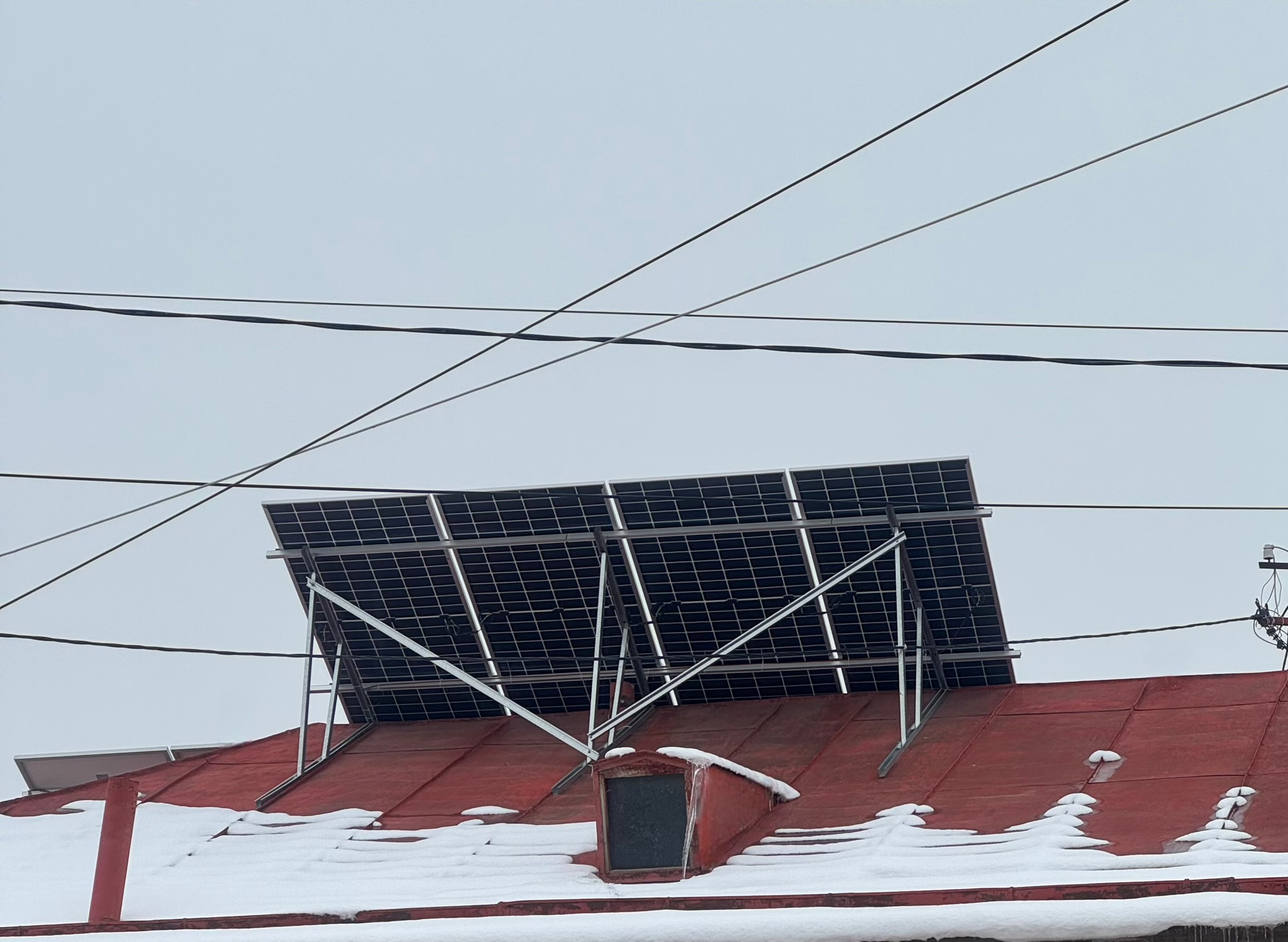
As electricity costs strain household budgets in Armenia, solar energy is emerging as a practical solution for rural communities. Villages such as Voskehat are using rooftop solar panels to reduce winter bills that once consumed a significant share of household income. Armenia, a country without domestic oil or gas reserves, is tapping into one of its most abundant resources: up to 300 days of sunshine a year.
For many rural residents, winter has long meant financial pressure. Gevorg Hunanyan, a resident of Voskehat, recalls how high electricity bills shaped household decisions.
“Before the panels, especially during the winter months, we paid a massive amount for electricity,” he said. “It reached 40,000 to 50,000 AMD every month.”
For a rural household, that can equal half a pension or a significant portion of a monthly salary. This reality has fueled what experts describe as energy poverty, a situation in which families are forced to sacrifice comfort to afford basic utilities.
“We had to constantly save,” Hunanyan said. “We were switching off lights and avoiding using appliances just to keep the bill from reaching an astronomical amount.”
For Hunanyan and many of his neighbors, this pressure became the main reason to look for an alternative.
According to a report by Intech.am, the cost of installing solar panels in Armenia is falling, with prices starting from 70,000 AMD. Under Armenia’s high solar irradiation conditions, a 1-kilowatt system can produce about 1,500 to 1,900 kilowatt-hours per year.
For Hunanyan, the results were immediate.
“After installing the panels, the problem simply disappeared,” he said. “Now our bills are either zero or negligible.”
Many households can recover installation costs in as little as five to six years, according to solar return-on-investment calculators. With solar panels typically lasting 25 to 30 years according to SOLARA, families like Hunanyan’s can benefit from decades of reduced electricity expenses. For rural households, the savings can go toward education, home repairs or agricultural investment.
While solar systems are increasingly visible on rooftops in Aragatsotn, the industry’s manufacturing and operational footprint is expanding across the country.
Hayk Shekyan, CEO of Shtigen, a renewable energy company, said awareness among the Armenian public has reached a tipping point, largely thanks to awareness programs supported by the European Union.
According to Shekyan, there is a clear distinction between urban and rural adoption of solar technology.
“Residents in the regions are more active,” Shekyan said. “Rural residents often have lower average incomes, which means energy costs represent a much higher percentage of their total household expenses. Consequently, they are more motivated to use energy efficiently and invest in long-term savings.”
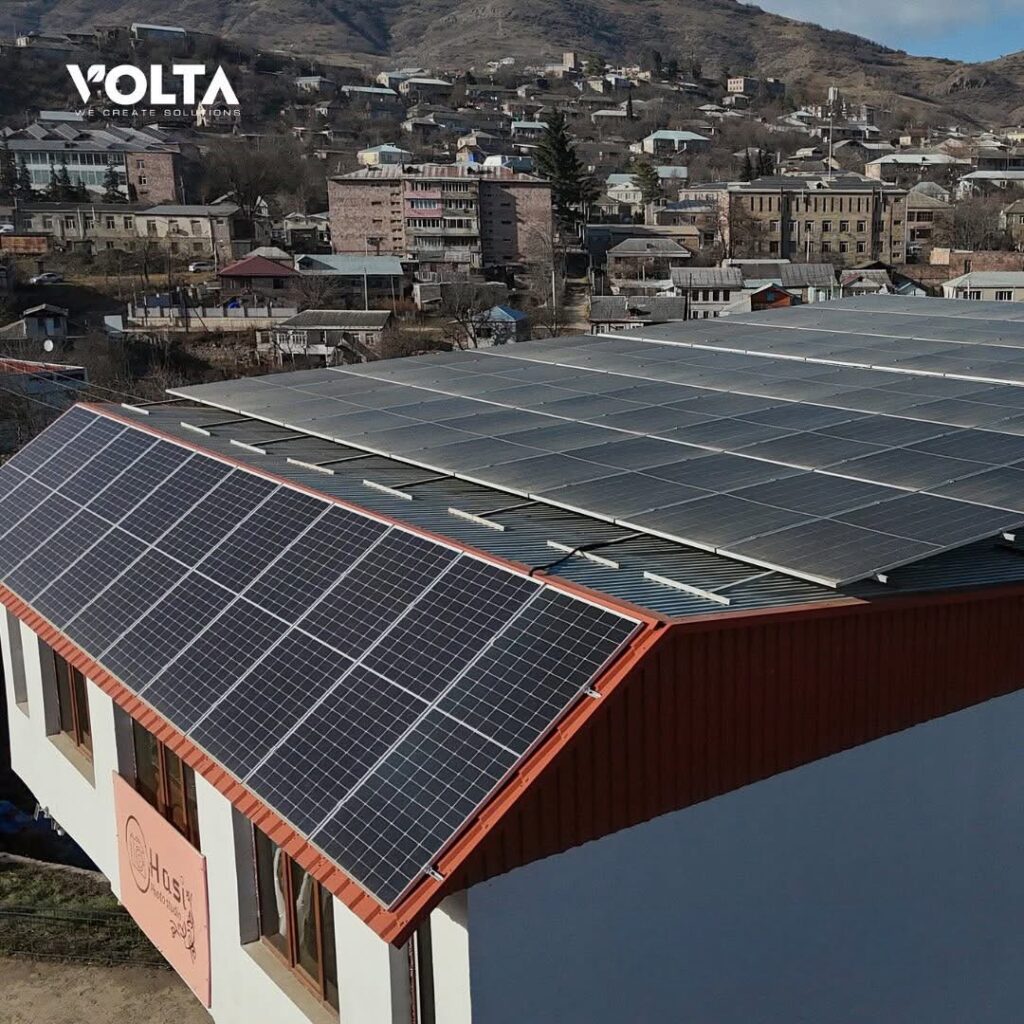
Companies such as Volta Vanadzor, which maintains operations in the Tavush region, are also contributing to domestic energy production.
The presence of companies such as Volta, alongside SOLARA and Arpi Solar, helped create a broader industry ecosystem. Local manufacturing and assembly can allow faster servicing and designs better adapted to Armenia’s mountainous climate, including high winds and heavy snowfall.
Despite the benefits, solar adoption has not been immediate everywhere. In traditional communities, early adopters can face skepticism.
“In the beginning, people in the village were very skeptical,” Hunanyan said. “They watched our roof and wondered what those ‘glass sheets’ would actually do. But after they saw the results and asked around, the numbers started to grow.”
This shift is visible in villages such as Lusakert, where residents, including Hripsime Martirosyan, have expanded solar use beyond basic electricity savings. In a home without a gas connection, Martirosyan uses solar panels to power sensor-controlled radiators and encourages neighbors to test equipment.
As Armenia looks ahead, the conversation is also moving beyond rooftops. Agrivoltaics or Agri-PV — the dual use of land for solar energy and agriculture — is an emerging model for sustainable development.
In Armenia, Agri-PV could offer several advantages.
Solar panels can provide protection against hail, which can destroy crops, and partial shade can reduce soil evaporation and improve water efficiency. Certain crops, including berries and leafy greens, can also benefit from reduced exposure to intense midday heat.
Armenia’s solar transition is not only a story about technology but also about shifting energy access in rural communities, where the cost of electricity can shape household decisions.
“Install them. You will save a significant amount of money,” Hunanyan said.