

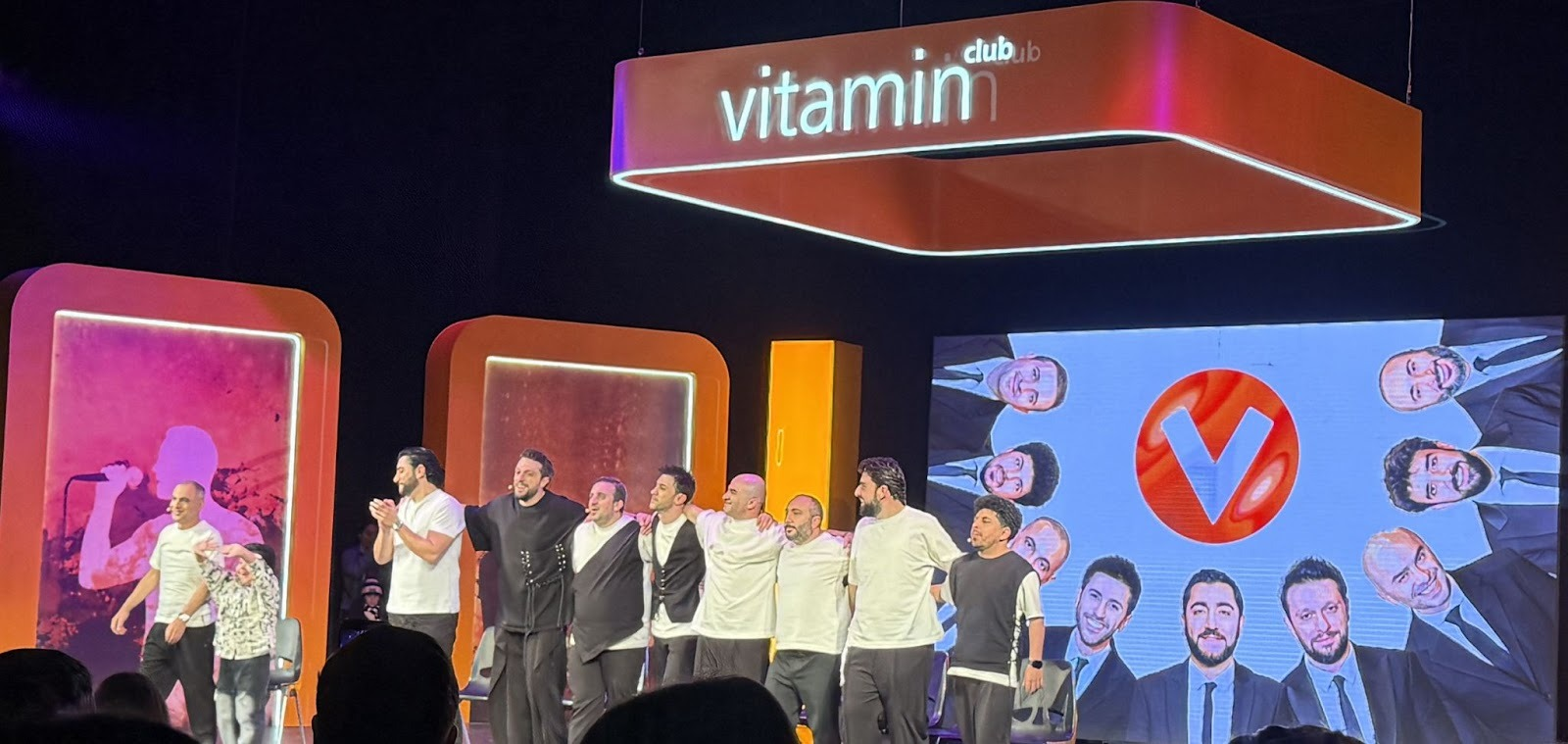
On a cold February evening the halls of Sundukyan National Academic Theatre were filled with warm laughter — just one of the series of shows that sold out weeks in advance of the beloved Vitamin Club marking its 10-year comeback. A decade after its last appearance, the famous comedy show returned to a full house, proving a rare example of trust in an era of disposable comedy.
The current series of 12 shows sold out quickly, some of them even in a span of a few minutes. This comeback created a momentum of major demand; a time when the modern comedy is framed by algorithms, short attention spans, and constant online visibility, resulting in more concerts still to be performed. Once a famous program on Armenian television, Vitamin Club’s team of 10 performers, among whom are well-known artists like musician and producer Garik Papoyan, Oscar-winning actor Vache Tovmasyan, and singer Aram MP3, was reunited to perform live.
“The sketches and program of Vitamin Club were my coping mechanism during depressive periods,” said Sati Rubinyan, one of the fans. “I’m glad that after all this time, there’s finally a chance to say thank you to all of them in this way.”Without major rewrites of the initial format, the demanded show brought up some questions about what the audiences are seeking in modern comedy. Much of the connection with the audience was established through its familiar, character-based humor.
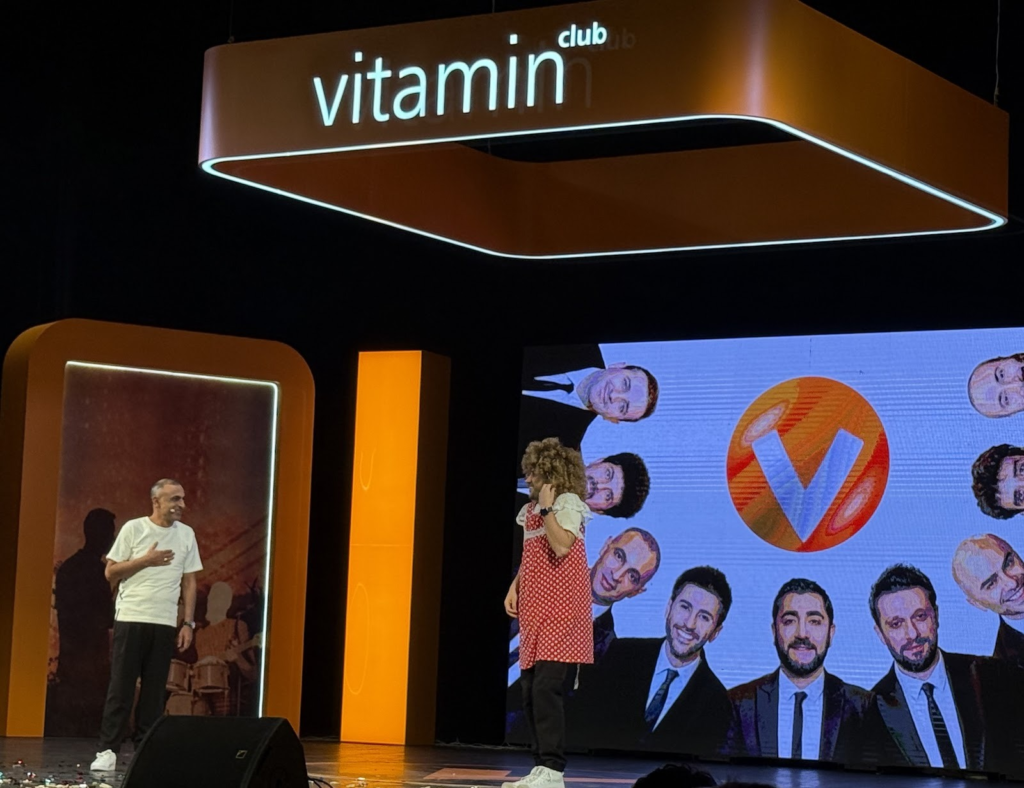
Yerevan, Feb. 01, 2026
Figures like Ekaterin – a Russian-speaking young woman whose exaggerated naivety often helps to portray satire. Alongside her, the show brought back a well-known sketch featuring three middle-aged men modeled after the kyartu archetype (an Armenian slang term referring to a hyper-masculine, radically conservative, working-class character), dressed in matching black sportswear and red shoes. While with comic tone, the sketch functioned as social commentary, exploring attitudes connected to class performance and moral posturing. The audience’s immediate recognition of these characters highlighted how these personas influenced the show’s humor.
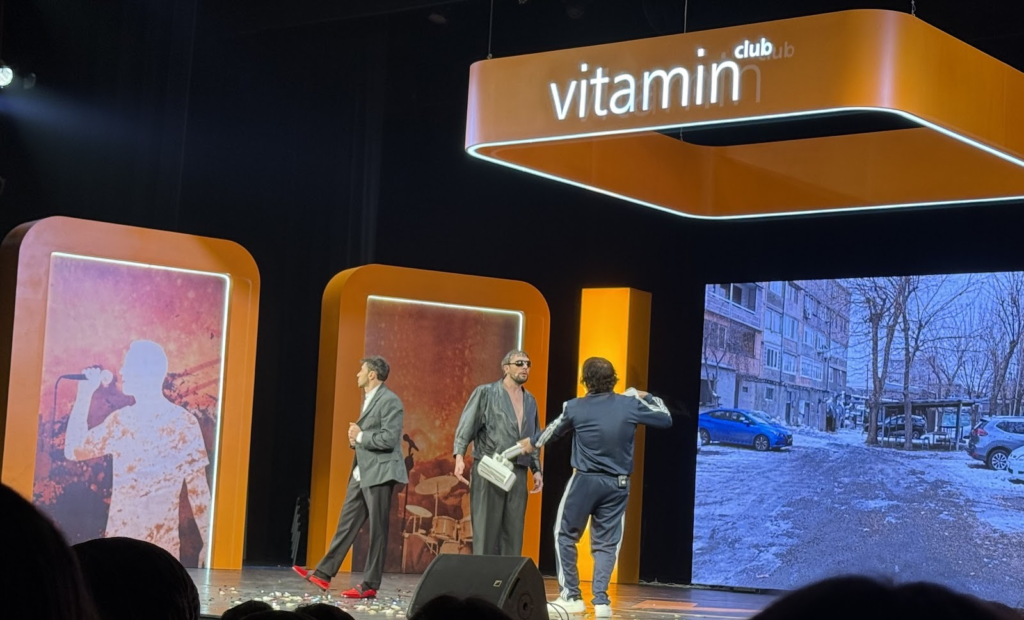
Yerevan, Feb. 01, 2026
Among the audience was an 80-year-old woman, Siran Hayiryan, who moved slowly through the theatre, leaning on assistance. When asked what brought her to the event, she said she loved the program years ago and wanted to see it again.
“I laughed the whole time,” Hayiryan said. “I asked my grandson to buy me tickets, I needed to see it.”
She especially noted her appreciation for the political humor, a reminder that Vitamin Club’s audience includes different generations, and that its comedy still resonates regardless of the age and time.
The live performance opened with no grand entrance; the comedians walked on stage one by one, exchanging a simple welcome that allowed the audience to get into the rhythm of the show.
What stood out most was not solely a sketch or an episodic part but rather the audience’s response. Laughter arrived before even the punchline joke was delivered. The appearance of each famous performer that was loved years ago, was welcomed with loud cheers by the audience. The familiarity between the performers and viewers was evident, suggesting a shared language in humor that developed years ago has been missed.
“Maybe it was fate’s irony, although I’m a pharmacist by profession, I never actually worked as one,” said Aram MP3, a well-known singer from the stage. “Years later, I found the vitamins of my life and they’re still with me today, and for that, I am thankful to you, my dear audience.”
Later toward the end, seated on stage, each of the comedians spoke about what the audience’s continuous support means to them; a scene that blurred the line between performance and conversation.
“It doesn’t matter where I go, I always want to return here because this is my home, my friends, my family,” said Vache Tovmasyan, the Oscar-winning actor and one of the Vitamin Club comedians from stage. “I will never forget the warmth I received from you today cause I can never feel this anywhere else.”
The dialogue reclaimed what the sold-out concerts have already shown: this return was built on a connection sustained over time.
“I didn’t come to find out something new,” said one of the fans from the audience Ruben Andryan after the live performance, “I just wanted to watch my favorite program again because I missed it; it was absolutely worth it.”
With multiple live performances and more still scheduled, Vitamin Club’s return demonstrates the continued appeal of familiar, character-driven comedy in Armenia’s media entertainment scene.
[Editor’s Note: The photographs are taken by the author]