

Yerevan is often described as a “pink city,” defined by tuff and the warm hue of its volcanic stone. The Cultural & Social Narratives Laboratory’s (CSN Lab) new exhibition, “Blue Archives,” offers another picture: a city that could have been blue.
Opened on Feb. 12 at the Museum of Literature and Art, the month-long exhibition, running through March 12, is the culmination of CSN Lab’s urban memory project. It reflects on the water bodies within Yerevan’s urban landscape, the memory formed around them, and the presence and absence of blue zones in the city.
The exhibition is structured as a loop. At the entrance hangs a white fabric banner bearing a simple blue sketch of boys ready to jump from a boat into the water.
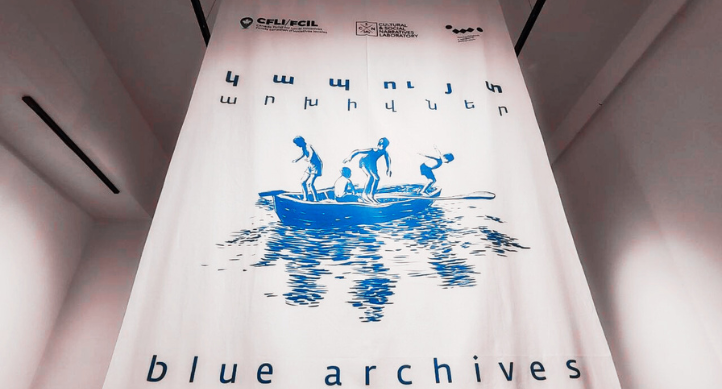
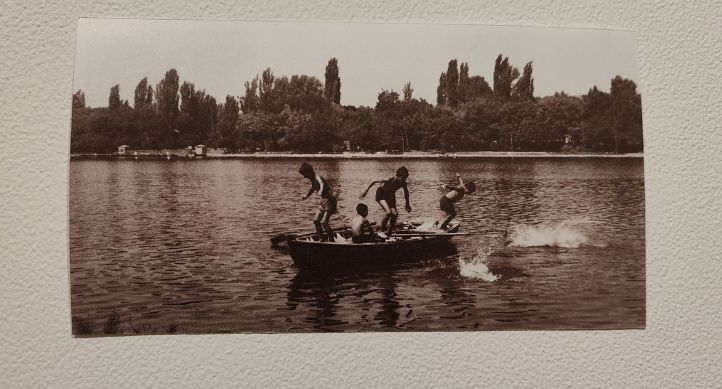
“Visitors are meant to feel as if they are making a big jump into the memory of Yerevan’s blue zones,” said Tigran Amiryan, founder and president of CSN Lab.
Between those two images unfolds a story of water as infrastructure, metaphor and right. According to Amiryan, here, water is not treated as an object of analysis but as a subject, echoing the French philosopher Michel Serres’ theory of the “natural contract,” which recognizes the Earth as a subject with rights. The notion of the right to water — and even the right of water’s own nature appears throughout the hall. By placing water at the center, the exhibition suggests that the city’s hydrological systems possess agency, memory and claims of their own.
At the core are five research projects developed by CSN Lab through the collaboration of researchers, artists, architects, urbanists and anthropologists. It all started with the Getar River, once an open artery of the city, crossing the Big and Small Centers and flowing through neighborhoods and gardens.
Over time, the river was partly covered and turned into a landfill, fading from public view. Yet even underground, Getar keeps the pulse of the city, waiting to be remembered.
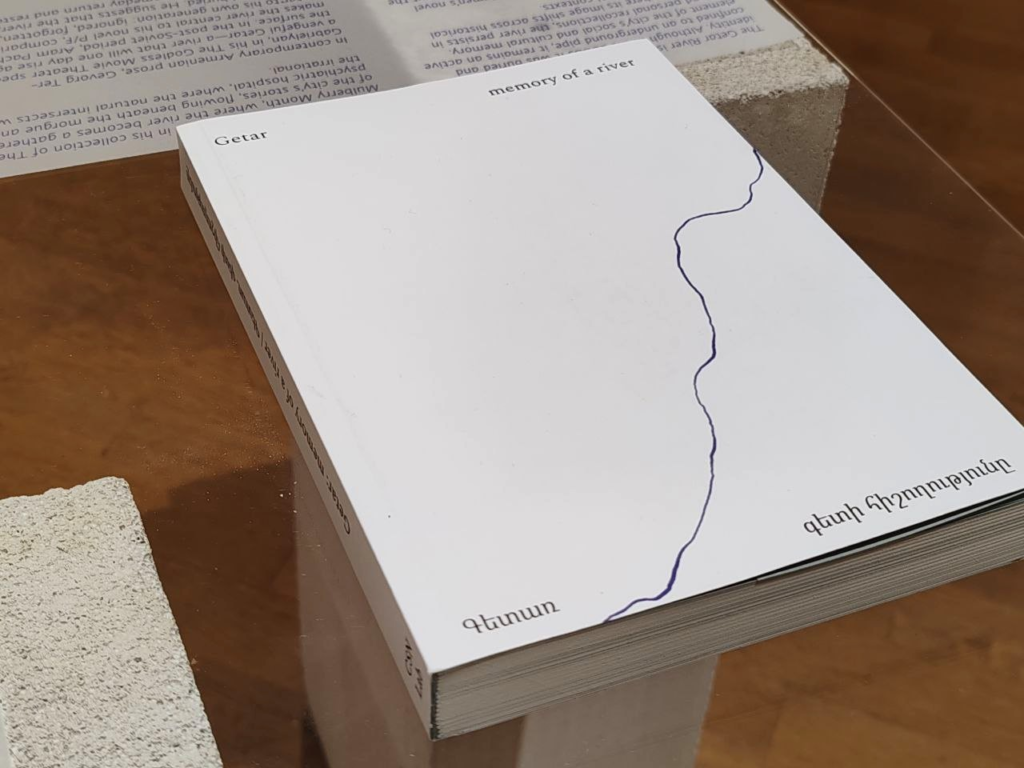
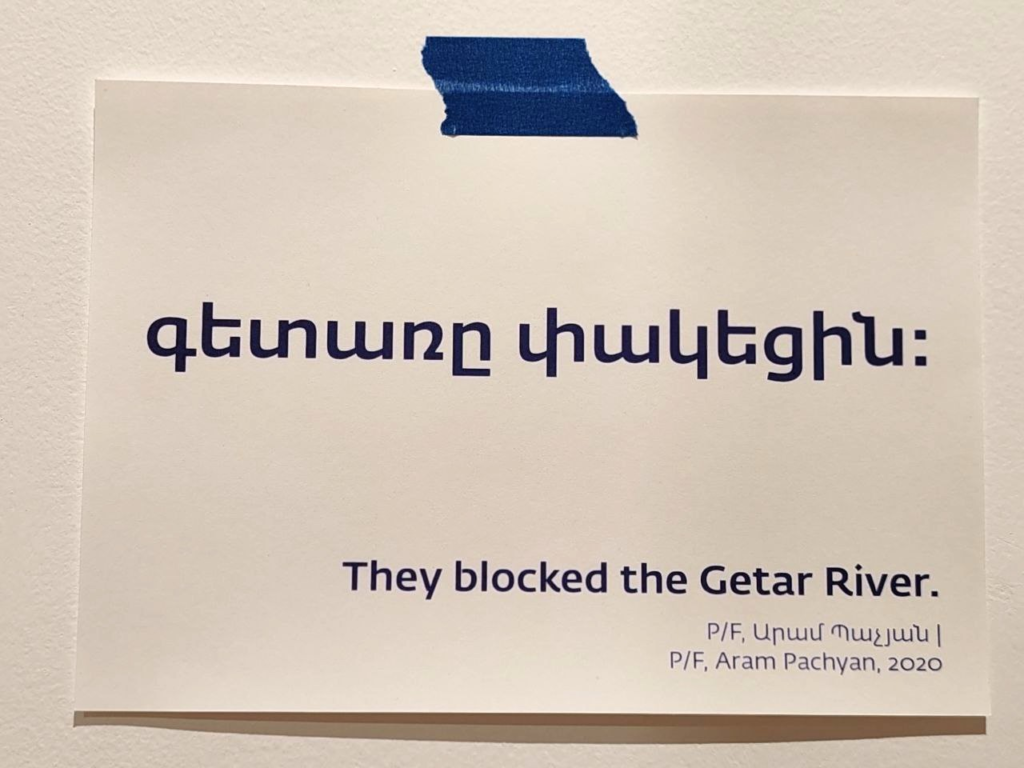
The book on Getar’s story is displayed alongside literary works by Aram Pachyan, Aghasi Ayvazyan, Mkrtich Armen and Aksel Bakunts, turning the exhibition into hydropoetics in all its senses.
While the first three writers return to Getar, tracing how it once flowed through the city, how it became a ghost river running beneath homes, and how some still dream of bringing it back into the open, Aksel Bakunts focuses on water’s presence. A quote from his work describes how a river beneath a balcony changes the color of daily life and plays like a lullaby, softening the city’s noise.
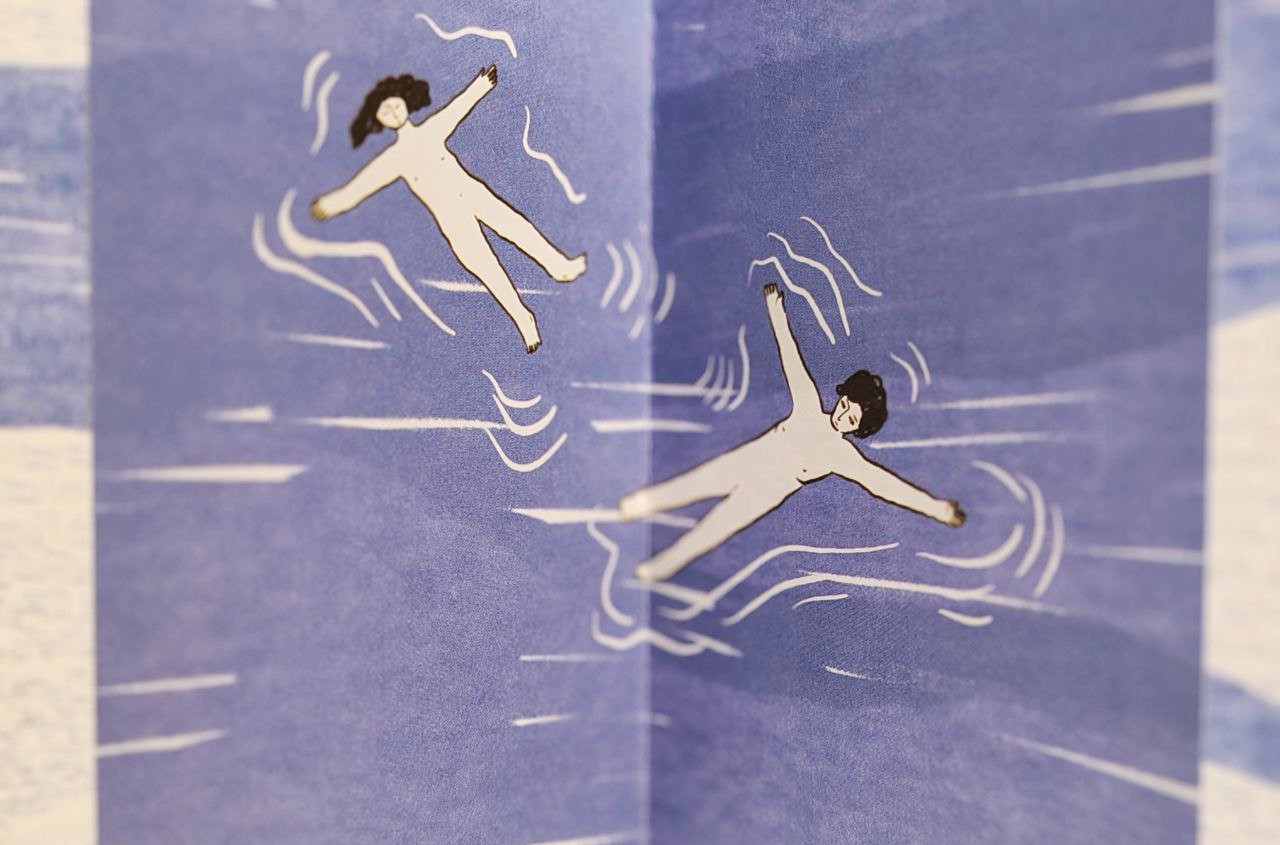
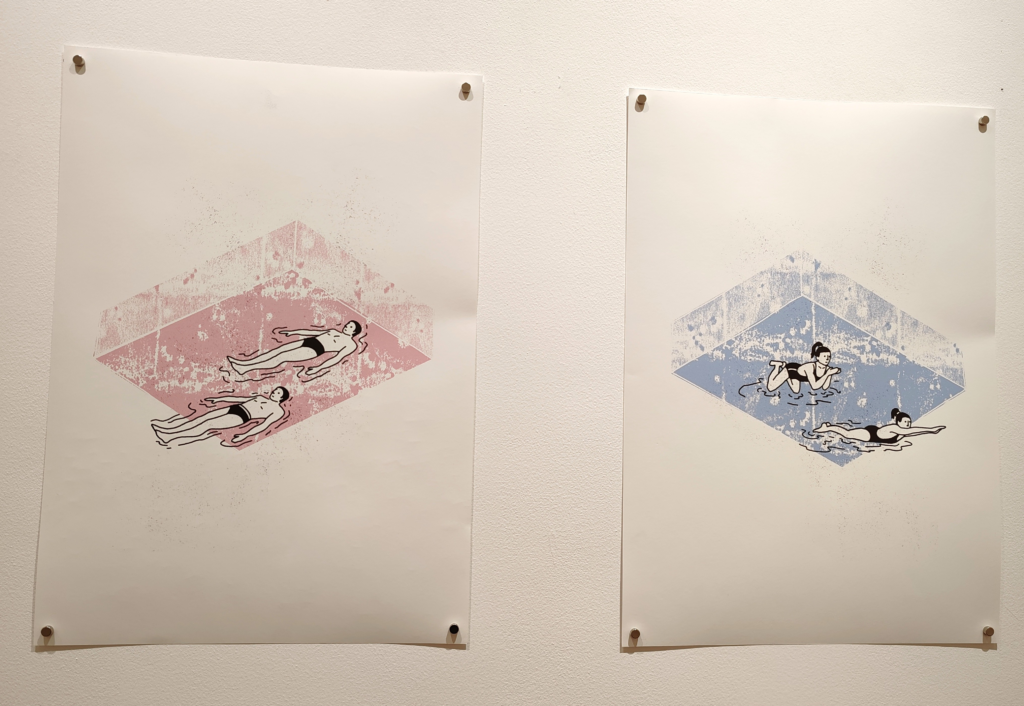
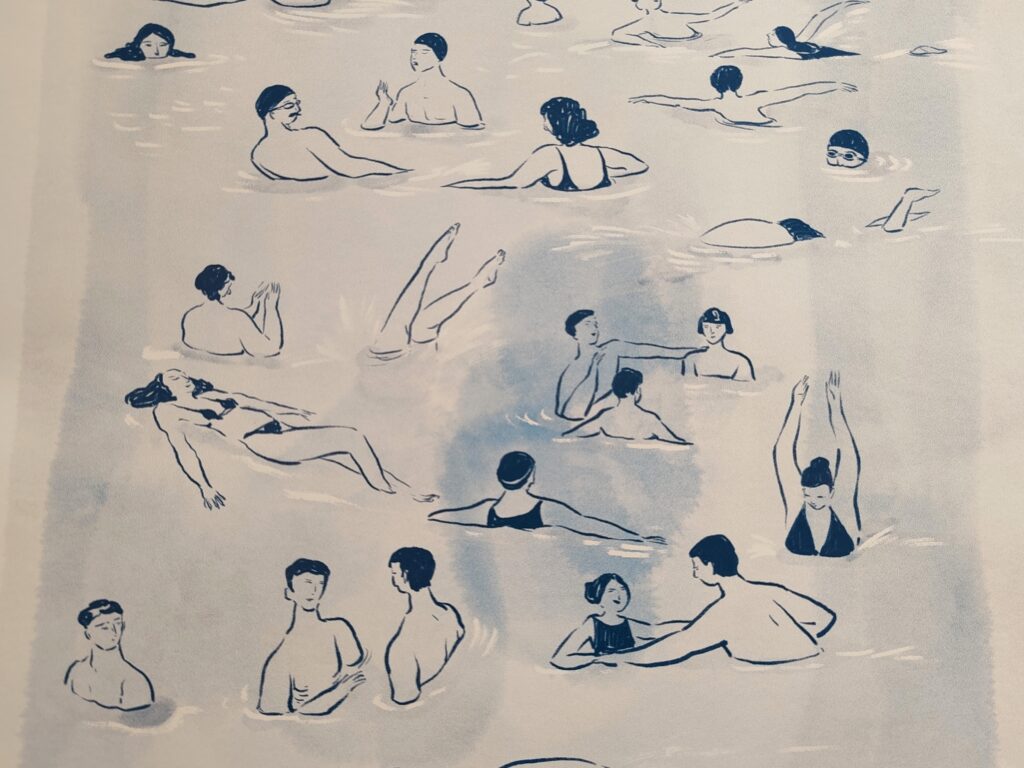
The right wall presents artworks exploring the gender dimension of public water spaces. Amiryan recalled that in the 1960s, women wore swimwear openly alongside men in Yerevan’s public pools and lakes. By the 1990s, that visibility had diminished, showing how the changing presence of women in water reflected broader social transformations.
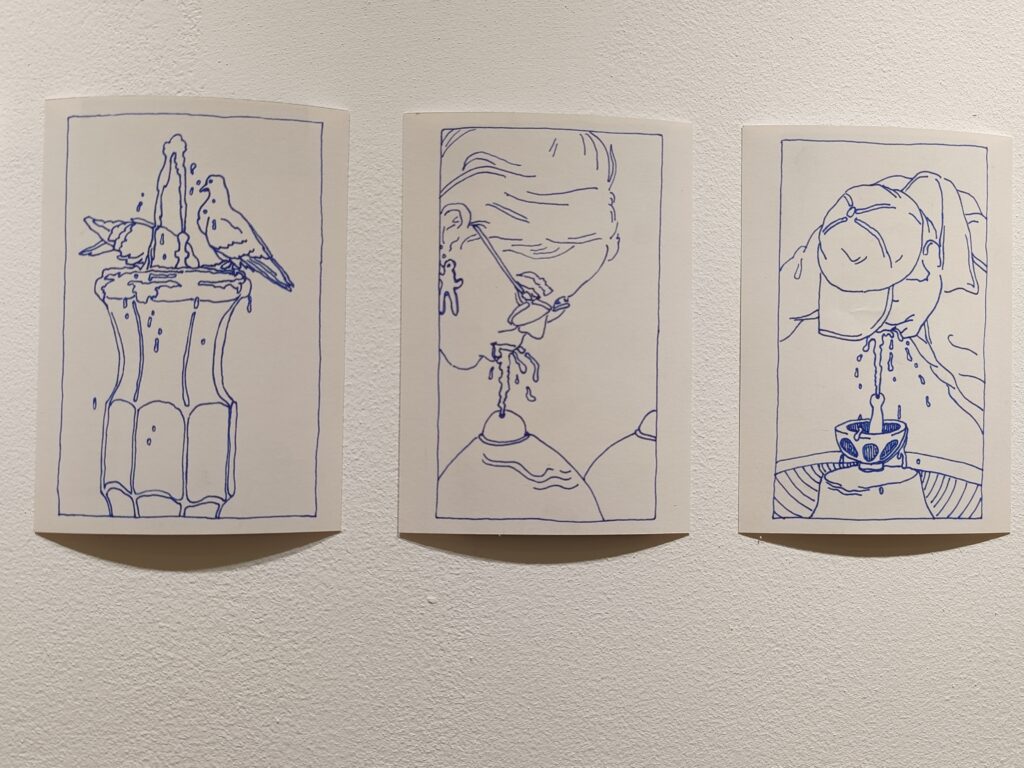
Maps of vanished lakes and canals are outlined beneath sheets of tracing paper, evoking the fragile persistence of places that survive only in memory, like dreams or mirages.
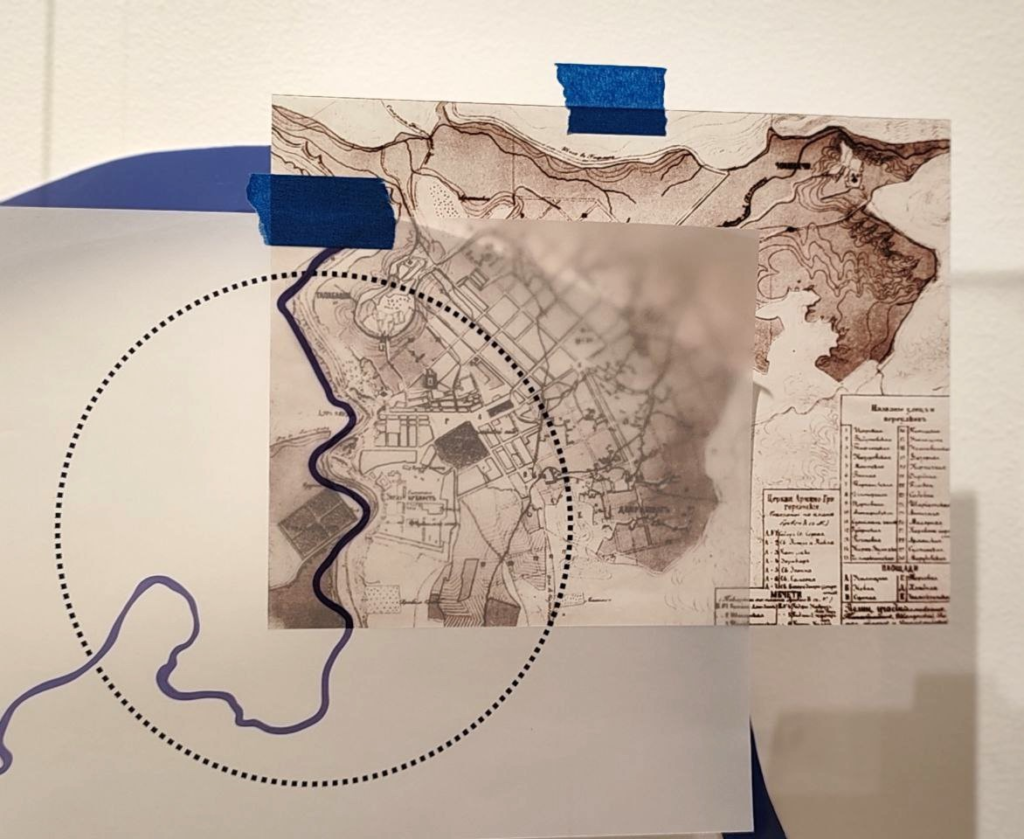
Among the documented cases is the Tulip Lake, constructed in 1968 for the 2,750th anniversary of Erebuni – Yerevan. Shaped like a cup or — as described in oral histories, a tulip —the lake gathered the flow of the Stalin Canal, now the Lower Hrazdan Canal, directing it toward the confluence of the Hrazdan and Getar rivers before continuing toward Yerevan Lake. By the 1980s, it had become polluted and dry, eventually turning into a construction site.
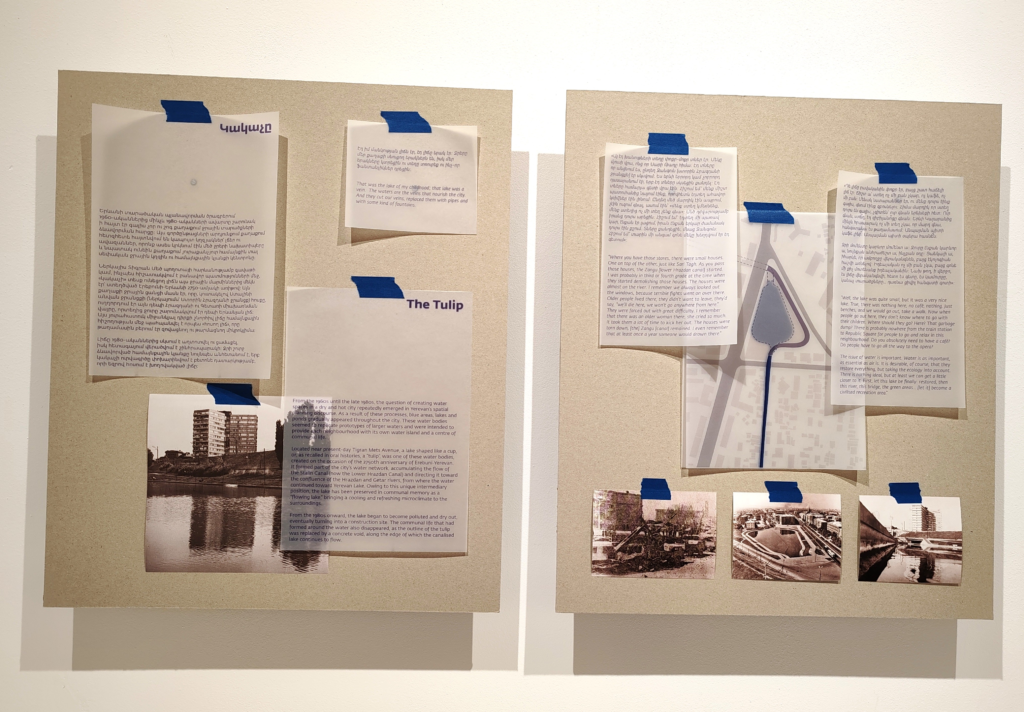
From the 1960s through the late 1980s, Yerevan’s urban planning discourse was grounded in the idea of water islands, with each neighborhood having its own cooling oasis in a hot, dry city, structuring collective routines.
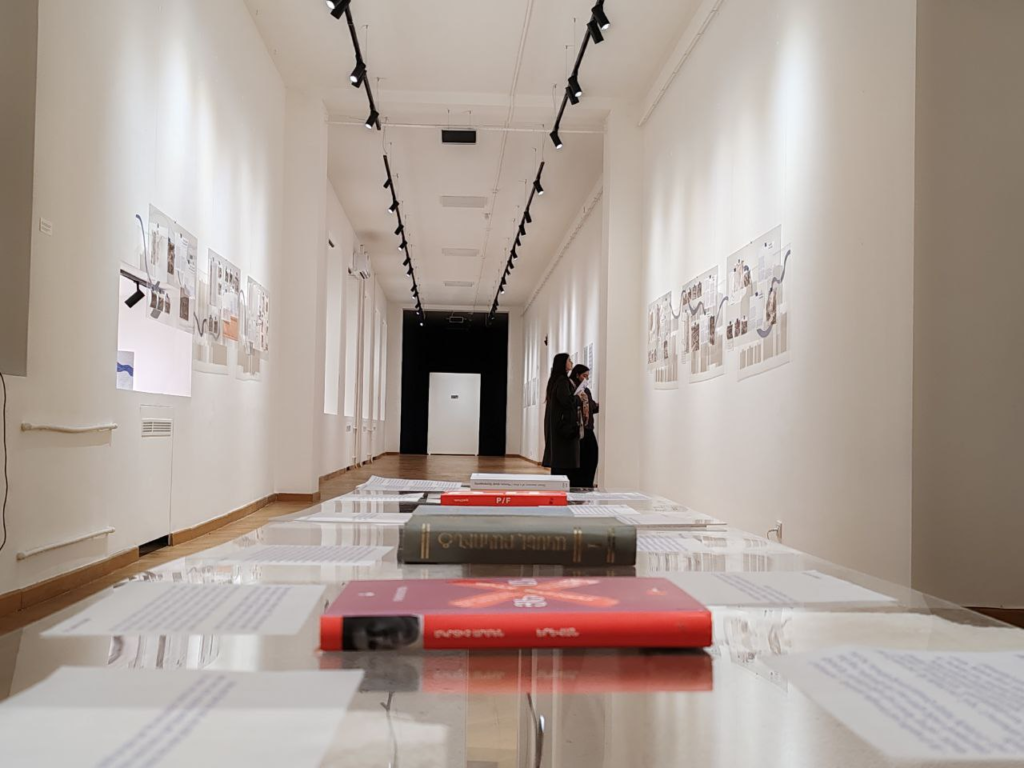
In the corners of the exhibition hall, screens allow visitors to hear researchers and collaborators describe their methods and findings.
The exhibition demands time and asks visitors to spend at least an hour tracing the narrative. Blue tape runs across the walls, visually connecting the materials like a river — documents flowing into testimony, testimony into image, image back into archive.
When you end up before the final photograph of boys jumping into water, it is hard not to see it as a lost paradise — one that, as stated on one of the banners, has left “our collective body thirsty.”
Editor’s Note: The photographs were taken by the author.