

During Francophonie Days, when Armenia turns toward the French language and its shared cultural ties, the story of Komitas Vardapet, a foundational figure in Armenian music who preserved thousands of folk songs, returns from France. This time, not through sound, but through a silence shaped by his memory, exile and scars of the 1915 Armenian Genocide.
The silence surrounding Komitas has long been interpreted through partial narratives, assumptions and limited historical understanding. The new exhibition “Letters from Villejuif” at the Komitas Museum-Institute offers a rare glimpse into the final, lesser-known years of the renowned Armenian composer, priest and ethnomusicologist Komitas.
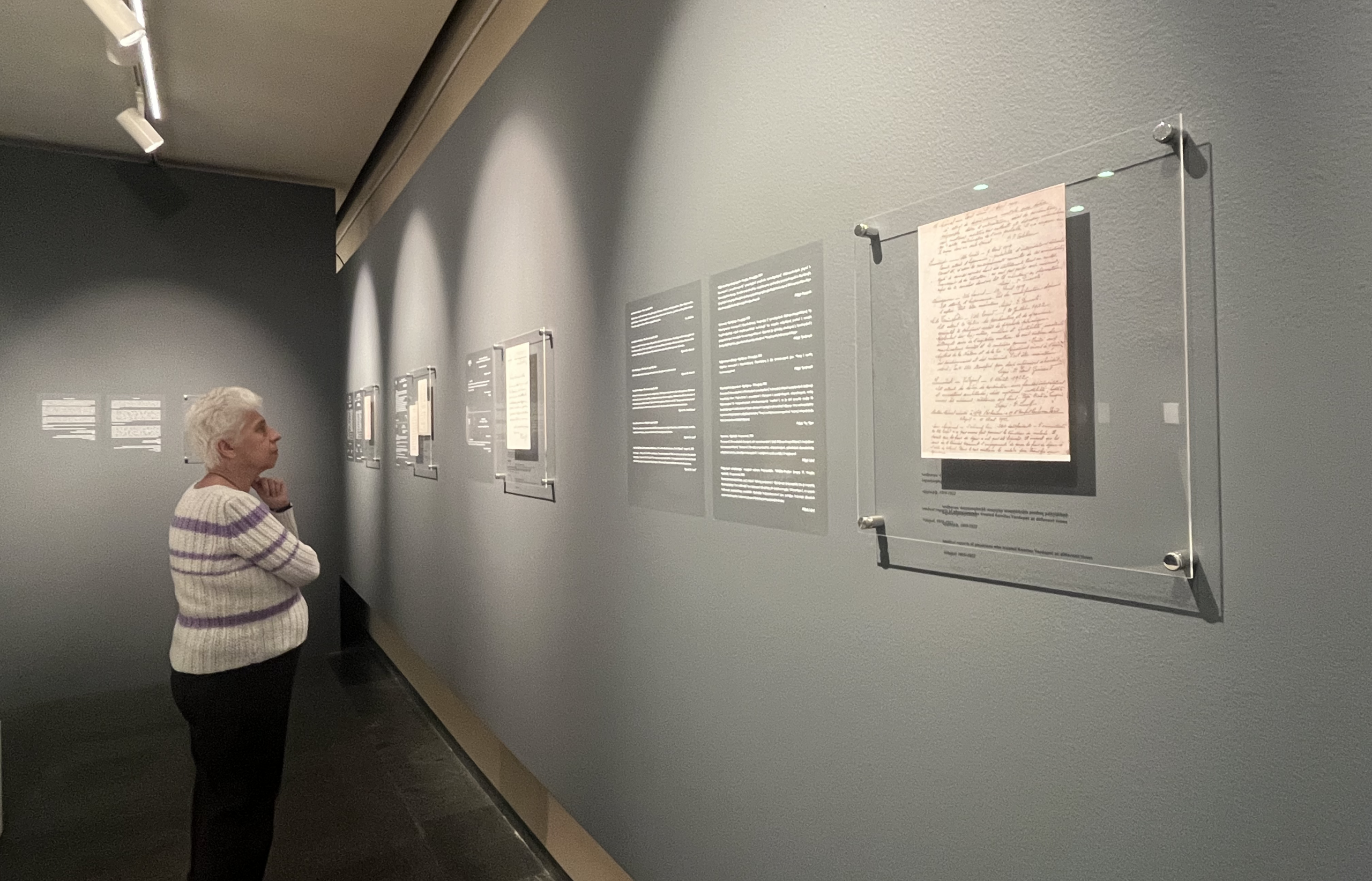
Running until April 22, the exhibition delves into the period Komitas spent in France, a place that became both his sanctuary and isolation. On March 20, a guided tour led by researcher and academic adviser Lilit Harutyunyan offered a closer look at historical letters, telegrams and official documents from the final years Komitas spent in a psychiatric hospital in Villejuif, near Paris. He lived there until his death in 1935, following the severe psychological trauma he endured after the events of 1915.
The exhibition sits in one of the museum’s final halls, a narrow, gently illuminated room where the light falls only on the documents, leaving the rest of the space in a soft shadow. A small yellow post box stands near the entrance, filled with copies of the original French letters alongside their Armenian translations, inviting visitors to take them in hand. Holding the papers creates the impression of touching Komitas’s world directly, as if the past has been placed into one’s palms. These letters carry not only historical weight but also emotional gravity.
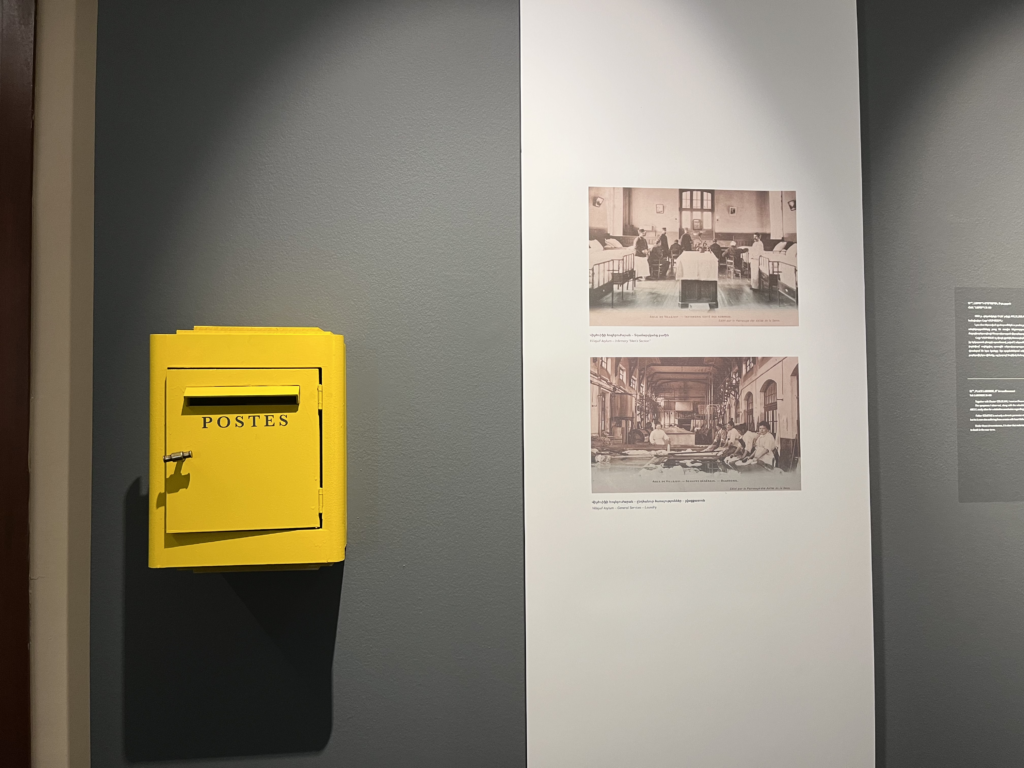
The exhibition includes about 90 exhibits from a collection donated by renowned musician and conductor Komitas Gevorgyan, including photographs, postcards and official notes. The exhibition is based on 11 original archival documents dating from 1913-1943, including a telegram from Catholicos Khoren I Muradyan, as well as a report on Komitas’s death from the director of the Villejuif psychiatric hospital.
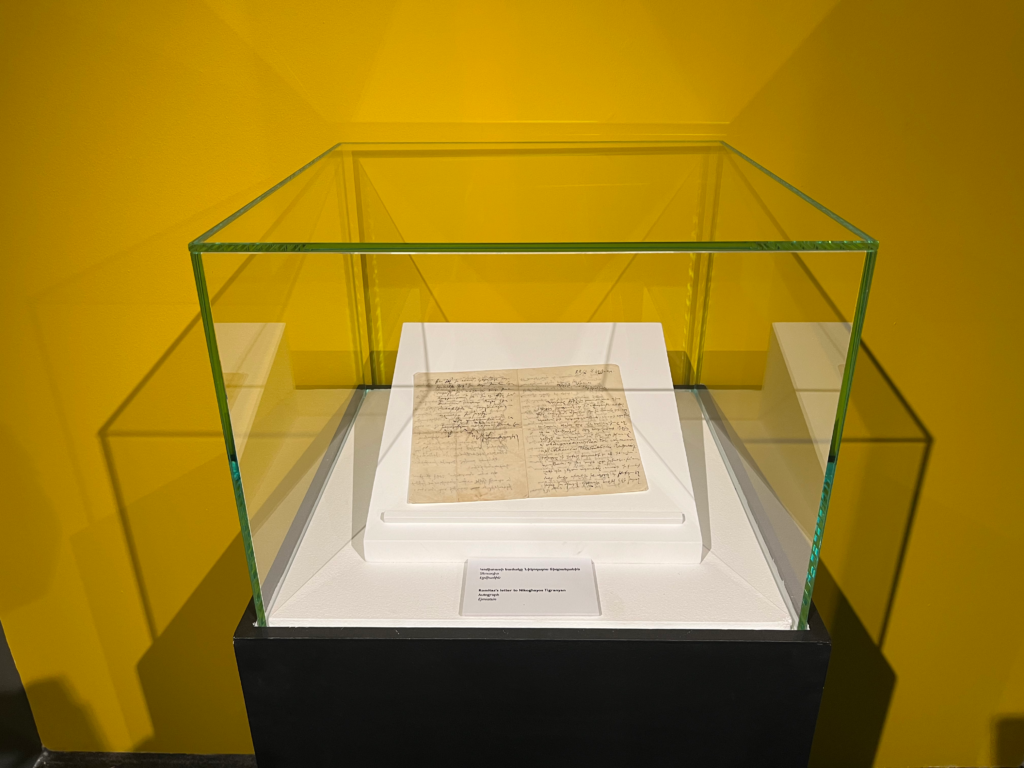
But it is these silent documents that carry the greatest sorrow.
To understand this silence, one must return to 1915. During the Armenian Genocide, Komitas was among the hundreds of Armenian intellectuals arrested and deported from Constantinople, an event that marked the beginning of a catastrophic policy of mass killings and cultural destruction and a turning point that deeply affected his mental health and life trajectory. Though Komitas survived, the experience left a lasting psychological scar.
A total of 13 letters, written between 1922 and 1935, focus on his health and the arrangements for his treatment. In them, the doctors avoid definitive diagnoses. None mention schizophrenia. Instead, one description stands out: his condition, they wrote, was like an “open wound.” That wound leads back to 1915 — to the trauma of the Genocide, to the arrests, deportations and loss he witnessed firsthand.
The documents suggest that what followed was not a sudden collapse, but a slow unraveling. His life gradually receded inward.
“At the beginning, he was more engaged, more responsive,” Harutyunyan said. “He was concerned about what was happening around him. But over time, he withdrew. Later, the silence came.”
These materials, Harutyunyan noted, do not seek to present dramatic revelations. “They are not meant to shock,” she said. “They offer something quieter but more meaningful, where each of us can become a researcher.”
That silence, long interpreted as madness, takes on a different meaning in the exhibition. A persistent myth claims that Komitas refused to speak because he did not know French. Archival materials cast doubt on that assumption. His silence was not based on inability, but on withdrawal formed by trauma.
For several years he spoke to no one. After a long break, he began to communicate only with a young medical intern, creating what seemed to be a rare human connection in isolation.
And yet, even in this silence there was music. At the hospital, Komitas had musical instruments and continued to create. Even as his language faded, his music did not.
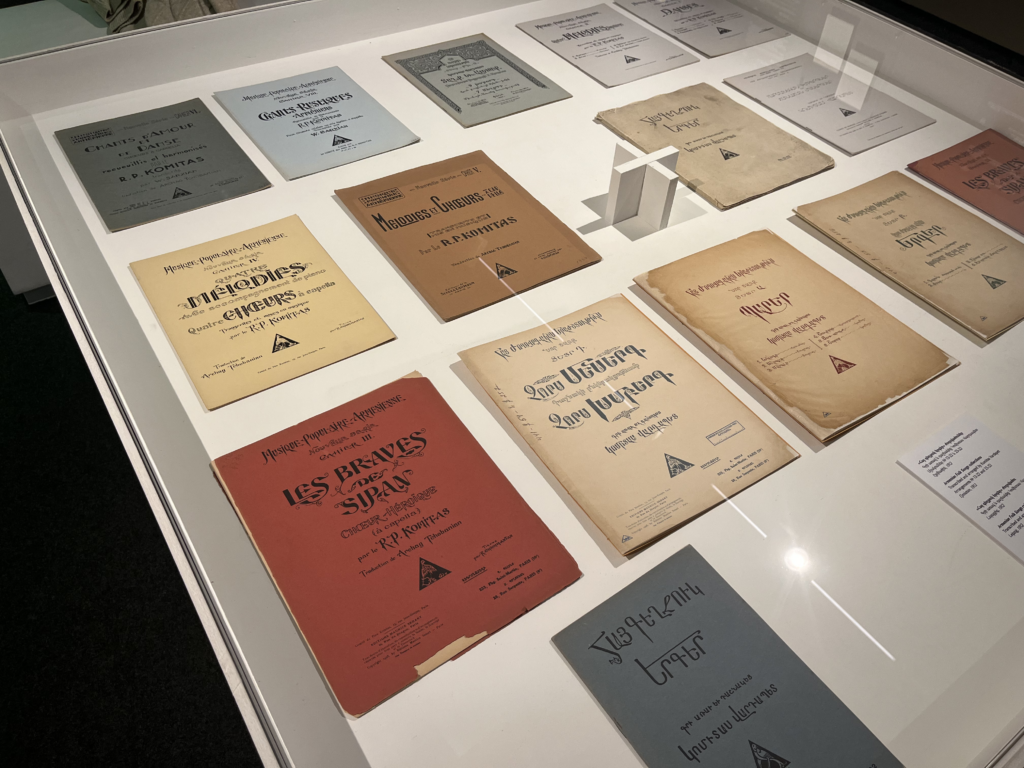
According to Harutyunyan, the documents also dismantle enduring myths. A widely circulated story claims that Komitas died of blood poisoning when a thorn pricked him while wearing wooden shoes. However, a list of his belongings, also included in the exhibition, shows that he regularly received new shoes. No reliable records mention wooden shoes, and detailed accounts of his life make no reference to such a case.
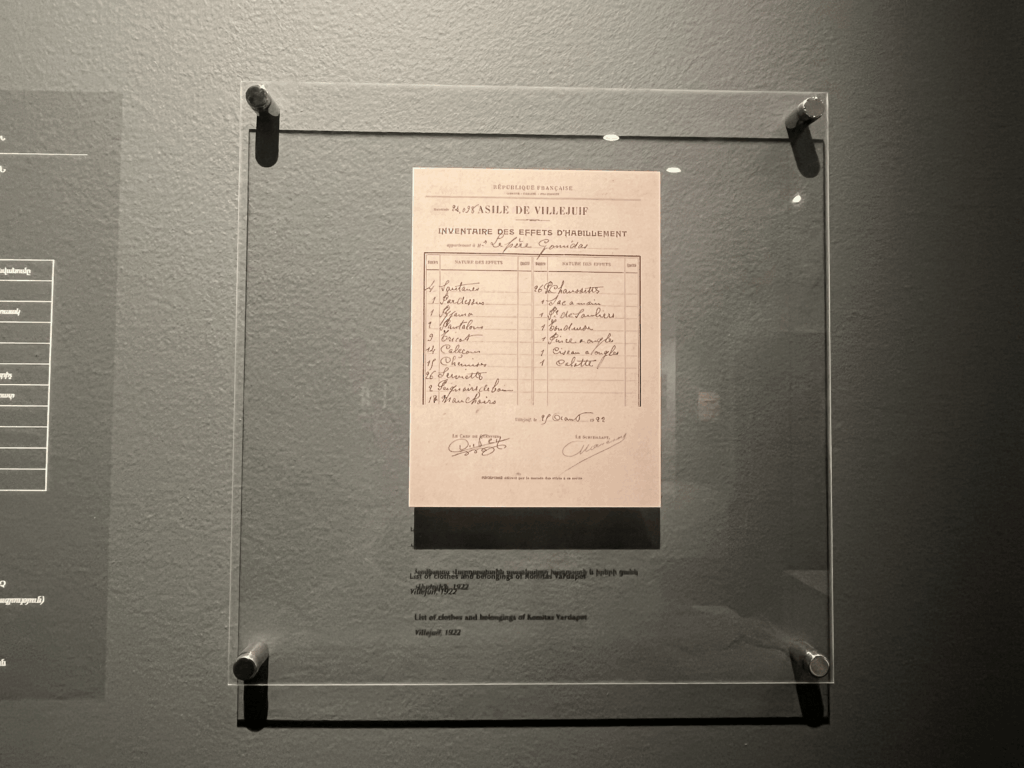
Even today, the cause of his death remains uncertain. Although often attributed to blood infection, archival materials suggest a more complex picture, pointing to other physical health problems without providing a definitive conclusion.
Additional documents tell the story of his last days. Four records refer to Maison Trouvain, the funeral home that organized his burial, and later, in May 1936, to the transfer of his remains from Paris to Soviet Armenia after years of silence in a foreign land.
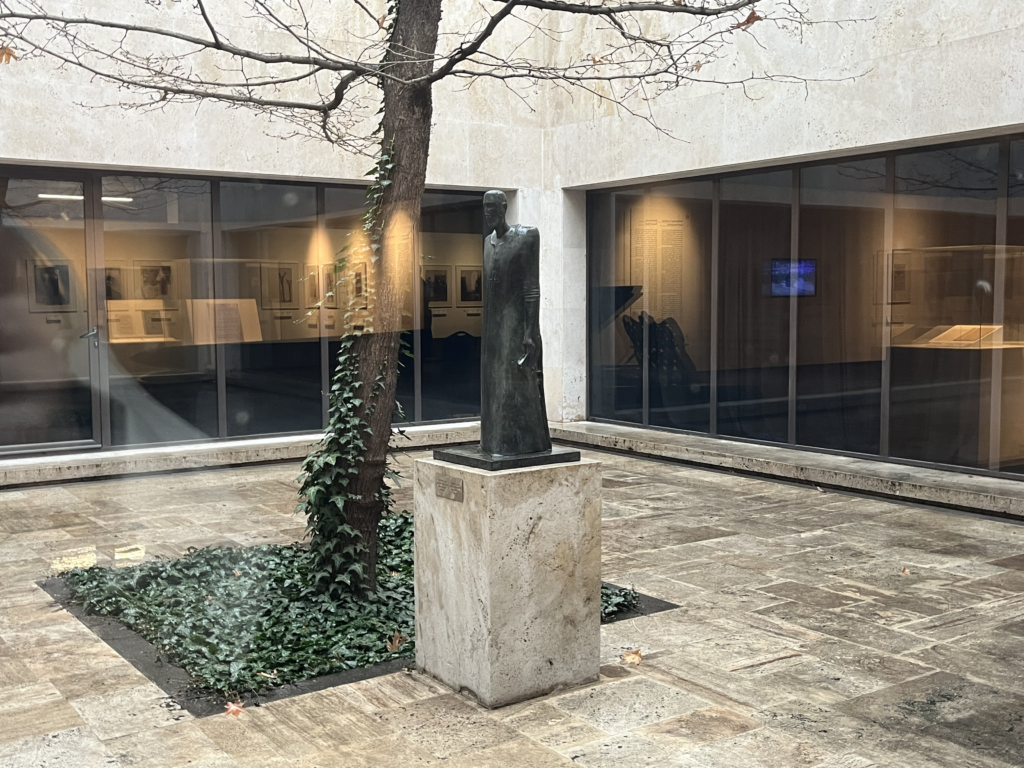
The exhibition does not provide definitive answers. Instead, it collects what remains: letters that are fragments, and lets them speak.
Editor’s Note: The photographs were taken by the author.