

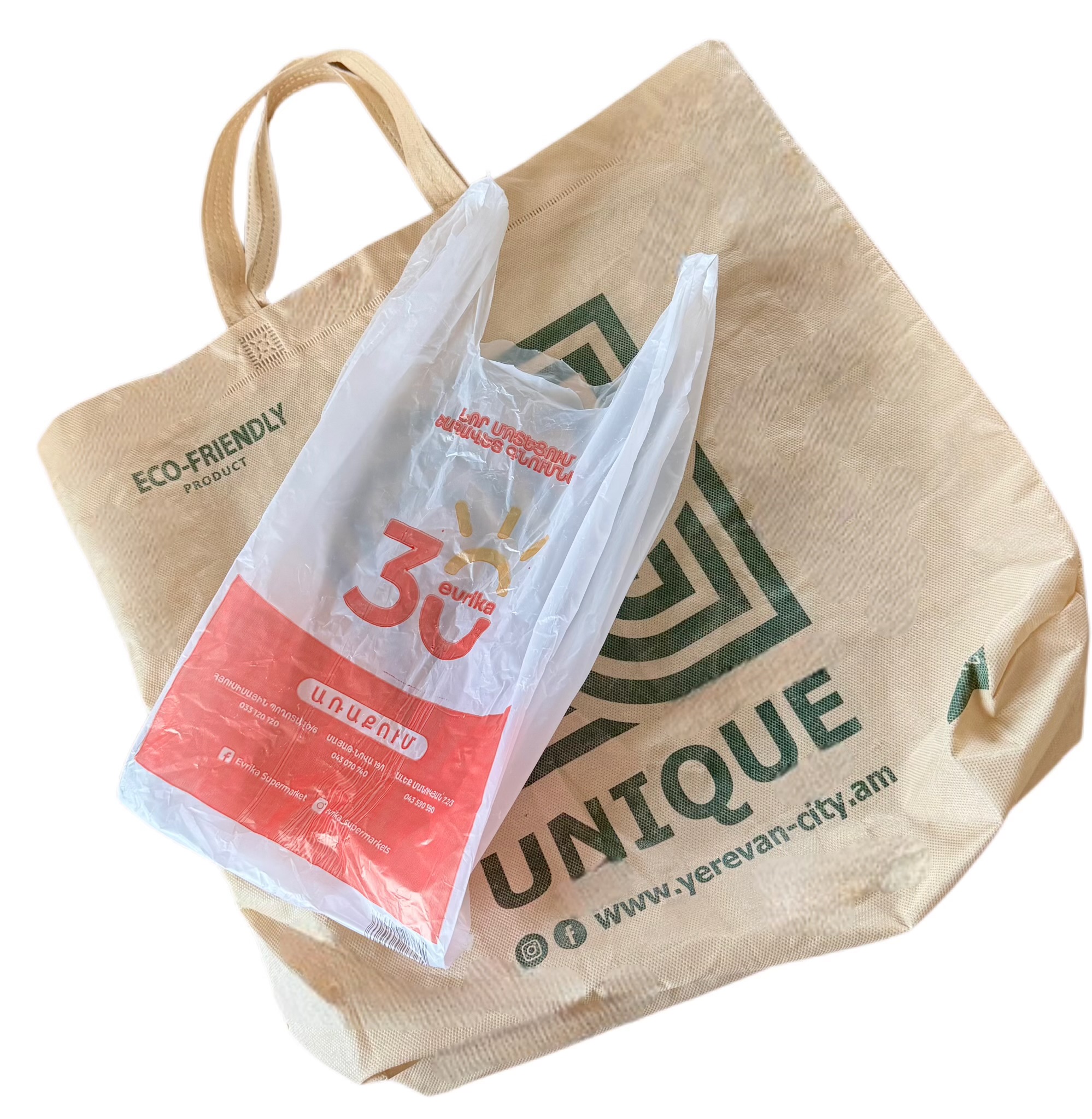
The scene at Yerevan supermarket checkout counters has not changed in years. The law says one thing, but the shelves paint a different picture.
Armenia continues to grapple with plastic waste management despite the introduction of restrictive legislation in 2022. The government is now trying again. Starting January 2027, it is set to ban plastic bags, plates, and coffee sticks, among other plastic products.
Minister of Environment Hambardzum Matevosyan presented a new “blacklist” at a parliamentary commission. According to the new regulation, starting in 2027, shops, cafes, and restaurants that provide plastic bags will be subject to fines. After a first warning, businesses will pay 100,000 to 150,000 AMD for repeated violations. Matevosyan said that this is an important step to show the “green” face of Armenia ahead of COP17.
Small business owners are already worried. “If I have to buy expensive paper bags, I will have to raise the price of bread,” says Silvia Karapetyan, 50, a small shop owner in Yerevan.
According to the 2024 annual report of the Statistical Committee of Armenia (Armstat), about 62,000 tons of plastic waste were generated in Armenia that year. This means that, divided across a population of almost 3 million, each Armenian sends roughly 20 to 25 kilos of plastic to the landfill every year. Waste management in Armenia remains a serious problem. The vast majority of household waste is taken directly to landfills without prior sorting or recycling. Consumption has not decreased since the adoption of the trade and services law in 2022, as there are still an average of 200 to 250 single-use bags per capita annually.
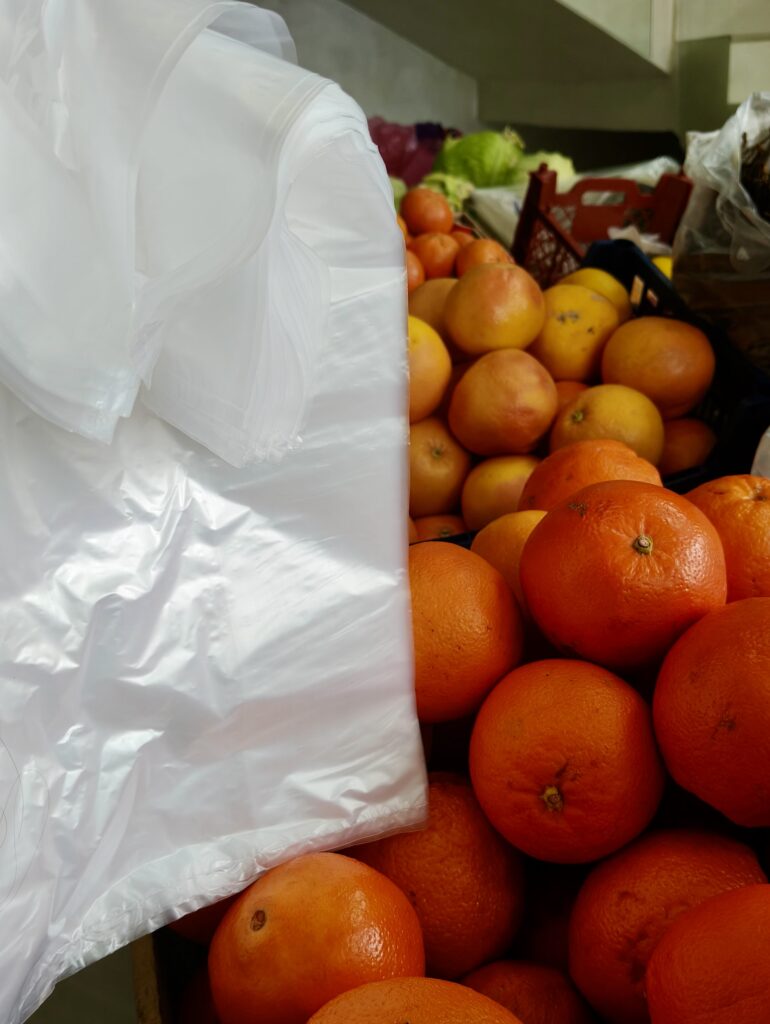
A business can simply “rename” its product. If the package is considered a “weighing bag,” it will remain at the checkout. These regulatory gaps are allowing the law to remain only on paper, while landfills continue to be filled with plastic.
The amount of loopholes and exceptions in the law has drawn criticism on social media. This inconsistency has led to widespread public confusion. Consumers often question why a small coffee stick is treated as an environmental threat, while coffee in plastic cups or heavy plastic bags for construction materials remains unregulated. These exceptions, often justified under the guise of “sanitary” or “weight-based” necessities, create significant loopholes in the 2022 law. The fight against plastic is far from thorough, leaving behind major “unregulated areas.”
Observations in local supermarkets reveal an interesting trend: Adults are more likely to take a cloth bag with them than young people. For Suren Kirakosyan, 65, it is an old habit, but for a younger consumer, convenience comes first.
“I use these bags as trash and throw them away,” says Ani Harutyunyan, 35. As long as a fabric bag is more expensive than a plastic one, ecology remains the hope of the pocket consumer.
However, not every “green” bag is truly sustainable. According to Hetq.am, laboratory checks show a real “eco-scam.” The bags labeled “bio” contain the same polyethylene. Meanwhile, local manufacturers such as EcoPaper are trying to offer an alternative to paper. However, without government subsidies, paper products remain more expensive than plastic. If the government does not help the local manufacturer to reduce the cost, eco-packaging will remain an “elite” product, and not a mass solution.
In Africa, countries like Rwanda not only ban plastic but also provide businesses with tax breaks for giving up the material. Meanwhile, Kenya warns that fines and punishments would only create a black market of packages.
In Europe, plastic producers are responsible for their own waste. Those who produce plastic must pay for both the waste collection and recycling.
While Armenia is preparing for a total ban on plastic in 2027, the effectiveness of this measure continues to be the subject of discussion among environmental experts. The main question is whether the government will finally close the existing legislative loopholes or whether the ban will serve as a short-term “image” step. Ultimately, the success of the fight against plastic depends on whether eco-packaging becomes accessible to the general public, rather than remaining a luxury for a few.
Editor’s Note: The photographs were taken by the author.