

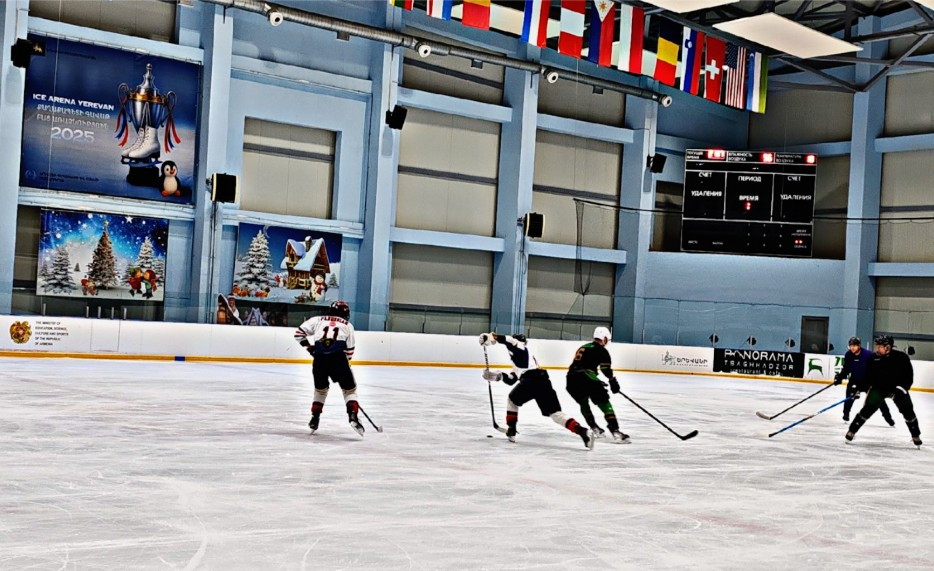
In a country known for chess grandmasters and wrestling champions, a dream is beginning to take shape: the renaissance of ice hockey in Armenia.
After a 15-year absence from the world stage, Armenia’s national hockey team came back in the spring as the country hosted the 2025 IIHF World Championship Division IV in Yerevan. Despite falling short of gold in an overtime loss to Kuwait, the silver medal appeared to symbolize a rebirth for the sport.
The journey began with a record-breaking win for Armenia, as the hosts defeated Malaysia 24-3. Then came the stunner: a shootout victory over tournament favorite Uzbekistan after a 2-2 tie in regulation. Goaltender Artyom Putulyan stopped 57 shots, earning honors as the tournament’s best goaltender and MVP of his team.
A day later, an overtime loss to Kuwait marked a bitter end to what could have been a historic moment for Armenian hockey. Following wins over Iran, 8-0, and Indonesia, 14-1, were not enough, as Uzbekistan confirmed its dominance with the win in the group.
“We really thought we’d take first place and move up to Division III,” said Eduard Kalantaryan, a sports commentator who has covered hockey since the 2006 Winter Olympics.
Why this time is different
The new era of Armenian hockey coincided with the Russia-Ukraine war and the wave of relocants from Russia to Armenia — including hockey player and businessman Petr Lebedev, who moved to Yerevan in 2022 and quickly immersed himself in the local hockey scene.
After becoming president of the Armenian Hockey League and later sports director of the Ice Hockey Federation of Armenia, Petr Lebedev joined forces with the federation to open a new chapter in the sport’s development.
“At first, the AHL had no formal connection to the federation,” recalled Aram Sargsyan, general secretary of the Armenian Ice Hockey Federation.
“But a league can’t have legitimate status and recognition unless it operates under the federation’s umbrella. Eventually, we realized there was no point in maintaining this division.”
The two entities quickly merged operations, and the league saw the formation of its founding clubs: Lions, Peppers, Pyunik, and BKMA, formerly the Falcons.
Starting from 2023, Armenia underwent a two-year process to meet the International Ice Hockey Federation’s minimum participation standards, proving both its infrastructure and roster’s eligibility. That included obtaining proper citizenship documents for diaspora and foreign players and establishing a functioning domestic league.
“At the right time, in the right place, everything aligned,” Sargsyan said. “And that allowed us to revive Armenian hockey.”
Building on setbacks and a controversial past
While 2025 marked a hopeful comeback, the turning point for Armenian hockey came 15 years earlier during the 2010 IIHF World Championship Division III — then the lowest division — hosted for the first time in Yerevan.
Armenia went undefeated against South Africa, 9-2; North Korea, 7-6; Mongolia, 15-0; and Georgia, which participated in a friendly format, 22-1. It seemed Armenia would win gold and advance to Division II. But representatives of South Africa filed a complaint alleging the use of ineligible diaspora players. The IIHF investigated and disqualified Armenia for two years.
Ironically, Sargsyan noted, South Africa’s own roster included players from England and Canada. “There wasn’t a single Black South African on the ice,” he said.
Eligibility regulations have become increasingly strict since the 1998 Olympics in Nagano, Japan, when Ulf Samuelsson, a two-time Stanley Cup winner and longtime player for Sweden, was ruled ineligible after it was revealed he had obtained U.S. citizenship, automatically voiding his Swedish passport under local law.
Fifteen years of waiting
After the 2010 disqualification, hockey in Armenia fell silent. The Demirchyan Complex rink closed, and survival depended entirely on the federation.
“We had no state funding — and still don’t,” Sargsyan said. “And we couldn’t afford to finance one of the most expensive sports in the world on our own.
Sargsyan combines his job as a technical product manager in IT while managing the federation’s operations. “All logistics were on us. We attended all the IIHF meetings, filed reports, kept it going—just to have the door open for future opportunities, which finally came in 2022.”
What’s next
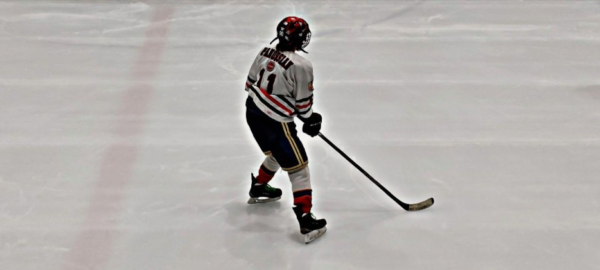
Because of the April world championship, domestic playoffs were pushed to October, though the league normally runs from fall to spring.
The league currently includes four teams, but the federation is working to launch a larger Caucasus Hockey League. Memorandums with Iran and Georgia are being finalized, and more teams — possibly from Russia — may join.
“It will function as a league — not a tournament — and will follow the regulations of our league,” explained Sargsyan. “Each country is expected to field two teams, and games will rotate among all host nations.”
The federation remains “grounded,” as Sargsyan emphasizes the need to grow Armenia’s talent pool.
“It would be much easier for us to recruit Russians, resolve their citizenship and military service issues, and achieve quick results by moving up divisions.”
Yet, to “keep the Armenian spirit,” the national team is trying to balance the experience of foreign players with the development of the next generation.
“We’ve established a youth hockey school to train children born in Armenia who can one day represent the national team,” Sargsyan said.
Yet without funding for that pipeline, it will be hard to produce results.
“Reality is that you have to show results first. Without results, the government won’t support us. That’s why we’re moving forward in parallel,” Sargsyan noted. Now, the team continues to scout and recruit.
“Next year’s national team won’t look the same. We will have around 10 new players lined up — and nine of them have Armenian last names,” Sargsyan said.
Next year’s championship is on the horizon. And according to the federation representative, the host will most likely be Kuwait — the only team to beat Armenia this year.
Editor’s Note: The photographs were taken by the author.